Air pillow packaging is one of the most widely used void fill materials in ecommerce and fulfillment, and also one of the most misunderstood. Businesses evaluating air cushion packaging tend to ask the same questions, and most of those questions have straightforward answers once you understand what air pillows are actually designed to do.
This FAQ collects the questions we hear most from operations, procurement, and fulfillment teams. If you want the full picture rather than direct answers, start with our ultimate guide to air pillow packaging.
The Basics
What is air pillow packaging?
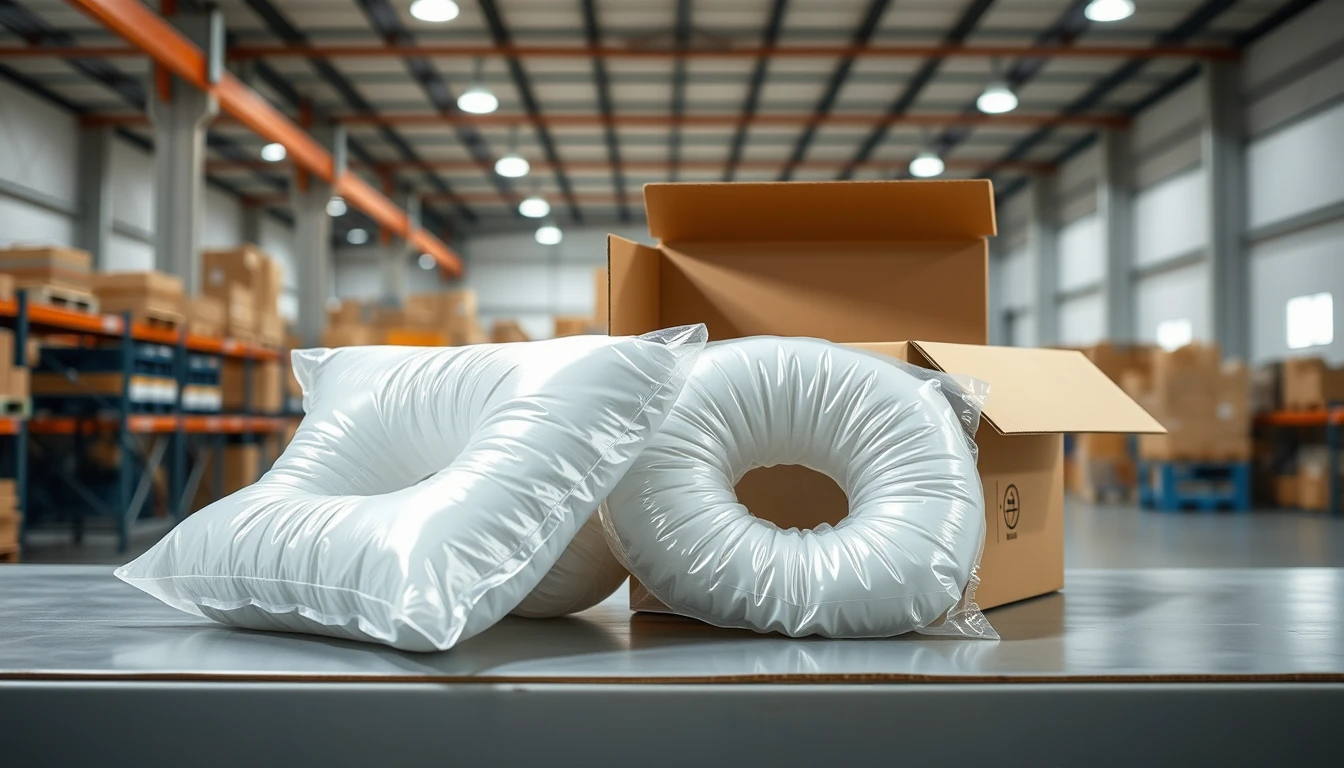
Air pillow packaging is a void fill material made of inflated plastic cushions used to fill the empty space inside a shipping carton. The cushions are produced from flat film that is inflated and sealed, either on demand at a packing station or pre-inflated for smaller operations.
The purpose is immobilization. Air pillows keep a product from moving inside its box, and they absorb and distribute impact energy that would otherwise reach the product.
How do air pillows work?
Air pillows work on the same principle as an airbag. When a package is dropped or struck, the product wants to keep moving. The inflated cushions compress, which slows that movement over a longer distance and reduces the peak force the product experiences.
They also prevent the product from reaching the walls of the carton in the first place. Most transit damage happens because a product accelerates across an empty space and hits something. Remove the empty space and you remove most of the opportunity for damage.
What is the difference between air pillows and air cushion packaging?
In practice, very little. "Air pillows" and "air cushion packaging" are used interchangeably for the same category of inflated void fill. You will also see "inflatable packaging," "air-filled packaging," and "air cushions" describing the same thing.
There are meaningful differences between formats within the category, including single-chamber pillows, multi-chamber quilted sheets, and bubble-style inflated film. Those differ in how they drape and how they fill, but they are all air cushion packaging. Our complete guide to air cushion packaging covers the formats.
Are air pillows the same as bubble wrap?
No, and the distinction matters when choosing. Bubble wrap is a wrapping material, designed to be applied directly to the surface of a product. Air pillows are a void fill material, designed to occupy the space around a product.
They solve different halves of the same problem, and many well-packed cartons use both: bubble wrap or paper around the item, air pillows around that. We compare them directly in air pillow vs bubble wrap: which protects better.
Protection and Performance
What do air pillows protect well?
Air pillows are strongest when the job is filling space and immobilizing an item:
- Products already boxed or wrapped that need to be held still inside a shipping carton.
- Irregularly shaped items where rigid inserts do not fit well and cushions can conform.
- Multi-item orders where products need to be kept from contacting each other.
- Light to moderately heavy goods across most ecommerce categories.
- The gap in a double-boxed package, where a cushion layer between inner and outer carton is exactly the right application.
What air pillows do not do on their own
Being honest about the limits is what makes the material work. Air pillows are void fill, not surface protection. On their own they will not:
- Replace individual wrapping for fragile items. Glass, ceramics, and finished surfaces need a layer against the product itself. Air pillows go around that.
- Provide primary protection for very heavy items. Mass generates force in a drop, and heavy goods generally need engineered inserts or dense foam rather than void fill alone.
- Protect a product in an oversized box. No amount of fill fully compensates for a carton that is much too large.
- Prevent damage from crushing under a stacked load. That is a function of the corrugated box's strength, not the fill inside it.
Treating air cushion packaging as a complete solution for every product is the most common mistake we see. It is a component of a packaging system.
Do air pillows deflate in transit?
Quality air pillow film is designed to hold pressure through a normal parcel journey, and properly inflated cushions from a well-maintained machine should arrive intact.
Deflation usually traces back to one of three causes: over-inflation, which stresses seams and makes cushions vulnerable to puncture; under-inflation, which leaves cushions too soft to immobilize anything; or sharp product edges puncturing the film directly. The first two are machine settings. The third is solved by wrapping the sharp item first.
Some pressure change with altitude and temperature is normal and expected. It is designed for.
How much do air pillows reduce shipping damage?
Enough that damage reduction is usually the main reason operations adopt them, though the honest answer is that it depends entirely on what you are shipping and what you are comparing against. An operation moving from no void fill at all will see a dramatic improvement. One already using a well-executed alternative will see a smaller one.
Rather than relying on a general figure, measure your own damage rate by SKU before and after a change. Our guide to reducing shipping damage rates covers how to approach that.
Cost and Operations
Are air pillows cost effective compared to other void fill?
For most operations at moderate to high volume, yes, but the reason is often not the one people expect. The unit price of the material is rarely the deciding factor. The savings come from three other places:
- Shipping cost. Air pillows are more than 99% air, so they add essentially no weight to a package. Heavier void fill adds billable weight to every shipment.
- Storage. Film stores flat on compact rolls and inflates at the point of use, so you store film instead of storing volume.
- Labor. On-demand cushions at the packing station remove walking, refilling, and waiting from the packer's cycle.
At low volume these advantages are modest. At high volume they compound quickly. See how air cushion machines save fulfillment centers for the operational detail.
How do air pillows affect dimensional weight?
Favorably, in two ways. First, the cushions themselves add almost no weight, so they do not push a package into a higher actual-weight bracket. Second, because air pillows conform and fill efficiently, they support using a smaller carton than loose fill often requires.
Since carriers bill on the greater of actual or dimensional weight, and carton size drives the dimensional calculation, the box you can get away with matters more than the fill you put in it. Our guide to reducing dimensional weight charges covers this.
How much does air pillow packaging cost?
Cost depends on film specification, cushion size, volume, and whether you are running an on-demand system, so there is no meaningful universal number. AIRFILL is quote-based, and pricing is built around your actual volume and configuration.
The more useful way to evaluate it is cost per package packed, including material, labor, storage, and the freight impact, rather than the unit price of the material in isolation. That comparison frequently reverses the ranking you would get from unit price alone. Talk to a packaging specialist for a quote based on your operation.
Storage, Supply, and Operations
Air pillow film ships and stores flat on rolls, which is one of the material's practical advantages. A compact roll of film converts into a large volume of cushioning, so warehouse space that would otherwise hold pre-inflated fill or bulk loose fill stays available for inventory.
For operations with limited space, this is often the deciding factor. Loose fill and pre-inflated cushions consume storage in proportion to the air they contain. Film does not.
Do I need a machine to use air pillows?
For anything beyond low volume, yes, and it is the normal arrangement. An air pillow machine inflates and seals cushions from film at the packing station, producing them continuously as packers need them.
Pre-inflated air pillows are available and make sense for very low volume, occasional shipping, or as backup, but they reintroduce the storage problem the material is good at avoiding.
How much space does an air pillow machine take up?
Most on-demand units are compact enough to sit at or above a packing station, and many are mounted overhead so the cushions feed down within reach of the packer without consuming bench space. The practical requirement is a stable position near the packer, power, and clearance for the film roll.
Is there a minimum volume that makes on-demand worthwhile?
There is a practical threshold, though it depends more on your constraints than a fixed package count. On-demand systems make sense when at least one of these is true: you are packing enough volume that packer time matters, storage space is genuinely constrained, or your damage rate is high enough that consistency has real cost.
If none of those apply, pre-inflated cushions may be the more sensible option. A specialist can tell you honestly which side of that line you are on.
How do air pillows compare to other packing materials?
The honest comparison depends on what job you need done, because each of the common packing materials is good at something different.
| Packing material | Strength | Limitation |
|---|---|---|
| Air pillows | Filling space, low weight, minimal storage | Not surface protection on their own |
| Packing peanuts | Conforms to any shape, inexpensive | Migrates and settles; poor customer experience |
| Bubble wrap | Surface protection, shock absorption at the product | Bulky storage; adds dimensional volume |
| Foam inserts | Superior protection for heavy or high-value goods | Highest cost; product-specific tooling |
| Kraft paper | Recyclable curbside, good for wrapping | Heavy; compresses over long transit |
Air pillows and packing peanuts compete most directly, since both are void fill. Packing peanuts conform well but settle during transit and create a poor unboxing experience. Air cushion packaging holds position and lifts out cleanly. Against foam inserts, foam offers superior protection for heavy goods, while air cushion packaging is far more flexible across a changing product mix. We cover that comparison in air pillow vs foam inserts.
Do air pillows provide shock absorption?
Yes, though it helps to be precise about the mechanism. The shock absorption comes from the compressible air inside the cushion, which extends the time over which the product decelerates and lowers the peak force it experiences.
That makes air cushion packaging effective protective packaging against impact and vibration, which are the two most common causes of transit damage. It is less effective against sustained crushing loads, where the structural strength of the shipping box does the work. Product protection at the surface, such as scratch and scuff prevention, is the job of a wrapping material rather than void fill.
Does air cushion packaging improve product safety?
For most operations, measurably. Product safety in shipping comes down to controlling movement and absorbing energy, and void fill addresses the first directly and the second substantially.
The caveat is the same one that runs through this FAQ: air pillows are one component of a protective packaging system. Product safety depends on the packaging materials working together, correctly sized boxes, and consistent execution at the packing station.
Materials and Sustainability
Are air pillows recyclable?
Air pillow film is generally a polyethylene film, which is recyclable through store drop-off programs that accept plastic film and bags, in the same stream as grocery bags and shipping mailers. It is typically not accepted in curbside residential recycling, because most curbside programs cannot process flexible film.
Two practical notes. Deflate the cushions before recycling, which also makes them far easier to transport. And check the specific film you are using rather than assuming, since specifications differ. If recyclability is a requirement for your program, ask us to confirm the current specification for the material you would be running.
For customers who need a curbside-recyclable option, AIRFILL's EcoGuard line uses corrugated construction rather than film. Our post on sustainable air-filled packaging covers the sustainability picture in more depth.
Are air pillows better for the environment than packing peanuts or foam?
On several measures they compare favorably. Air pillows use a small amount of film to fill a large volume, so material use per package is low. They add negligible shipping weight, which reduces transport emissions per shipment. And unlike loose fill, they do not scatter and are easier to collect for recycling.
We would rather be precise than sweeping here. "Better for the environment" depends on which measure you care about, whether the material is actually recycled in practice, and what you are comparing against. Our comparison of air pillows vs packing peanuts looks at the tradeoffs directly, and AIRFILL packaging vs traditional styrofoam covers that comparison.
Is air cushion packaging a sustainable packaging solution?
It performs well on several measures that matter for sustainable packaging, and we would rather be specific than make a broad environmental claim.
Where air cushion packaging genuinely helps: material use per box is low, because a small quantity of film fills a large volume. Shipping weight is negligible, so transport energy consumption per shipment is lower than with heavy packing materials. Storage space and freight for inbound packaging supplies drop sharply, since you ship and store film rather than bulky packaging supplies full of air. And packaging waste at the packing station falls, because on-demand systems produce what each box needs instead of a fixed quantity.
Where it depends: the environmental impact of any plastic film comes down to whether it is actually recycled in practice, which depends on your customers having access to film drop-off. If curbside recyclability is a firm requirement, the corrugated EcoGuard line is the better fit than film-based void fill.
Our post on sustainable air-filled packaging goes into the tradeoffs, and the essential guide to sustainability in packaging covers the wider picture.
Does air cushion packaging reduce shipping costs?
Usually, through two mechanisms rather than the price of the material.
First, weight. Because the cushions are more than 99% air, they add essentially nothing to billable weight, while heavier packing materials add cost to every box.
Second, box size. Void fill that conforms efficiently supports using a smaller shipping box, and since carriers bill on the greater of actual or dimensional weight, box size often determines the rate. Reducing box dimensions is one of the most reliable ways to reduce shipping costs across a catalog.
There is a third, less visible saving: fewer damage claims mean fewer replacement shipments, and a replacement costs the product, a second round of packaging materials, and a second shipment.
What certifications does the film carry?
Material specifications and certifications change over time, so we would rather confirm the current documentation for your specific film than publish a claim that may go stale. Ask a specialist and we will provide the current specification sheets.
Choosing and Implementing
What size air pillows should I use?
Cushion size should match the void you are filling and the geometry of the product. Cushions that are too large bridge across a gap without filling it, leaving the product free to move underneath. Cushions that are too small disappear into corners and fail to immobilize anything.
Most operations end up running one or two cushion sizes that cover the majority of their carton profile. Our guide to choosing the right air pillow size walks through matching size to product.
How many air pillows does a box need?
Enough that the contents cannot move when the sealed box is gently shaken, with cushioning on all six sides including underneath. The most common under-packing error is filling the top of the carton and leaving the bottom and sides thin, because that is what is visible while packing.
Can air pillows be used for double boxing?
Yes, and it is one of their best applications. The cushioned gap between an inner and outer carton is exactly the kind of void that air cushion packaging fills well, and the low weight means double boxing does not add significant shipping cost. This is the standard approach for fragile categories such as glassware.
Which industries use air pillow packaging?
Broadly, any operation shipping boxed goods through a parcel network. In practice the heaviest adoption is in ecommerce and DTC fulfillment, third-party logistics, electronics and IT asset shipping, cosmetics and personal care, automotive parts, and subscription services.
We have written industry-specific guides for electronics, automotive parts, and cosmetics.
How do I switch from my current void fill?
Start by measuring what you have: packaging cost per box packed, storage space consumed, packer seconds per box, and damage rate by product. Then run a limited trial on a representative slice of your order profile rather than switching all packaging materials at once, and drop-test packed boxes before committing.
The most common mistake is comparing unit price of one packing material against another. The comparison that matters includes labor, storage space, shipping costs, and damage.
Can air cushion packaging systems integrate with an existing packing line?
In most cases yes, and with less disruption than businesses expect. On-demand air cushion packaging systems are typically mounted at or above the existing packing station and produce cushions on demand, so the rest of the packaging process stays as it is.
That is a large part of why void fill is often the first packaging automation an operation adopts. It touches every box, requires no redesign of the packaging line, and does not depend on other systems being upgraded first. Our guide to on-demand packaging systems covers how the systems fit into an existing operation.
What packaging materials should I keep alongside air pillows?
Most well-equipped packing stations run a small set of complementary packaging materials rather than a single product:
- A wrapping material (paper, bubble wrap, or foam sheets) for surface protection on fragile items.
- Void fill to immobilize the contents and fill empty space.
- Two or three box sizes matched to the real product mix.
- Dividers for orders containing multiple fragile items.
- Quality packing tape for proper sealing.
Air cushion packaging covers the void fill role well. Trying to make it cover all five is where operations get disappointing results.
Is air pillow packaging a good fit for e-commerce?
E-commerce is where air pillow packaging is most widely adopted, and for good reasons that line up with how online retail actually operates. Order profiles change constantly, so a packaging solution that conforms to whatever is in the box is more practical than product-specific inserts. Margins are tight, so packaging materials that lower shipping costs matter. And the customer opens the box personally, so packing air pillows that lift out cleanly beat traditional packaging materials that scatter.
Our complete guide to inflatable packaging for e-commerce covers the category in depth, and why leading e-commerce brands are switching to air-filled packaging looks at what is driving adoption.
How do I work out what my packaging needs actually are?
Start from your constraints rather than from the packaging materials. Four questions usually settle it:
- What are you shipping? Fragile goods need surface protection plus void fill. Durable goods often need void fill alone.
- At what volume? Volume determines whether on-demand systems deliver enough cost savings and labor efficiency to justify the equipment.
- What is scarce? If valuable warehouse space is the constraint, film-based packaging solutions win on storage. If labor is the constraint, on-demand production wins there.
- Where is money leaking? Damage claims, dimensional weight, or labor. Each points at a different fix.
Answer those and the right packaging solution is usually obvious. Guessing at packaging needs without them is how operations end up paying for protective materials they do not need while still getting damage on the products that matter.
Still Have Questions?
Air pillow packaging is straightforward once you see it as one component of a packaging system rather than a product that solves everything. The right packaging solution depends on what you ship, how much of it, and where damage and cost are actually coming from.
AIRFILL Technologies builds packaging systems around on-demand air cushion void fill for businesses shipping at real volume, combining product protection, cost efficiency, and a sustainable packaging profile that holds up to scrutiny. For the broader picture, see what void fill packaging is or our complete guide to protective packaging materials.
Talk to a packaging specialist for a free consultation and we will answer the questions specific to your packaging needs.
AIRFILL Technologies — 1816 Railroad Street, Corona, CA 92878 · (844) 247-3455