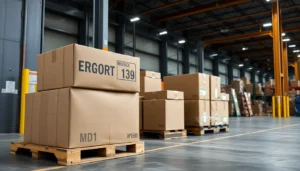
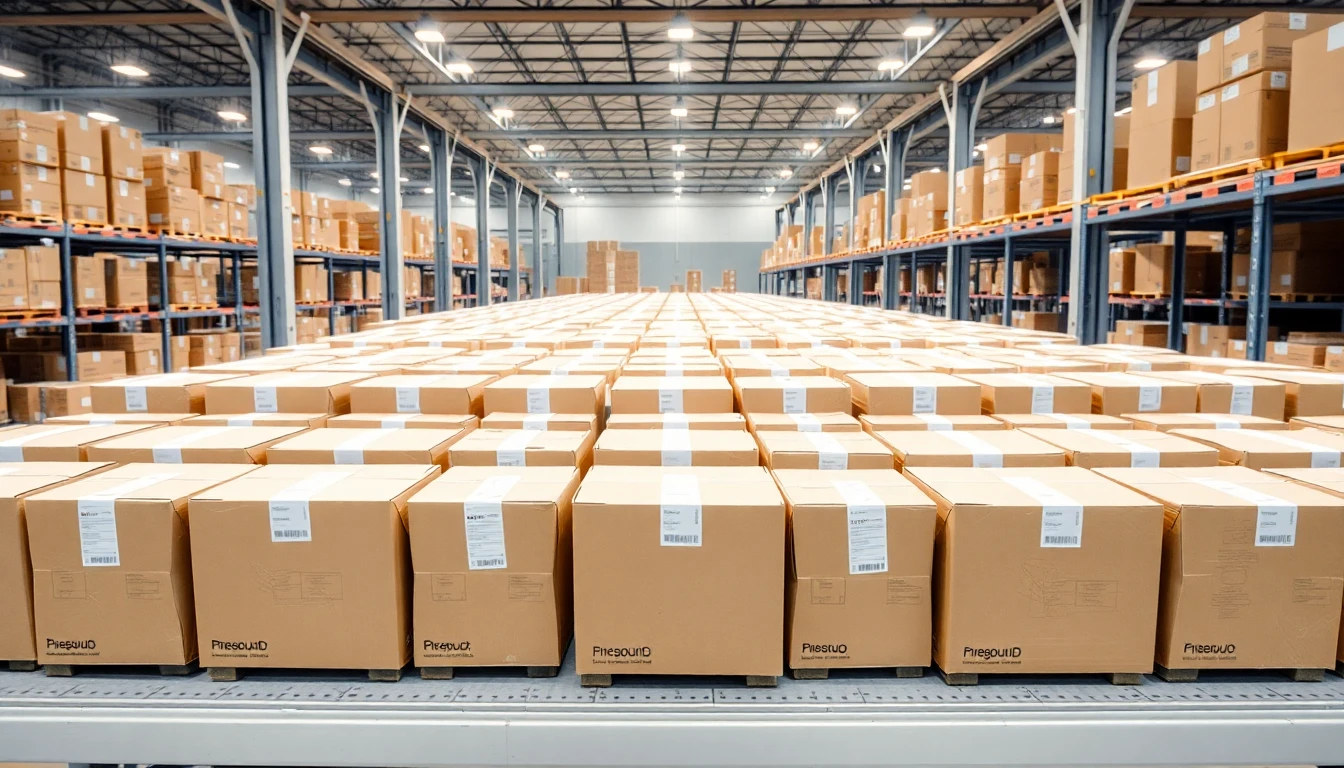
Amazon FBA packaging requirements are not suggestions. Fulfillment centers reject, repackage, or charge back non-compliant inbound shipments, and every one of those outcomes costs you money and shelf time.
The frustrating part for most operations teams is that the rules are scattered across a dozen Seller Central help pages, written for a single-unit seller rather than a business shipping pallets. This guide pulls the Amazon FBA packaging requirements into one operational document: what has to be on the unit, what has to be on the box, how Amazon validates protection, and which packaging materials are actually permitted inside the shipping box.
If you are evaluating your broader packaging approach at the same time, our guide to void fill packaging covers the category fundamentals this article assumes.
What Amazon FBA Packaging Requirements Actually Cover
FBA packaging requirements operate at two distinct levels, and conflating them is the most common source of prep errors.
Unit level. Every sellable unit must arrive at the fulfillment center ready to be picked, stored, and shipped to a customer with no further preparation. That means the correct poly bags or boxing, a scannable barcode, and any required warnings or labels.
Shipment level. The shipping box or pallet that carries those units to Amazon has its own separate requirements: box dimensions, weight limits, FBA box ID label placement, and packaging materials that survive the trip.
A shipment can be perfectly compliant at the box level and still be rejected because a single unit inside was bagged incorrectly. Treat them as two separate checklists.
Poly Bags: The Most Commonly Failed FBA Packaging Requirement
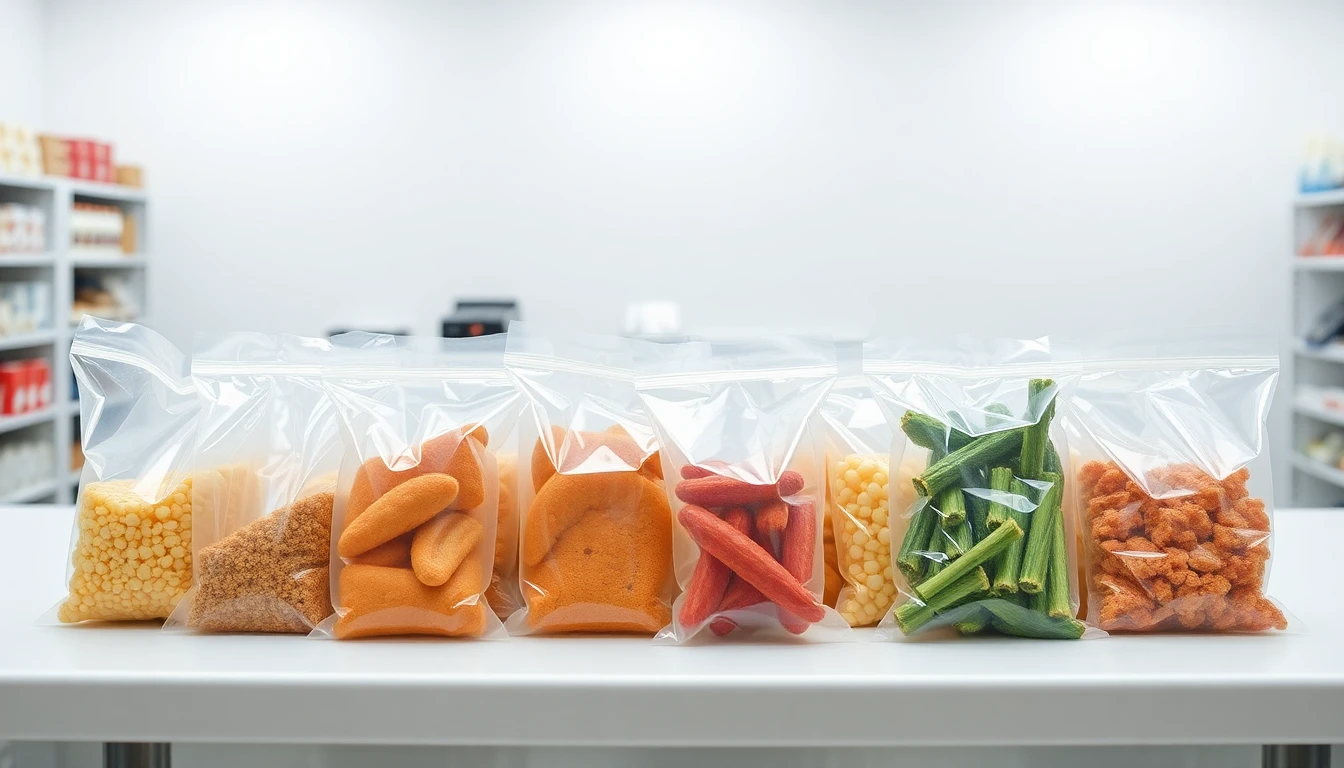
Poly bags cause more prep failures than any other single requirement, largely because the rules are specific and non-obvious.
Thickness. Poly bags must be at least 1.5 mil thick. Thinner bags tear inside the fulfillment centers and the unit becomes unsellable.
Transparency. The bag must be transparent enough that the unit and its scannable barcode can be identified without opening it.
Suffocation warning. Any poly bag with an opening of five inches or greater requires a suffocation warning printed on the bag or applied as a label. The warning text must be legible and sized appropriately to the bag.
Seal. Poly bags must be completely sealed. Not folded, not taped shut at one corner, sealed. Loose poly bags are treated as unprepped units.
No overhang. Excess bag material should be trimmed or folded so the bagged unit is not substantially larger than the product packaging itself. Loose material adds dimensional volume and slows picking.
Barcode visibility. The scannable barcode must be visible through the bag, or a duplicate barcode applied to the outside.
Products that are already retail-boxed and sealed generally do not need bagging. Products that could separate, leak, or collect dust do.
FBA Product Barcode Requirements: Manufacturer Barcode vs Amazon Barcode
Every unit needs one scannable barcode, and only one visible scannable barcode. FBA product barcode requirements are strict because the entire receiving process depends on a single unambiguous scan.
Manufacturer barcode. If you are enrolled in commingled inventory, Amazon can use the existing manufacturer barcode already printed on the retail product packaging. Your units are then pooled with identical units from other sellers.
Amazon barcode. If you want your specific inventory tracked to you, you apply an Amazon barcode instead. This is the safer option for most brands, and it is effectively required for any product where condition or authenticity matters to you.
The critical operational rule: when you apply an Amazon barcode, you must cover the manufacturer barcode completely. Two scannable barcodes on one unit is a receiving error waiting to happen, and it is one of the most frequent causes of inventory being misattributed.
Labels must be applied flat, on a surface the scanner can read, and never wrapped around a corner or across a seam.
Two related rules catch people out. You must cover existing barcodes on the retail packaging, including any secondary codes, so only one code scans. And when reusing corrugated boxes for inbound shipments, remove or black out old shipping labels and any prior carrier barcodes. Reusing boxes is permitted, but a box still carrying prior carrier labels will misroute or stall at receiving. Cover them with opaque tape rather than a marker pen, which rarely defeats a scanner.
Expiration Dates and Regulated Products
Products with expiration dates carry additional FBA packaging requirements. Expiration dates must be printed in a readable format on the unit itself, and Amazon requires them to be visible without opening the product packaging. Where the printed date is small or low contrast, sellers commonly apply a supplementary label.
Units with expiration dates must also be bagged or otherwise sealed, and Amazon applies its own shelf-life rules on receiving. Products arriving with insufficient remaining shelf life are refused, which is an expensive lesson if a whole inbound shipment is affected.
Case Packed Products and Boxed Units
Case packed products follow a different prep path from individual units, and mixing the two causes receiving errors.
Case packed products are boxed units of identical items, same SKU and same condition, in a manufacturer sealed case. The case is the receiving unit. Every case in the shipment must contain the same quantity, and the case must carry a single address label plus its own barcode.
Individual units are prepped and labelled one at a time, then combined into a shipping box for transit.
The rule that matters operationally: do not mix case packed products and loose individual units in the same box. Shipping multiple case packs of different SKUs together, or breaking a case open and adding loose units alongside it, produces a mismatch between what the system expects and what arrives.
Original manufacturer packaging can usually stay as it is when it already meets the requirements: sealed, durable, correctly barcoded, and able to survive handling. There is no benefit to re-bagging a product whose retail packaging is already compliant.
Box Dimensions, Weight and Shipping Box Rules
The shipping box that carries your units into the network has hard limits.
Box dimensions. Standard boxes must not exceed 25 inches on any side. Oversize units are the exception and follow separate handling rules.
Weight. Boxes must not exceed 50 pounds. A box between 50 and 100 pounds must carry a clearly applied team lift label. Above 100 pounds requires a mechanical lift label.
One destination per box. Do not combine units destined for different fulfillment centers in one shipping box.
Box condition. Use a new or structurally sound corrugated shipping box with all original markings removed or blacked out. Old carrier labels and unrelated barcodes cause scanning errors at receiving.
FBA box ID label. Every box needs its FBA box ID label applied flat on a side surface, not on a seam, not on the top where stacked cartons can obscure it, and never wrapped around an edge. Apply the carrier label separately and do not cover either one.
Right-sizing the shipping box matters beyond compliance. Oversized cartons cost more to ship into the network and cost more again on the outbound leg, which is the mechanism our guide to reducing dimensional weight charges covers in detail.
Void Fill and Packaging Materials Amazon Allows
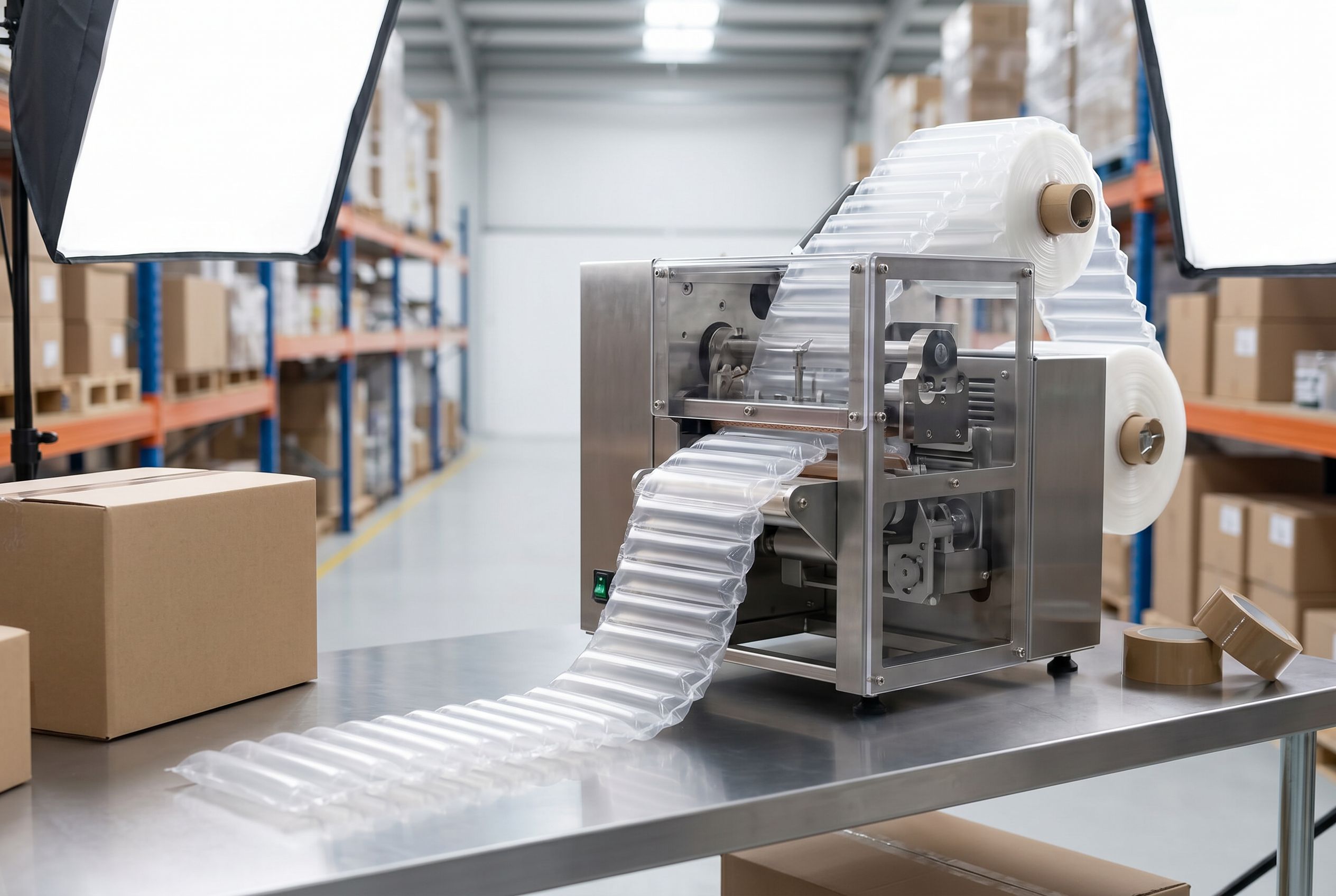
This is where FBA packaging requirements become directly relevant to how you equip your packing stations, because Amazon maintains an explicit prohibited list.
Not permitted:
- Loose fill packing peanuts
- Shredded paper
- Foam strips and loose foam pieces
- Crinkle wrap and similar loose decorative fill
The reasoning is operational rather than aesthetic. Loose packaging materials escape the carton during receiving, contaminate conveyor and sortation equipment, and create a housekeeping and safety problem across facilities handling millions of units.
Permitted packaging materials:
- Air pillows and inflatable air cushions
- Bubble wrap
- Full sheets of paper, including heavy weight kraft paper
- Corrugated inserts and dividers
Kraft paper is acceptable in full sheets but not shredded, and it adds weight that air pillows do not. Whatever you choose has to be adequate packaging material for the product, not merely permitted.
For businesses shipping into FBA at volume, air pillows are a practical fit for exactly the reason Amazon bans loose fill. Air pillows stay contained, they do not fragment, and a chain of cushions can be placed and cut without shedding anything around the packing bench. They also arrive at your facility as flat film rather than as pre-inflated volume, which matters when prep space is already tight.
If you are weighing air pillows against alternatives on protection rather than compliance, our comparison of air pillows and bubble wrap covers where each performs better.
Bubble Wrap and Where It Fits in FBA Packaging
Bubble wrap remains fully compliant with FBA packaging requirements and is the right choice for surface protection, which is a different job from void fill. Bubble wrap wraps the item to protect its finish and absorb direct impact. Void fill immobilizes the item inside the shipping box so it does not move at all.
Most compliant FBA packaging for fragile items uses both: bubble wrap against the product, air pillows filling the remaining space. Using bubble wrap alone to fill a large void is expensive and does not immobilize the unit reliably.
FBA Packaging Requirements for Fragile Items
Fragile items carry additional prep requirements, and they are the category most likely to generate customer damage complaints that eventually affect account health.
Bag or box the unit. Glass and ceramic fragile items generally require bagging or boxing so that if the item breaks, the fragments stay contained.
Protect on all six sides. The unit should have no direct contact between the product and the outer carton wall. Two inches of cushioning between the product and each wall is a workable operational rule.
Immobilize completely. A packed carton for fragile items should produce no movement when shaken. If the contents shift, the void fill is insufficient regardless of how much cushioning surrounds the item.
Fragile marking does not change handling. Marking a box fragile does not cause it to be handled differently inside an automated fulfillment network. Protection has to come from the packaging itself.
Our guides to protective packaging for glassware and air pillow packaging for fragile items go deeper on technique.
The 3 Foot Drop Test: How Amazon Validates Your Packaging
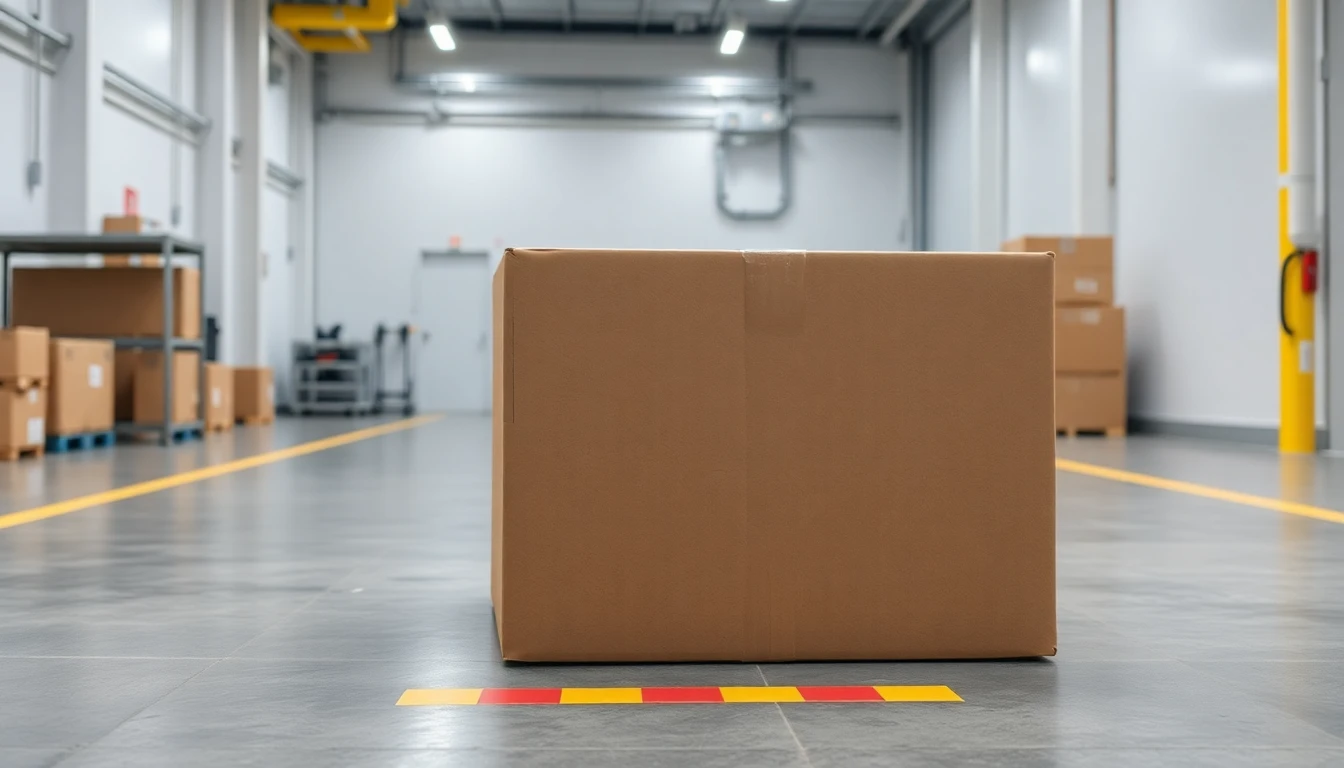
Amazon's validation standard for packaged products is a 3 foot drop test, and it is worth running internally before you ship rather than discovering the result through damage claims.
The test is straightforward. Drop the fully packed unit from three feet onto a hard surface, six times:
- Flat on the bottom
- Flat on the top
- Flat on the longest side
- Flat on the shortest side
- On a corner
- On an edge
A unit passes if the product inside is undamaged and remains sellable. The outer shipping box is permitted to show wear.
Failures are informative. If the product breaks on a corner drop but survives flat drops, corner protection is the weak point. If contents shift audibly before any drop, void fill volume is insufficient. If the box bursts at a seam, the carton grade is wrong for the weight.
Running this 3 foot drop test on a representative sample of each SKU is the cheapest packaging diagnostic available, and it maps directly onto how the network will actually treat your shipment.
How Fulfillment Centers Handle Your Packaging
It helps to understand what happens after the truck arrives, because the fulfillment process explains most of the rules.
At an Amazon fulfillment center, an inbound box is opened and each unit is scanned into inventory. Units go into mixed bins alongside unrelated products. When an order is placed, the unit is picked, dropped into a tote, conveyed, packed into an outbound carton with whatever packing materials that site uses, and sorted.
Three implications follow directly, and they explain the FBA packaging requirements more clearly than any rulebook:
Your packaging is handled twice. It travels once to the fulfillment centers and again to the customer. Both journeys are on you, because a unit damaged in storage or in outbound handling still reflects on your listing.
Units sit next to unrelated products. A leaking, shedding or unsealed unit contaminates neighbouring inventory, which is why sealing rules are enforced strictly.
Nothing is inspected by hand. The receiving process is scan driven. A barcode that does not scan cleanly is a manual exception, and manual exceptions are where chargebacks originate.
Amazon also operates a Frustration Free Packaging programme for products certified to ship in packaging that is easy to open and free of excess material. It is a separate certification track from standard FBA prep, and worth investigating only once your core compliance is stable.
SIOC and Ships In Own Container
Ships In Own Container, usually abbreviated SIOC, applies to products certified to ship in their own retail product packaging with no additional Amazon box.
SIOC is attractive because it removes an entire layer of material and handling, but the certification bar is real. The retail package has to survive distribution testing on its own, carry required labeling, and meet size and weight thresholds. For most sellers it is worth pursuing only on high-volume SKUs where the packaging is already robust enough to be close to compliant.
If your product does not clearly qualify, standard FBA prep with proper void fill is the lower-risk path.
Building a Repeatable FBA Prep Process
Compliance failures are usually process failures rather than knowledge failures. A few operational patterns hold up well:
Write a SKU-level prep card. For each SKU, document bag or no bag, barcode type, cushioning required, and box size. Prep decisions should not be made from memory at the bench.
Standardize on fewer box sizes. A rationalized set of carton sizes makes right-sizing achievable and simplifies training. It also reduces the void volume you need to fill.
Put void fill at the point of use. On-demand air pillow systems produce cushions at the packing station from flat film, keeping packaging materials out of the way until needed. Our overview of on-demand packaging systems explains how that changes a prep line.
Audit with the drop test. Sample regularly rather than only after a problem appears.
Track chargebacks by cause. Amazon's non-compliance fees tell you exactly where your prep process is leaking, if anyone is reading them.
For operations preparing large or growing inbound volumes, our guide to packaging for high-volume shippers covers the throughput and automation side of the same problem.
A Pre-Shipment Compliance Checklist
Run this before any inbound shipment leaves your dock.
Unit level
- Poly bags at least 1.5 mil, transparent, completely sealed, excess trimmed
- Poly bags carrying an exterior scannable barcode where the code is not readable through the film
- Suffocation warning present on any poly bags with a five inch or greater opening
- One scannable barcode visible; manufacturer barcode covered where an Amazon barcode is applied
- Expiration dates printed legibly and visible without opening the product packaging
- Fragile items bagged or boxed and cushioned on all six sides
- Sets and multi-packs sealed and marked so they are not separated into individual units
Shipping box level
- Corrugated boxes new or structurally sound, a regular slotted carton in good condition, within box dimensions and weight limits
- Packing tape applied across all seams; no oversize boxes carrying mostly empty space
- Old shipping labels and unrelated barcodes removed or blacked out
- Only permitted packing materials inside: air pillows, bubble wrap, full paper sheets, corrugated inserts
- No loose fill of any kind
- FBA box ID label applied flat on a side face, carrier label separate and unobstructed
- One destination per box, and a single address label on each
- Contents immobilised, producing a secure package that does not shift when shaken
Validation
- 3 foot drop test run on a representative sample of each SKU configuration
- Sample verified as a complete delivery against the shipment plan before sealing
Teams that work from a printed checklist at the bench rather than institutional memory see the majority of their chargebacks disappear within a cycle or two.
Getting FBA Packaging Requirements Right at Scale
Meeting Amazon FBA packaging requirements is mostly a matter of building the rules into your process rather than checking them at the end. Document unit-level prep per SKU, standardize the shipping box program, keep only permitted packaging materials at the bench, and validate with the 3 foot drop test on a schedule.
Doing that well protects margin in three places at once: fewer non-compliance chargebacks, fewer damaged units, and less dimensional weight paid on both legs of the journey.
AIRFILL Technologies supplies air pillow and air cushion packaging systems built for high-throughput prep environments, including on-demand equipment that produces void fill at the packing station. If you are working through FBA compliance and want to talk through the packaging side, get in touch with our team.