Key Takeaways
- Protective packaging materials prevent damage during transit, with air cushion packaging being one of the most effective and sustainable options available
- Modern eco-friendly solutions like AIRFILL’s EcoGuard collection combine superior protection with environmental responsibility
- Quality protective packaging can reduce product damage by up to 85% while cutting shipping costs through optimized packaging design
- Different industries require specialized protective materials, from electronics to automotive parts to pharmaceuticals
- On-demand air cushion systems offer 95% space savings compared to traditional pre-made packaging materials
Understanding Protective Packaging Materials
Protective packaging materials represent the critical barrier between your products and the countless hazards they face during storage, transportation, and handling. These specialized materials are engineered to absorb impact, resist moisture, prevent vibration damage, and maintain product integrity throughout the entire supply chain journey.
The global protective packaging market has reached $26.7 billion and continues expanding as businesses recognize that investing in quality protection saves money in the long run. Every shipping box that leaves your facility carries the potential for damage claims, customer dissatisfaction, and brand reputation issues – making the choice of protective packaging products a business-critical decision. Packaging and shipping choices are a direct reflection of your company’s brand image and professionalism, influencing perceived reliability and customer satisfaction.
Modern protective packaging serves multiple functions beyond simple cushioning. These materials must protect items from direct impact, absorb shock and vibration, fill empty spaces to prevent movement, create barriers against dust and moisture, and maintain their protective properties across varying temperatures and humidity levels. The protective properties of materials can vary depending on the specific needs and shipping conditions. The best solution combines all these protective elements while remaining cost-effective and environmentally responsible.
Research shows that 73% of consumers now prefer brands using sustainable packaging, driving demand for innovative materials that deliver superior protection without environmental compromise. This shift has accelerated the development of advanced protective packaging that outperforms traditional options while supporting corporate sustainability goals. Factors such as material costs, shipping requirements, and sustainability goals all play a role in the analysis process for selecting protective packaging solutions.
Types of Protective Packaging Materials
The protective packaging landscape encompasses diverse materials, each designed for specific protection requirements and shipping conditions. Understanding these options helps businesses select the most effective protection for their unique needs.
| Material Type | Protection Level | Sustainability | Cost Efficiency | Space Efficiency |
|---|---|---|---|---|
| Bubble Wrap/Bubble Bags | Moderate | Low | Moderate | Low |
| Packing Peanuts | Low-Moderate | Very Low | Low | Very Low |
| Foam Packaging | High | Low | High | Low |
| Paper Fill | Moderate | High | Moderate | Moderate |
| Air Cushion Packaging | Very High | High | Very High | Very High |
| Mailers | To learn more about moderate packaging solutions, read about the best benefits of air filled packaging technology for your business. | High (if eco-friendly) | Moderate | High |
Bubble bags, a type of protective bag, are constructed from flexible plastic with air-filled sacs, providing excellent cushioning and insulation for items during shipping. Mailers, including bubble mailers, are protective packaging options designed to safeguard products during transit. They often feature bubble lining, come in various sizes, and are available in eco-friendly versions, making them essential for secure shipping.
Traditional protective packaging materials like expanded polystyrene peanuts and bubble wrap have served the packaging industry for decades. Bubble wrap and bubble bags are typically made from flexible plastic, which provides cushioning and protection for shipped items. These materials offer basic protection but come with significant drawbacks including poor space efficiency, environmental concerns, and limited reusability. Foam packaging provides excellent cushioning but requires substantial storage space and creates disposal challenges.
Paper-based void fill materials offer improved sustainability but may lack the consistent protection required for fragile items during long-distance transit. While recyclable, paper solutions can lose protective properties when exposed to moisture, creating risk for products requiring guaranteed protection.
Many protective packaging materials, such as bubble wrap and air cushions, are supplied in roll form, offering versatility, ease of storage, and convenient use for various shipping needs.
Modern businesses increasingly turn to advanced materials that combine superior protection with operational efficiency. These innovative solutions address traditional packaging limitations while delivering measurable improvements in product protection, cost control, and environmental impact.
Air Cushion Packaging: The Superior Solution
Air cushion packaging represents the evolution of protective packaging, offering unmatched versatility, protection, and efficiency. Unlike traditional bubble wrap or foam alternatives, air cushions provide customizable protection that adapts to any product shape while maximizing space utilization and minimizing environmental impact.
On-demand inflation technology allows businesses to create protective packaging exactly when needed, eliminating the storage requirements of pre-made materials. This system delivers 95% storage space reduction compared to traditional packing peanuts or pre-inflated bubble wrap, transforming warehouse efficiency and reducing facility costs.
Air cushion systems offer 40% faster packing times compared to traditional void fill methods. Workers can quickly create custom-fitted protection for any product size or shape, improving productivity while ensuring consistent protection quality. The streamlined process reduces labor costs while increasing throughput capacity.
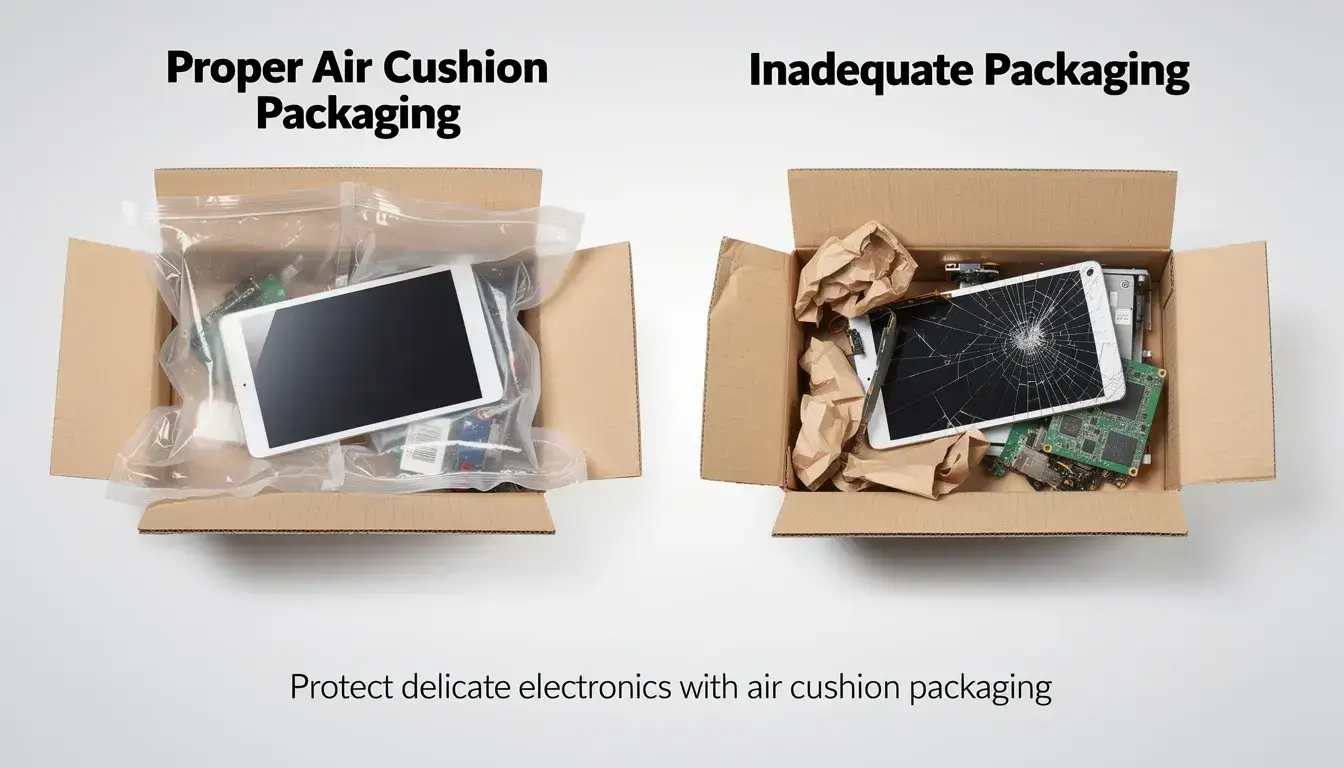
The superior cushioning performance of air pillows stems from their ability to distribute impact forces across the entire surface area. When products experience drops or impacts during shipping, air cushions compress to absorb energy while maintaining protective barriers around fragile products. This dynamic response provides better protection than static materials like foam or paper fill.
Air cushion packaging excels in versatility, protecting everything from delicate electronics and glassware to automotive components and jewelry. The materials adapt to irregular shapes, fill corners effectively, and provide consistent protection regardless of package orientation during transit.
Foam Packaging for Fragile Items
Foam packaging stands out as one of the most reliable solutions for protecting fragile items during shipping. Engineered from materials like expanded polystyrene (EPS) and polyethylene foam, foam packaging offers exceptional cushioning and shock absorption, making it ideal for safeguarding delicate products such as electronics, glassware, and jewelry. Its versatility allows it to be custom-molded or cut to fit the unique shape and size of each item, ensuring a snug, secure fit that minimizes movement and reduces the risk of product damage.
Businesses benefit from foam packaging’s cost-effective nature, as it provides extra protection without significantly increasing shipping costs. The lightweight properties of foam help keep overall package weight down, further optimizing shipping expenses. Whether shipping a single piece of fine jewelry or a batch of sensitive electronics, foam packaging materials deliver the right balance of protection and efficiency.
By integrating foam packaging into their shipping processes, companies can significantly lower the risk of returns due to damage, enhance customer satisfaction, and protect their brand reputation. For fragile products that demand the highest level of care, foam packaging remains a trusted, proven solution.
Securing Packages with Bubble Wrap
Bubble wrap is a staple in the world of protective packaging, renowned for its ability to secure packages and shield fragile items from the rigors of shipping. Each layer of bubble wrap acts as a cushion, absorbing shocks and impacts that could otherwise result in product damage during transit. This makes bubble wrap an excellent choice for a wide range of items, from small electronics to larger, more delicate goods.
One of the key advantages of bubble wrap is its cost-effectiveness. It provides reliable protection without adding significant weight or expense to shipments. Additionally, bubble wrap is both reusable and recyclable, offering an environmentally friendly option for businesses looking to reduce their ecological footprint while maintaining high standards of product protection.
By wrapping products in bubble wrap, companies can ensure that fragile items are well-protected throughout the shipping process, minimizing the risk of damage and returns. This not only helps control costs but also boosts customer satisfaction by ensuring products arrive in pristine condition.
Void Fill Solutions for Empty Spaces
Void fill solutions play a crucial role in protective packaging by filling empty spaces within shipping boxes and preventing products from shifting during transit. Common void fill materials include packing peanuts, air pillows, and paper fill, each offering unique benefits depending on the type of product being shipped. These materials are especially important for fragile items like electronics and glassware, which require extra protection to avoid breakage.
Using void fill is a cost-effective way to enhance product protection without significantly increasing shipping costs. Air pillows and packing peanuts, for example, are lightweight yet provide excellent cushioning, while paper fill can be easily shaped to fit around products of various sizes and forms. By customizing void fill solutions to match the specific needs of each shipment, businesses can ensure that their products remain secure and undamaged, regardless of the journey’s length or handling conditions.
Incorporating void fill solutions not only reduces the risk of product damage but also helps maintain a professional presentation upon delivery, reinforcing a company’s commitment to quality and customer care.
AIRFILL Technologies: Leading Innovation in Protective Packaging
AIRFILL Technologies stands as the industry leader in protective packaging innovation, bringing over 15 years of engineering excellence and manufacturing expertise to businesses worldwide. Located at 1816 Railroad Street, Corona, CA 92878, AIRFILL Technologies has revolutionized how companies approach product protection and sustainable packaging solutions.
The company’s comprehensive product line includes the AirWave systems for high-volume operations, QuickFill machines designed for medium-scale businesses, and the groundbreaking EcoGuard collection that delivers premium protection using 100% recycled materials. AIRFILL carries a comprehensive range of protective packaging materials to meet diverse industry needs. Each system incorporates patented technology that ensures consistent air pressure, optimal cushioning performance, and reliable operation in demanding industrial environments.
AIRFILL’s engineering team developed proprietary inflation technology that creates stronger, more durable air cushions compared to conventional systems. The advanced equipment produces air pillows with superior seal strength and burst resistance, ensuring products remain protected throughout extended shipping journeys. These innovations have earned AIRFILL Technologies recognition as the preferred packaging partner for leading e-commerce companies, manufacturers, and logistics providers.
The company’s manufacturing capabilities span multiple facilities equipped with state-of-the-art equipment and quality control systems. This infrastructure enables AIRFILL Technologies to deliver consistent product quality while scaling production to meet growing demand for sustainable protective packaging solutions.
Customer support represents a cornerstone of AIRFILL’s business model. The company provides comprehensive training, ongoing technical support, and preventive maintenance services to ensure maximum equipment performance and operational efficiency. AIRFILL has extensive experience in building trusted relationships and providing tailored services to their clients across different industries. This commitment to customer success has established long-term partnerships with businesses across diverse industries.
For immediate assistance with protective packaging needs, contact AIRFILL Technologies at (844) 247-3455 to speak with packaging experts who can assess your requirements and recommend optimal solutions.
Industry Applications of Protective Packaging
Different industries face unique challenges in protecting their products during shipping and storage. AIRFILL Technologies’ versatile protective packaging materials serve diverse sectors, each with specific protection requirements and performance standards.
E-commerce and Retail
E-commerce operations depend on protective packaging to maintain customer satisfaction and minimize return costs. Online retailers shipping consumer electronics, fragile items like glassware and ceramics, and oddly-shaped products rely on air cushion packaging to ensure products arrive in perfect condition. The ability to create custom-fitted protection for each order improves the customer experience while reducing damage claims.
Major e-commerce platforms report significant improvements in customer satisfaction scores after implementing AIRFILL air cushion systems. The combination of superior protection and reduced packaging waste aligns with consumer expectations for responsible shipping practices.
Automotive Industry
Automotive manufacturers and parts suppliers require robust protection for components ranging from delicate sensors to heavy transmission parts. AIRFILL’s protective packaging materials protect items during shipping from manufacturing facilities to dealerships and repair centers. The solutions accommodate irregular shapes while providing consistent protection against vibration and impact damage.
Spare parts distribution centers particularly benefit from on-demand air cushion systems, as they handle thousands of different component types requiring customized protection approaches. The efficiency gains from rapid packaging creation support just-in-time inventory management strategies.
Electronics and Technology
The electronics industry demands the highest protection standards due to product sensitivity and high replacement costs. AIRFILL’s protective packaging solutions protect semiconductors, computer equipment, and consumer devices from electrostatic discharge while providing cushioning against physical impacts.
Technology companies shipping servers, networking equipment, and specialized electronics rely on AIRFILL’s consistent protection quality to maintain product reliability and customer confidence. The ability to create protective barriers that conform to complex equipment shapes ensures comprehensive protection.
Healthcare and Pharmaceuticals
Medical device manufacturers and pharmaceutical companies face stringent regulatory requirements alongside protection needs. AIRFILL’s materials provide contamination barriers while maintaining product integrity during shipping. Temperature-sensitive medications benefit from the insulation properties of air cushion packaging combined with specialized thermal control systems.
Healthcare supply chains depend on reliable protection to ensure medical devices and pharmaceutical products reach facilities in perfect condition. The cost of damaged medical equipment or compromised medications far exceeds packaging investments, making quality protective packaging essential.
Food and Beverage
Food and beverage companies use AIRFILL’s protective packaging to maintain product freshness and prevent contamination during transit. Air cushion systems provide gentle cushioning for delicate items like wine bottles and gourmet foods while creating barriers against external contaminants.
The food industry’s increasing focus on sustainable packaging aligns perfectly with AIRFILL’s EcoGuard collection, enabling companies to protect products while supporting environmental objectives.
Sustainable Packaging Solutions and Environmental Benefits
AIRFILL Technologies leads the industry in developing sustainable protective packaging that delivers superior performance while minimizing environmental impact. The company’s EcoGuard collection demonstrates how advanced engineering can create materials that protect products better than traditional options while supporting corporate sustainability goals.

The EcoGuard collection utilizes 100% recycled materials without compromising protection quality or performance. These materials undergo rigorous testing to ensure they meet the same strength and durability standards as conventional protective packaging while providing end-of-life benefits through recyclability and biodegradable options. Fiber-based void fill and paper-based packaging in the EcoGuard line facilitate easy recycling for consumers, supporting eco-friendly practices.
Air cushion packaging inherently offers environmental advantages compared to traditional alternatives. Life cycle analysis shows air cushions generate 60% lower carbon footprint compared to expanded polystyrene or bubble wrap. The reduction comes from decreased material usage, elimination of transportation weight for pre-made packaging, and improved recyclability.
AIRFILL’s commitment to environmental responsibility extends beyond material composition to manufacturing processes. The company implemented energy-efficient production methods and waste reduction initiatives that minimize environmental impact throughout the product lifecycle. These efforts earned third-party certifications validating the company’s sustainability claims.
The elimination of PFAS chemicals from AIRFILL’s formulations addresses growing regulatory concerns while maintaining material performance. This proactive approach ensures customers can confidently use AIRFILL products in applications requiring environmental compliance without sacrificing protection quality.
Businesses implementing AIRFILL’s sustainable protective packaging report improved brand perception among environmentally conscious customers. The ability to provide superior product protection while demonstrating environmental responsibility creates competitive advantages in markets where sustainability influences purchasing decisions.
Compostable options within the EcoGuard collection break down naturally in commercial composting facilities, eliminating waste stream concerns for companies committed to zero-landfill objectives. These materials maintain protective properties throughout shipping while supporting circular economy principles.
Cost Benefits and Return on Investment
Quality protective packaging delivers measurable financial benefits that extend far beyond initial material costs. AIRFILL Technologies’ solutions provide compelling return on investment through reduced damage claims, optimized shipping costs, and improved operational efficiency.
Companies implementing AIRFILL air cushion systems typically experience 30% reduction in packaging costs combined with 85% fewer damage claims. This dual benefit creates substantial savings that quickly justify equipment investments while improving customer satisfaction scores.
A mid-size e-commerce company shipping 10,000 packages monthly reported annual savings exceeding $50,000 after switching to AIRFILL protective packaging. The savings resulted from reduced product returns, lower shipping costs due to optimized package sizes, and decreased labor costs from faster packing operations.
The on-demand nature of air cushion systems eliminates inventory carrying costs associated with traditional packaging materials. Businesses no longer need warehouse space for bulky packing peanuts or pre-inflated bubble wrap, freeing valuable real estate for revenue-generating inventory.
Labor efficiency improvements contribute significantly to ROI calculations. AIRFILL systems enable workers to pack products 40% faster while creating superior protection. This productivity gain allows companies to handle increased shipping volume without proportional increases in labor costs.
Shipping cost optimization occurs through reduced package weights and improved dimensional efficiency. Air cushions weigh significantly less than foam alternatives while providing better protection, reducing freight charges for weight-sensitive shipments. The ability to create custom-fitted protection eliminates wasted space in shipping boxes, optimizing dimensional weight calculations.
Insurance and liability cost reductions represent additional ROI components often overlooked in packaging decisions. Companies with documented damage reduction through quality protective packaging may qualify for lower shipping insurance rates and reduced liability exposure from customer injury claims related to damaged products.
The environmental benefits of sustainable packaging create intangible value through improved brand perception and regulatory compliance. Companies avoiding potential environmental fines or benefiting from sustainability incentives add to overall ROI calculations.
Ready to calculate your potential savings? Contact AIRFILL Technologies at (844) 247-3455 for a custom ROI analysis based on your specific shipping volume and product requirements.
Implementation and Equipment Solutions
AIRFILL Technologies provides comprehensive equipment solutions designed to integrate seamlessly into existing packaging operations. The company’s range of on-demand air cushion systems accommodates businesses from small e-commerce startups to high-volume distribution centers.
The QuickFill series serves businesses shipping 100-1,000 packages daily, offering compact design and simple operation while delivering professional-quality protective packaging. These systems require minimal training and fit into standard packing stations without facility modifications.
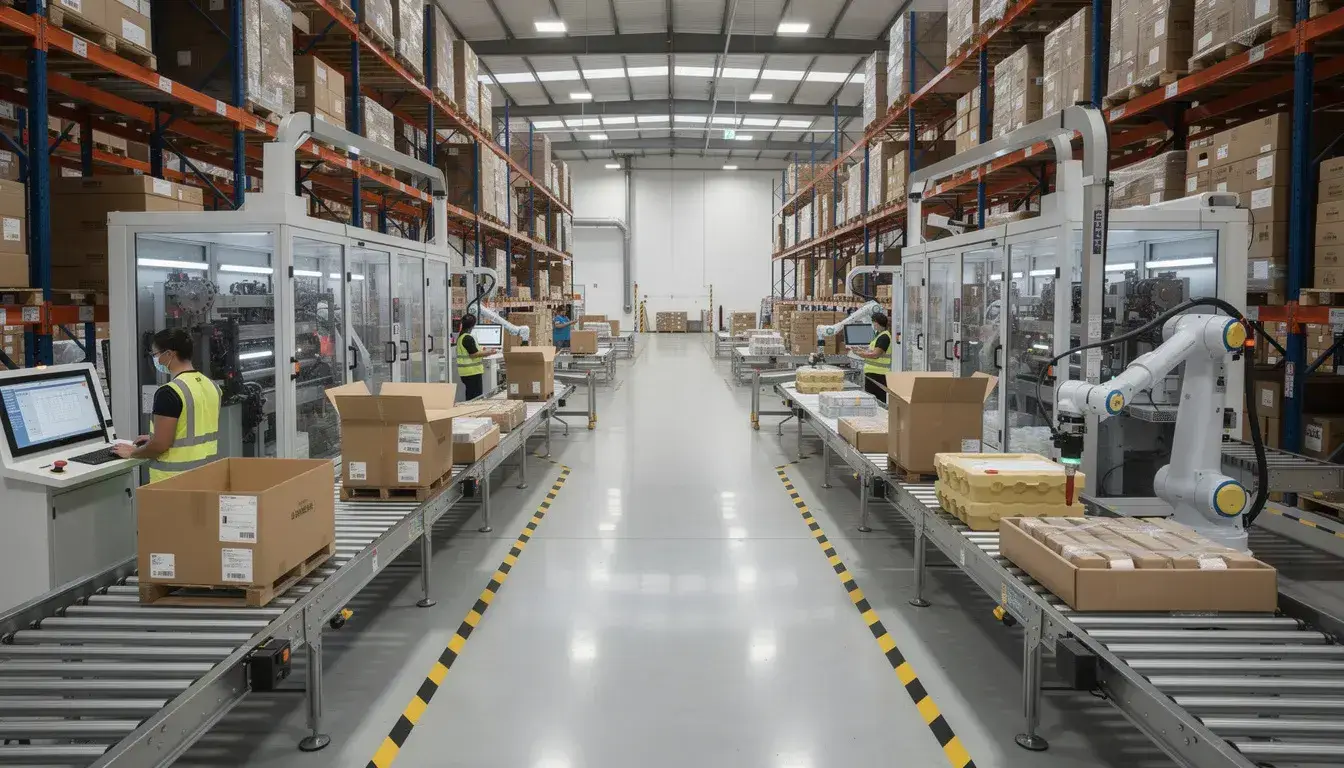
AirWave systems target medium to high-volume operations shipping 1,000+ packages daily. These robust machines feature automated operation, multiple material options, and integration capabilities with existing conveyor systems. The equipment delivers consistent performance in demanding industrial environments while maintaining ease of use.
Installation typically takes one day with AIRFILL’s experienced technicians handling equipment setup, calibration, and initial operator training. The company provides comprehensive training programs ensuring operators understand proper technique for optimal protection and efficiency.
Maintenance requirements remain minimal with AIRFILL equipment designed for reliability and longevity. Preventive maintenance schedules and readily available parts ensure continuous operation while minimizing downtime costs. Remote diagnostic capabilities enable proactive support and rapid issue resolution.
Technical support includes 24/7 hotline access, on-site service, and remote troubleshooting to maintain peak performance. AIRFILL’s service network ensures rapid response times regardless of customer location.
Equipment specifications accommodate various facility requirements including electrical configurations, space constraints, and integration needs. The modular design allows for future expansion as business requirements grow.
Choosing the Right Protective Packaging Materials
Selecting optimal protective packaging requires careful evaluation of product characteristics, shipping conditions, and business objectives. AIRFILL Technologies helps customers review their current packaging practices and shipping methods to recommend improvements, navigating this decision process through comprehensive assessment and recommendation services.
Product fragility represents the primary selection criterion, with different materials offering varying protection levels. Delicate electronics require maximum cushioning and anti-static properties, while durable goods may need basic void fill to prevent movement during transit. Understanding your products’ vulnerability guides material selection decisions.
Weight considerations affect both protection requirements and shipping costs. Heavy items need robust cushioning to absorb impact forces, while lightweight products benefit from gentle restraint preventing movement without excessive cushioning weight.
Shipping distances and handling intensity influence material durability requirements. Products crossing multiple distribution centers face more handling events requiring consistent protection throughout extended journeys.
Environmental exposure during shipping affects material selection for temperature-sensitive products or those requiring moisture barriers. AIRFILL’s materials accommodate various environmental challenges while maintaining protection integrity.
Cost analysis must consider total ownership costs including material prices, storage requirements, labor efficiency, and damage reduction benefits. The lowest material cost rarely represents the most economical solution when factoring operational efficiency and protection performance.
Environmental impact considerations increasingly influence packaging decisions as companies balance protection needs with sustainability objectives. AIRFILL’s EcoGuard collection enables businesses to achieve both goals without compromise.
Getting Started with AIRFILL Technologies
AIRFILL Technologies makes implementation simple through comprehensive consultation and support services designed to ensure successful adoption of advanced protective packaging solutions.
The consultation process begins with detailed assessment of current packaging practices, product requirements, and business objectives. AIRFILL’s packaging experts analyze shipping volume, damage rates, and operational challenges to recommend optimal solutions.
Free trial programs allow businesses to test AIRFILL equipment and materials in their actual operations before making purchase decisions. These trials demonstrate performance benefits while enabling staff training and process optimization.
Implementation timelines typically span 2-4 weeks from order confirmation to full operation, including equipment delivery, installation, training, and optimization. AIRFILL’s project management approach ensures smooth transitions with minimal operational disruption.
Ongoing support includes regular check-ins, performance monitoring, and optimization recommendations to maximize benefits from protective packaging investments. The company’s commitment to customer success extends throughout the entire relationship.
Training programs accommodate various learning styles and operational requirements, from basic operator instruction to comprehensive management education covering ROI analysis and process optimization strategies.
Ready to revolutionize your protective packaging? Schedule your free consultation with AIRFILL packaging experts today. Call (844) 247-3455 or visit the AIRFILL Technologies showroom at 1816 Railroad Street, Corona, CA 92878 to see the latest innovations in protective packaging technology.
Frequently Asked Questions
What’s the difference between air cushion packaging and traditional bubble wrap?
Air cushion packaging offers superior protection through on-demand inflation that creates custom-fitted barriers around products, while bubble wrap provides fixed protection levels with limited adaptability. Air cushions also offer 95% storage space savings since they’re created as needed, whereas bubble wrap requires significant warehouse space for pre-made inventory. Additionally, air cushions typically provide better puncture resistance and more consistent protection over time.
How much warehouse space can I save with on-demand air packaging systems?
On-demand air packaging systems typically save 95% of warehouse space compared to traditional pre-made protective materials like packing peanuts or pre-inflated bubble wrap. A business that previously allocated 1,000 square feet for packaging material storage could reduce this to just 50 square feet with AIRFILL’s on-demand systems, freeing valuable space for revenue-generating inventory.
Are AIRFILL’s eco-friendly materials as protective as traditional options?
Yes, AIRFILL’s EcoGuard collection made from 100% recycled materials meets or exceeds protection standards of conventional packaging materials. Extensive testing demonstrates these sustainable materials provide equivalent cushioning, puncture resistance, and durability while offering environmental benefits. The materials undergo the same rigorous quality control processes to ensure consistent protection performance.
What’s the typical ROI timeline for implementing AIRFILL environmentally friendly packaging solutions?
Most businesses see positive ROI within 6-12 months of implementation. The timeline depends on shipping volume, current damage rates, and material costs, but typical savings include 30% reduction in packaging costs, 85% fewer damage claims, and 40% faster packing times. Higher-volume shippers often achieve ROI in 3-6 months due to greater operational efficiency gains.
Do you provide training and ongoing support for equipment maintenance?
AIRFILL Technologies provides comprehensive training during installation and ongoing support throughout the equipment lifecycle. This includes operator training, maintenance education, 24/7 technical support hotline, preventive maintenance scheduling, and access to certified service technicians. Remote diagnostic capabilities enable proactive support and rapid issue resolution to minimize any operational disruption.