For decades, packing peanuts were the default void fill solution for almost every shipping operation. They were cheap, widely available, and well-protected for most applications. Air pillows changed that math. On-demand inflatable packaging now outperforms peanuts on every meaningful operational metric except one (raw material price per cubic inch), and even that advantage disappears once the full cost stack is measured.
This guide compares air pillows and packing peanuts across six factors that drive packaging decisions in serious shipping operations: cost, protection, sustainability, packing speed, storage footprint, and customer experience. The verdict isn’t close, but the reasons matter more than the conclusion.
The Quick Verdict
For high-volume e-commerce, fulfillment, and 3PL operations, air pillows beat packing peanuts in nearly every scenario. The exceptions are narrow: very low-volume operations where labor cost is negligible, businesses with no DIM weight exposure, and operations where storage space is genuinely free.
For the rest of the shipping world, the question is no longer which solution wins. It’s how much the operation is overpaying by continuing to use packing peanuts.
What Are Air Pillows?
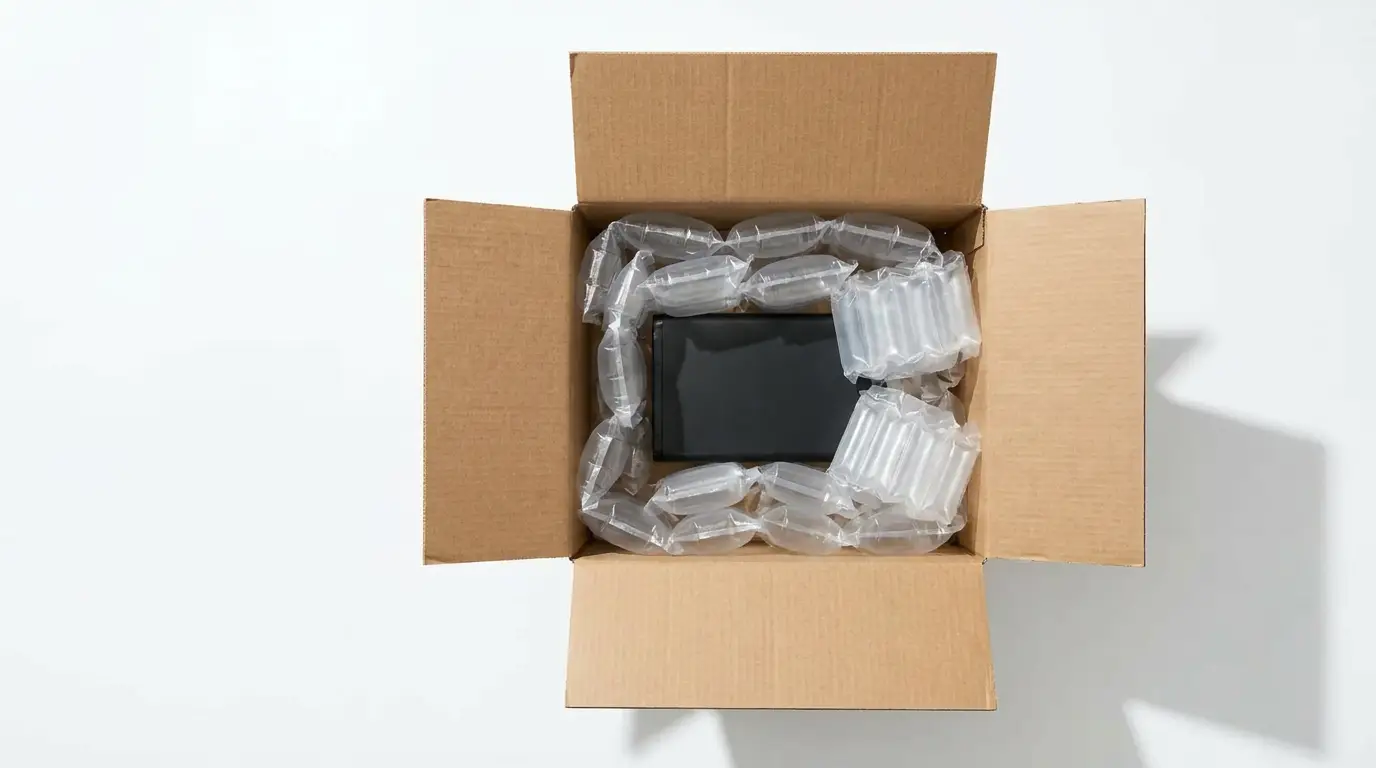
Air pillows are small, inflated plastic cushions, typically 4×8 inches up to 8×12 inches, used as void fill around products inside shipping cartons. They are produced from rolls of pre-formed plastic film, inflated on demand at the packing station using a small countertop machine. The packer drops the right amount of inflated material into the carton, the box gets sealed, and the shipment goes out.
The defining property of air pillows is that the cushioning material is mostly air. A roll of unfilled film smaller than a microwave produces thousands of pillows. The packaging doesn’t exist as inventory until the moment the packer needs it.
What Are Packing Peanuts?
Packing peanuts are small foam pieces (traditionally polystyrene, increasingly starch-based or biodegradable variants) used as loose fill in shipping cartons. They are stored in bulk, scooped or poured into cartons around the product, and rely on their collective volume to immobilize the contents.
Two main types are in common use:
Polystyrene peanuts are the traditional version. They are extremely lightweight, very cheap per cubic foot, and not biodegradable. Recycling options are limited because most curbside programs don’t accept them.
Starch-based or biodegradable peanuts dissolve in water and are compostable. They cost more than polystyrene, weigh significantly more (which affects DIM weight and freight cost), and can attract pests if stored improperly.
Both types share the same operational characteristics that increasingly make them a poor fit for modern shipping operations.
Cost Comparison
Material price per cubic foot is the only metric where packing peanuts win, and they win it decisively. A cubic foot of polystyrene peanuts costs roughly half as much as an equivalent volume of inflated air pillows, in raw-material terms.
That advantage disappears the moment you measure the full cost stack.
Labor cost. Scooping or pouring peanuts into a carton takes meaningfully longer than dropping in pre-inflated air pillows. For most operations, the difference is 15 to 30 seconds per package. At 500 packages per day, that amounts to 2 to 4 hours of additional labor, roughly half of a packer’s shift dedicated to shoveling foam.
DIM weight cost. Packing peanuts settle during transit, so operations typically overfill cartons to compensate. The result is larger boxes than necessary, which trigger higher DIM weight surcharges from carriers. Air pillows fill voids without settling, allowing for tighter carton sizing.
Storage cost. A pallet of packing peanuts protects 200 to 400 packages and consumes 64 cubic feet of warehouse space. The same protection from air pillows requires a film roll smaller than a microwave. At $10 to $20 per square foot of warehouse rent, the storage cost difference compounds quickly.
Damage cost. Peanuts shift during transit, which can leave portions of the product unprotected by the time the package reaches the customer. Air pillows immobilize products more effectively because they conform to the void space and stay in place.
When all four hidden costs are added to the material price, on-demand air pillow systems typically reduce total packaging cost by 20 to 40 percent versus packing peanuts.
Protection Comparison
For lightweight, non-fragile products, both air pillows and packing peanuts protect adequately. The differences emerge with fragile or irregularly-shaped items.
Air pillows conform to the void space and stay where they’re placed. They absorb shock, immobilize the product, and don’t shift during handling. For fragile items, they can be combined with inflatable bubble wrap or air column bags around the product itself for layered protection.
Packing peanuts rely on collective volume to protect, but they have a fundamental design problem: they shift. During transit, peanuts settle toward the bottom of the carton, which can leave the upper portion of the product unprotected. By the time a package has been through truck vibration, conveyor belt drops, and last-mile handling, the protection profile inside the carton may look very different from how the package was originally sealed.
Real-world damage rate data from operations that have switched typically shows a measurable improvement after replacing peanuts with air pillows for fragile shipments. The exact reduction varies by product mix, but operations shipping breakable items often report damage rate improvements of 30 to 60 percent.
For shock-sensitive electronics, glass, ceramics, or anything that can break from a four-foot drop, air pillows (especially in combination with air column bags or inflatable bubble wrap) deliver materially better protection than peanuts.
Sustainability Comparison
Sustainability is increasingly a procurement requirement, not just a marketing consideration. Both air pillows and packing peanuts come in sustainability-positioned variants, but the actual environmental profiles vary significantly.
Polystyrene peanuts have the worst environmental profile of any packing material in common use. They are made from petroleum-based foam, are not biodegradable, are rejected by most curbside recycling programs, can break apart into smaller pieces that contaminate waterways, and persist in landfills for centuries. Major retailers and corporate ESG programs increasingly prohibit polystyrene packaging in supplier contracts.
Starch-based or biodegradable peanuts improve significantly on polystyrene. They dissolve in water, are compostable in industrial facilities, and are made from renewable inputs. The drawbacks are weight (heavier than polystyrene, which affects freight cost and DIM weight), price (typically 2x to 4x the cost of polystyrene), and the reality that “compostable” requires industrial composting infrastructure that most municipalities don’t provide.
Standard air pillow film is recyclable through store drop-off programs that accept polyethylene plastic film, the same waste stream as plastic shopping bags. Not all curbside programs accept it.
Curbside-recyclable air pillow film is accepted in most municipal curbside recycling programs and meets the requirements of most corporate ESG commitments. The film is polyethylene-based and uses meaningfully less plastic per cubic foot of protection than peanut alternatives.
The sustainability winner depends on the specification. Curbside-recyclable air pillow film outperforms both polystyrene and starch-based peanuts on most environmental metrics that matter to procurement teams: total plastic volume per shipment, end-of-life recyclability, and freight footprint per package.
Speed and Labor Comparison
The labor difference between air pillows and packing peanuts is one of the largest practical impacts of switching, and one of the most overlooked in initial cost analyses.
Packing peanuts. The packer has to position the carton, scoop or pour peanuts to the right level, place the product, add more peanuts to fill the remaining void, level the top, and seal the carton. The peanuts shift during this process, which often requires the packer to add more than originally intended. The mess factor (stray peanuts on the floor, on the product, in the air) adds further friction.
Air pillows. The packer pulls the right length of pre-inflated pillow chain from the inflation machine, drops it into the carton, places the product, drops in additional pillows to fill the remaining void, and seals the carton. No scooping, no settling, no cleanup.
For most operations, the time difference is 15 to 30 seconds per package. At 500 packages per day, that’s 2 to 4 labor hours saved daily. Over a year, that translates to a meaningful reduction in either packing line headcount or peak season overtime.
For high-volume operations, the labor savings alone often justify the switch within 60 to 90 days, regardless of any other cost factor.
Storage Footprint Comparison
The storage difference between air pillows and packing peanuts is dramatic and rarely captured in the initial cost analysis.
A pallet of packing peanuts protects 200 to 400 packages and consumes approximately 64 cubic feet of warehouse space. Multiple pallets are typically needed to support a busy fulfillment operation. The peanuts also need to be stored in environments that prevent moisture exposure, pest infestation, and static cling.
A roll of unfilled air pillow film with an equivalent shipping-protection capacity is roughly the size of a small kitchen appliance. The same level of inventory coverage that requires a dozen pallets of peanuts can be achieved with a single shelf footprint using air pillow film rolls.
For warehouses paying $10 to $20 per square foot per year, this storage difference is real money. For operations that have outgrown their current warehouse footprint, recovering the square footage from packaging supplies often delays the need for expansion.
Customer Experience Comparison
The unboxing experience matters more than most operations leaders initially appreciate, particularly for direct-to-consumer e-commerce brands.
Packing peanuts create a memorable but negative unboxing. They spill onto floors, cling to products through static, generate cleanup work for the customer, and communicate “industrial shipping” rather than “considered packaging.” For brands that emphasize quality or premium positioning, peanuts undermine the message at the moment of the customer’s first impression.
Air pillows are clean, contained, and easy to dispose of. They don’t shed, spill, or cling. The customer pulls them out of the carton, one or two pieces at a time, and either recycles or discards them.
For B2B shipments to a warehouse or another business, this factor matters less. For e-commerce shipments to end consumers, it matters a great deal. Operations serving consumer brands frequently see noticeable improvements in customer satisfaction scores after switching from peanuts to air pillows, even when no other change is made to the packaging.
When Do Packing Peanuts Still Make Sense?
In fairness, there are scenarios where packing peanuts remain a reasonable choice:
Very low-volume operations. A small business shipping 5 to 10 packages per day may not generate enough labor savings to justify any inflation system, even a no-cost lease. The peanuts work, the volume is manageable, and the operational complexity is low.
Operations with extreme cost sensitivity and minimal damage rates. A business shipping inexpensive, durable products in high volume may find that peanuts provide adequate protection at the lowest material cost.
Highly irregular shapes that can’t be effectively cushioned with pillows. Some unusual product geometries are easier to pack with loose fill than with structured cushions.
For nearly every other shipping operation, the case for staying on peanuts has weakened significantly over the last decade. The labor cost gap has widened, the DIM weight pressure from carriers has intensified, the sustainability requirements have tightened, and the cost of capital for inflation machines has dropped to zero through no-cost lease programs.
Frequently Asked Questions
Are air pillows more expensive than packing peanuts?
Material cost per cubic inch is higher for air pillows, but total cost of ownership is lower in nearly every operation that ships at scale. When labor, storage, DIM weight, and damage costs are included, on-demand air pillow systems typically reduce total packaging cost by 20 to 40 percent versus packing peanuts.
Do air pillows protect better than packing peanuts?
For most product categories, yes. Air pillows conform to void space and stay in place, while packing peanuts shift during transit and can leave portions of the product unprotected. The protection difference is most pronounced for fragile or irregularly-shaped items.
Are packing peanuts more sustainable than air pillows?
It depends on which versions are being compared. Polystyrene peanuts have a worse environmental profile than any common air pillow film. Starch-based biodegradable peanuts and curbside-recyclable air pillow film are roughly comparable on sustainability, though air pillows typically use less total plastic per shipment and have a smaller freight footprint.
Can I switch from packing peanuts without buying an inflation machine?
Yes. Most modern air pillow inflation machines are available through no-cost lease programs where the equipment is provided alongside the film supply contract. There is no upfront capital investment required.
How long does the switch from peanuts to air pillows take?
Most operations complete the changeover in 1 to 2 weeks from contract signature to live operation. This includes machine delivery, packer training, and a brief period where both systems run in parallel.
Will my customers notice the difference?
For e-commerce shipments to end consumers, almost always yes. Air pillows produce a meaningfully cleaner unboxing experience than packing peanuts, with no static cling, no spillage, and no cleanup. For B2B shipments, the customer-facing impact is smaller but still positive.
What happens to old packing peanut inventory when we switch?
Most operations run down their existing peanut inventory over the first month of operating both systems. Once the peanut supply is exhausted, the operation runs entirely on air pillows. There is no need to dispose of usable inventory.
The Bottom Line
The comparison between air pillows and packing peanuts isn’t really about which one protects products better, though air pillows usually do. It’s about which one fits the modern shipping operation: scaled, labor-conscious, DIM-aware, sustainability-required, and customer-facing.
Packing peanuts solved a problem that operations had in 1985. Air pillows solve the problem operations have in 2026. The two solutions overlap on the basic job of filling empty space inside a carton, but everything around that job has changed: how much labor costs, how carriers bill, how much warehouse space costs, what customers expect, and what regulators require.
For operations still using packing peanuts at scale, the practical question is rarely whether to switch. It’s how quickly the changeover can happen and how much the operation is overpaying every month it stays on the old system.
Request a packaging cost analysis to see what your operation is actually spending on peanuts when all four hidden costs are included.