If you are sourcing protective packaging for a fulfillment or distribution operation, the air pillow vs bubble wrap question comes up fast. Both materials cushion products during shipping. Both are widely available. But they perform very differently at scale, and the choice between them has a real impact on cost, speed, and damage rates.
This post breaks down how each material actually performs across the factors that matter most to operations and procurement teams: protection quality, storage and handling, pack speed, cost per shipment, and sustainability profile.
What Is Bubble Wrap?
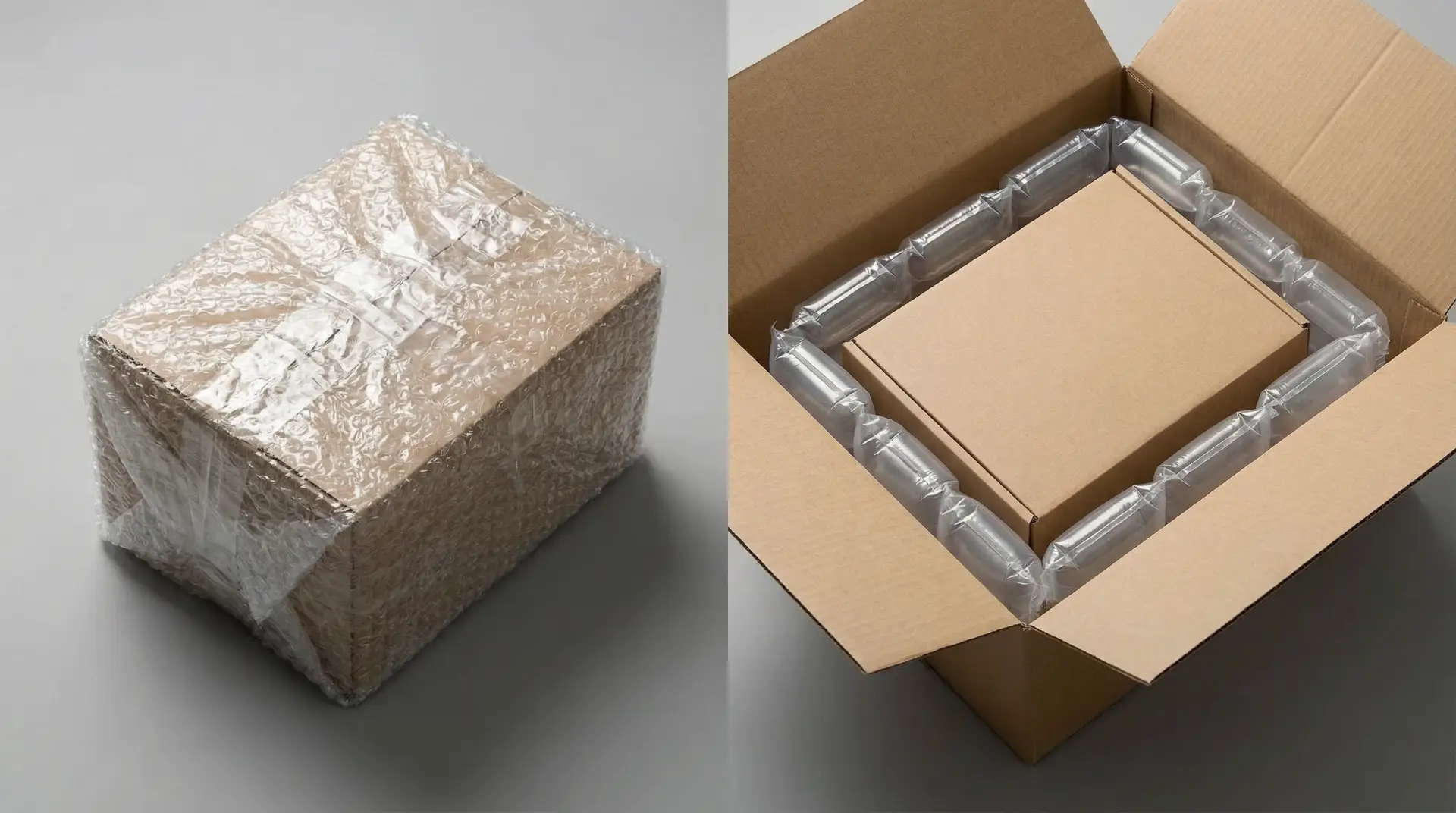
Bubble wrap is a plastic film material pre-filled with small pockets of air. It ships to you already inflated, typically on large rolls or in perforated sheets. The air pockets absorb impact during transit by compressing on contact, which distributes force away from the product inside the box.
It has been the default protective packaging material for decades, and it still gets the job done for certain applications. The challenge is that it was designed for low-volume wrapping tasks, and it tends to show its weaknesses when operations scale up.
What Are Air Pillows?
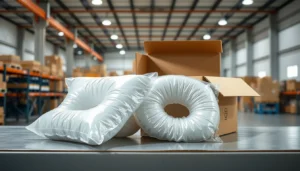
Air pillows are inflatable plastic cushions produced on demand at the pack station using an air pillow machine. The film rolls arrive flat and compact. The machine inflates them in real time as your team packs orders. Air pillows function as void fill, cushioning, and blocking and bracing material depending on how they are placed inside the shipping box.
Because they ship and store flat, they consume a fraction of the space that pre-inflated bubble wrap requires. A single roll of air pillow film can produce hundreds of cushions without taking up floor or shelf space until the moment they are needed.
Protection: How Each Material Performs
Both air pillows and bubble wrap provide cushioning through air compression. The real difference is in how that protection is deployed.
Bubble wrap excels when you are wrapping a single fragile item closely, conforming the material around curves, corners, and delicate surfaces. It is a good choice for hand-packing custom orders with irregular shapes that need direct contact protection on all sides.
Air pillows excel at void fill and suspension. When a product has empty space around it in the box, air pillows hold it in place and prevent movement during transit. Movement is one of the leading causes of shipping damage, and air pillows are specifically designed to eliminate it by filling that void tightly. For standard boxed shipments at volume, air pillows consistently deliver strong damage protection results.
The key distinction: bubble wrap wraps, air pillows fill and suspend. For most high-volume fulfillment environments, filling and suspending is the primary packaging need, which puts air pillows at an advantage for the majority of shipments.
Storage and Handling
This is where the gap between the two materials becomes most visible in an actual operation.
Bubble wrap arrives pre-inflated. That means you are essentially storing and paying to ship air. Large rolls of bubble wrap consume significant warehouse floor space or shelving, and replenishment orders require substantial receiving and storage bandwidth. The more volume you run, the worse this problem gets.
Air pillow film rolls are flat and compact. A box of film rolls that would fit on a single shelf can produce thousands of cushions. Your storage footprint for packaging materials shrinks considerably, and replenishment orders are smaller and easier to manage. For operations with constrained warehouse space, this difference alone is often enough to drive a switch.
Pack Speed
Pack speed matters in any fulfillment operation where labor is a real cost. Bubble wrap requires your team to unroll material, tear or cut it, wrap individual items, and tuck excess material into the box. Each of those steps adds seconds per shipment, and those seconds compound across thousands of daily orders.
Air pillows are produced at the pack station and placed directly into the box. There is no cutting or wrapping required for standard void fill applications. Packers pull the cushions they need and place them. Most operations that switch from bubble wrap to air pillows see a meaningful improvement in pack time per unit, which translates directly into labor cost savings.
Cost Per Shipment
A direct material price comparison between bubble wrap and air pillow film can be misleading because it ignores the full cost picture. To compare them accurately, you need to factor in storage costs, labor time per shipment, inbound freight on packaging materials, and waste disposal costs.
When you calculate the total cost per shipment across all those factors, air pillows consistently come out ahead for operations running meaningful volume. The material itself is generally cost-competitive with bubble wrap. The savings in labor, storage, and freight on incoming packaging materials push the total cost-per-shipment figure lower for air pillows in most real-world comparisons.
This is why procurement teams that do a full cost analysis rather than a simple line-item comparison almost always move toward air pillows once they run the numbers.
Sustainability
Sustainability has become a real procurement consideration, not just a marketing point. Bubble wrap uses a substantial amount of plastic by volume because it arrives pre-filled with air. Air pillow film uses significantly less plastic material to produce the same protective effect because the film itself is thin and the cushion is formed with air that costs nothing and weighs nothing.
The transportation footprint difference also matters. Shipping flat film rolls versus pre-inflated bubble wrap means fewer trucks on the road to deliver equivalent protective capacity. For operations with sustainability reporting requirements or ESG commitments, this is a meaningful data point in the packaging evaluation.
AIRFILL’s EcoGuard film line is designed specifically for operations that need strong protective performance alongside a reduced environmental profile. It delivers reliable cushioning with a lower plastic consumption rate per shipment.
When Bubble Wrap Still Makes Sense
Bubble wrap is not the wrong choice in every situation. For small-batch custom orders where individual items need to be carefully wrapped by hand, it remains a practical material. Retail gift packaging, fragile artisan products, and one-off specialty shipments are reasonable use cases.
Where bubble wrap struggles is in the high-volume fulfillment environment. Speed, storage, cost, and sustainability all point in the same direction once you reach meaningful daily shipment volume.
The Bottom Line
For operations running hundreds or thousands of shipments per day, air pillows outperform bubble wrap on nearly every metric that affects the bottom line. They protect products effectively by eliminating void and preventing movement in the box. They pack faster. They store efficiently. And they cost less per shipment when you factor in the full picture.
If your operation is still running on bubble wrap as the primary void fill and cushioning material, it is worth taking a serious look at what an air pillow system would do to your per-shipment packaging costs.
Frequently Asked Questions
Are air pillows better than bubble wrap for shipping?
For most B2B shipping operations, air pillows outperform bubble wrap on cost per shipment, storage footprint, and packing speed. Bubble wrap still holds an edge for wrapping irregularly shaped or highly fragile individual items, but for void fill and cushioning in standard boxes, air pillows are the stronger choice.
Is bubble wrap or air pillows more sustainable?
Air pillows use significantly less plastic film by volume compared to bubble wrap. Because they are inflated on demand, they ship flat and take up far less storage and transportation space, which also reduces carbon output across the supply chain.
Can air pillows replace bubble wrap in a fulfillment center?
Yes. Most fulfillment operations that switch from bubble wrap to air pillows report faster pack times, lower material costs, and better use of floor space. The transition typically requires an air pillow inflation machine and a brief adjustment period for pack station staff.
Ready to Compare Your Current Packaging Costs?
AIRFILL Technologies works with operations teams and procurement managers to build air pillow packaging systems that fit their volume, product mix, and budget. If you want to see what your cost per shipment looks like with an air pillow system in place, we can walk through the numbers with you.
Call us at (844) 247-3455, email paul@airfilltechnologies.com, or submit an inquiry here and we will get back to you quickly.
Related Reading:
Air Pillow Packaging: The Ultimate Guide for Businesses
What Is Void Fill Packaging? Types, Benefits and Best Practices
Air Pillow vs Foam Inserts: Which Is Right for Your Operation?
5 Signs Your Business Is Overspending on Packaging