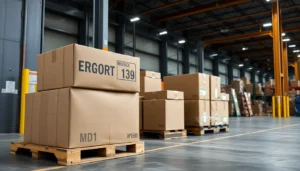
Most packaging is validated by shipping it and seeing what breaks. That works, slowly and expensively, and it produces a damage rate rather than an answer.
Package testing standards exist to compress that feedback loop. Rather than waiting for a season of returns, packaging testing subjects packaged products to a controlled sequence of the hazards they will meet in distribution and tells you whether the design survives before you commit to it.
This guide covers the protocols that matter, what each test method actually measures, and how to read results in a way that changes your packaging rather than just filing a certificate.
Why Packaging Testing Exists
A shipment experiences a predictable set of hazards between your dock and the customer: it is dropped, stacked under load, vibrated for hours on a vehicle, pushed across conveyors, and exposed to temperature and humidity swings.
Package testing standards reproduce those hazards in a defined, repeatable sequence. That repeatability is the point. Two packaging solutions tested to the same standard test method can be compared directly, and a result from one laboratory means the same thing as a result from another.
For businesses, packaging testing answers three commercial questions. Is this design good enough to ship? Which of two designs is better? And can we remove material without crossing the line into damage? The third question is where testing usually pays for itself, because it is the only rigorous way to reduce packaging cost without gambling on the damage rate.
The Two Standards Families That Matter
Two organisations dominate transit packaging testing in North America.
ISTA: International Safe Transit Association
The International Safe Transit Association publishes test protocols organised into series, each representing a different level of rigour.
1 Series non-simulation integrity testing. These are integrity testing procedures rather than simulations of a real journey. ISTA 1A, the most commonly cited, applies drops and vibration to a packaged product as a robustness screen. It tells you a package is not fragile. It does not claim to represent a specific distribution channel.
2 Series partial simulation. Adds elements of real distribution, such as atmospheric conditioning, to the 1 Series framework.
3 Series general simulation. These test protocols represent actual distribution environments. ISTA 3A covers parcel delivery of packaged products shipped individually, which is the relevant standard for most ecommerce operations. It includes conditioning, drops sequenced by package weight and size, vibration, and shock.
6 Series member specific. Protocols developed for particular retailers and carriers. ISTA 6-Amazon.com, including the SIOC variants, is the recognised route for products intended to ship in their own container.
7 Series development. Used for comparing designs during development rather than for pass or fail certification.
For most businesses shipping parcels, ISTA 3A is the meaningful benchmark and ISTA 1A is a useful, cheaper screen during development.
ASTM: Standard Test Methods
ASTM International publishes the underlying standard test method documents that specify how an individual test is performed.
ASTM D4169 is the umbrella standard practice for performance testing of shipping containers and systems. Rather than a single test, it defines a distribution cycle assembled from the hazards a shipment will meet, then applies an assurance level that sets the severity. Assurance Level I is most severe, Level III least. Choosing the distribution cycle and assurance level correctly is most of the work.
Individual ASTM test methods that appear inside those cycles include:
- ASTM D5276: free fall drop testing of loaded containers
- ASTM D642: compression testing of shipping containers
- ASTM D999: vibration testing of shipping containers
- ASTM D4332: atmospheric conditioning of packaging materials and containers before testing
ISO 4180 fills a similar role internationally, defining general rules for a complete distribution test series.
The practical relationship is straightforward: ISTA gives you a named protocol to run and cite, ASTM gives you the standard test method for each individual procedure inside it.
The Package Drop Test: The Most Revealing Test Method
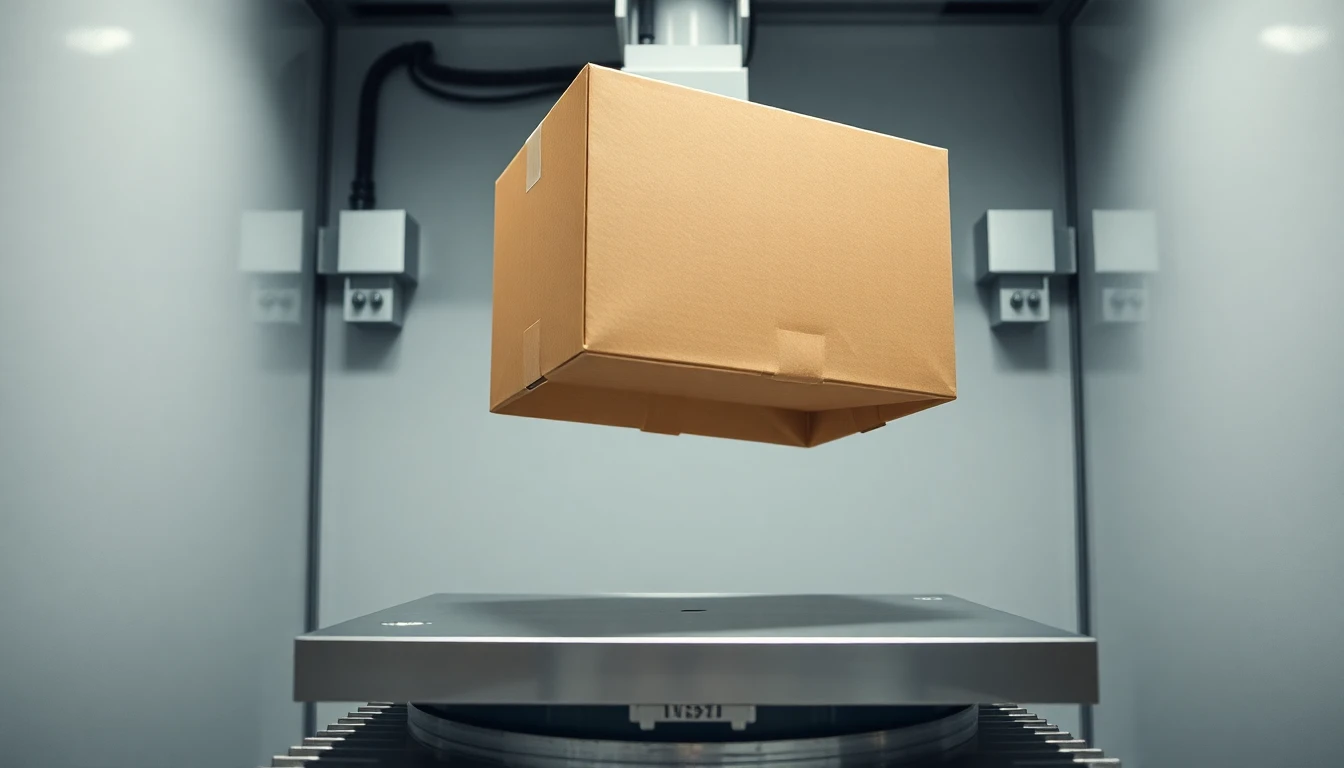
If you run one test, run a drop test. It surfaces more design faults per hour than anything else.
A package drop test drops the packaged product from a defined height onto a rigid surface in a defined sequence of orientations. Drop test standards specify height by weight and size of the package, so heavier packages are dropped from lower heights, reflecting real handling.
A standard drop test sequence works through all the ways a package can land:
- One corner
- The three edges radiating from that corner
- All six faces
Amazon's widely applied requirement for packaged products is a simpler version of the same idea: a 3 foot drop test across six orientations, with the product required to remain undamaged and sellable.
Drop test results are diagnostic if you read them properly:
Failure on corner or edge drops, survival on faces. Corner protection is under-specified. Energy is concentrating at a point rather than distributing.
Product damage with an intact carton. The outer packaging is fine and the internal cushioning or void fill is inadequate. The product is moving inside the box and striking the wall.
Carton seam or closure failure. Board grade or closure method is wrong for the weight.
Progressive damage across the sequence. The packaging is absorbing energy but not recovering. This is common with materials that crush permanently on first impact and then offer no protection for subsequent drops.
That last pattern is worth dwelling on, because it distinguishes cushioning types. Materials that deform permanently protect once. Materials that recover, including air cushions, retain protective capability across a sequence of impacts, which matters because real shipments are not dropped only once.
Compression Testing and Stacking Strength
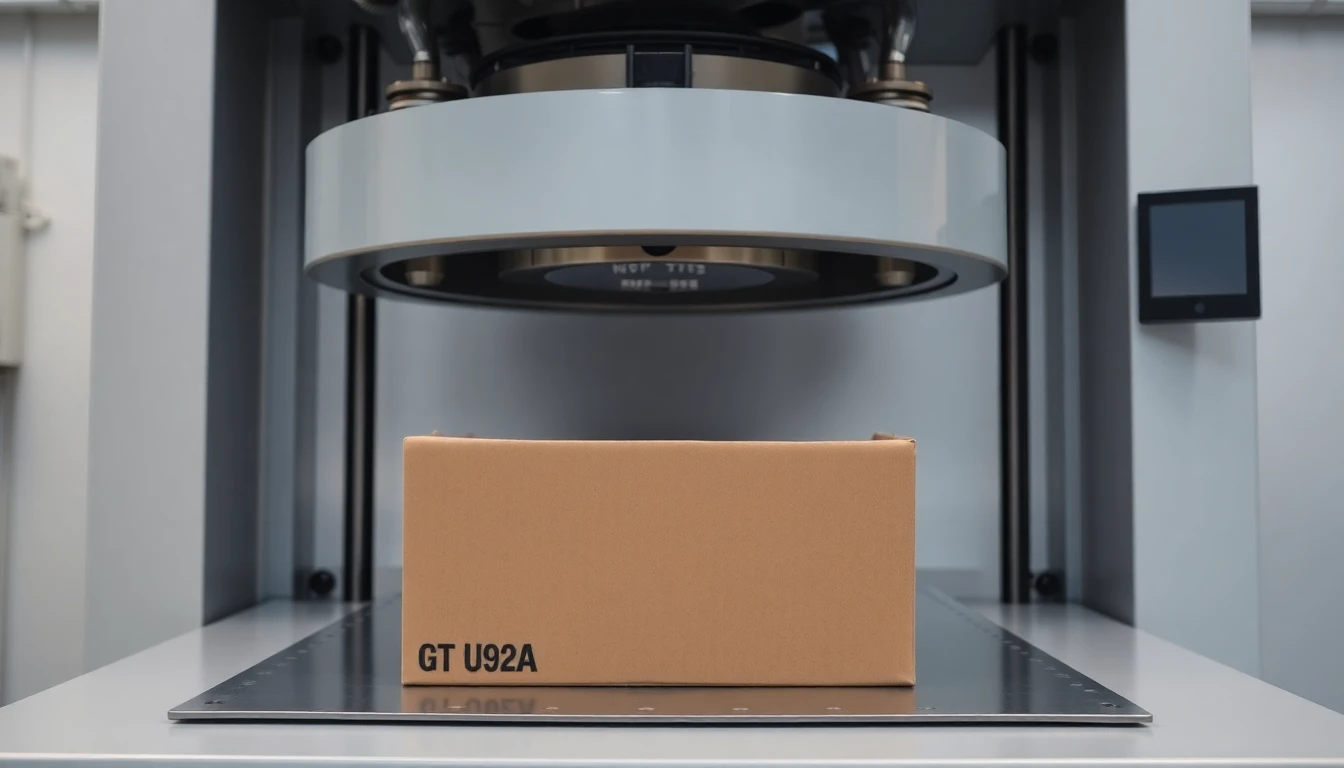
Drop testing gets attention because the failures are dramatic. Compression testing catches the failures that happen quietly in a warehouse or a trailer.
Compression testing applies a steadily increasing load to a shipping container until it fails, measuring the maximum load it supports. It answers whether your carton survives being at the bottom of a stack for a week.
Two variables matter more than most teams expect. Humidity substantially reduces corrugated compression strength, which is why atmospheric conditioning to ASTM D4332 precedes the test. Time under load matters too: a carton that holds a load briefly may fail under the same load sustained for days, so safety factors are applied to laboratory results.
Compression performance is largely a function of the board specification and, importantly, of what is inside. A carton packed so its contents help carry the load performs very differently from one where the contents sit below the load path and the walls carry everything.
Vibration, Conditioning and the Rest of the Cycle
Vibration testing reproduces hours of transport on a vehicle. It surfaces different failures than drop testing does: abrasion where a product rubs against packaging materials, fasteners loosening, settling that opens up void space, and resonance where a product and its cushioning amplify motion at particular frequencies. Vibration is the test that finds the packaging that looked fine on day one and had migrated by delivery.
Atmospheric conditioning places packaged products in a controlled temperature and humidity environment before mechanical testing. Testing a carton at laboratory conditions when it will ship through a humid summer overstates its performance.
Incline or horizontal impact testing reproduces the longitudinal shocks of rail transport and rough handling, relevant mainly for palletised freight.
Together these make up the distribution cycle. Running a drop test alone validates against one hazard; running the cycle validates against the journey.
Primary Packaging vs Transport Packaging
Packaging testing applies at more than one level, and being clear about which level you are testing prevents a lot of wasted effort.
Primary packaging is what contacts the product: the bottle, the pouch, the blister, the retail carton. Primary packaging testing is concerned with containment, barrier performance, product safety and shelf life rather than with distribution hazards.
Transport packaging is the shipping container and everything inside it that exists to get the product there intact. This is where ISTA and ASTM distribution protocols apply.
The two interact. A robust transport package can compensate for fragile primary packaging, and strong primary packaging allows a lighter transport build. Testing packaged products as a complete system, primary packaging inside transport packaging, is the only way to see that trade-off. Testing the shipper alone tells you the corrugated boxes survived, which is not the same as the product surviving.
Compatibility Testing and Flexible Packaging
Two areas fall outside the standard drop and compression cycle but belong in a complete packaging testing programme.
Compatibility testing checks that the product and its packaging do not degrade each other over time. Compatibility testing matters most for liquids, chemicals and anything with a long shelf life, where migration, corrosion or softening develops over weeks rather than in a laboratory afternoon.
Flexible packaging requires its own test methods. Pouches, films and bags fail differently from rigid corrugated boxes: seal strength, puncture resistance and flex durability determine performance, and integrity testing methods such as burst and leak testing are used rather than compression. Flexible packaging inside a shipper still needs the transport cycle run on the combination.
Testing Packaged Products Across the Supply Chain
Packaging technology has moved faster than most testing programmes have. Ecommerce shifted the dominant hazard profile from palletised freight moving between distribution centres to individual packaged products travelling through parcel networks with far more handling per unit.
That matters when choosing test protocols. A packaging design validated for retail outlet shipment on pallets is not automatically fit for single parcel delivery systems, because the hazards genuinely differ: more drops, more orientations, less stacking. If your channel mix has shifted toward direct-to-consumer, your test protocols should have shifted with it.
Industry standards have kept pace here, which is why ISTA maintains separate protocols for individual packaged products and for palletised loads. Choosing the protocol that matches how the goods actually move through your supply chain is more important than choosing the most rigorous one available.
In House Testing Between Formal Test Procedures
Formal laboratory testing is the right tool at decision points. Between those points, informal in house testing catches most problems at almost no cost.
A workable in house programme needs very little: a measured drop height marked on a wall, a hard floor, a consistent drop sequence, and a written record. Follow the published drop test standards for orientation and sequence so results stay comparable, and test the same way every time.
What in house testing gives you is fast iteration. A packaging engineer can run four configurations in an afternoon and identify which one to send for formal validation, rather than paying laboratory rates to discover that the first design was obviously under-specified. It also builds the habit of validating changes, which is where most damage problems originate: a substituted board grade or a changed void fill material that nobody re-tested.
What in house testing cannot give you is a certificate. Where a retailer, carrier or customer requires evidence, or where product safety is a factor, accredited laboratory testing to a named standard test method is the only thing that counts.
Reading Results Without Fooling Yourself
A few traps recur.
Testing one sample. Packaging performance varies. A single pass is weak evidence, and a single failure may be an outlier. Test a sample set.
Testing the wrong configuration. Test the packaged product as it actually ships, with real product, real fill weight and real closure. A test using a dummy load of different mass distribution proves little.
Certifying rather than learning. A pass to ISTA 3A tells you the design cleared the bar. It does not tell you by how much. If your goal is to reduce packaging materials, you need to know the margin, which means testing to failure or testing several reduced configurations.
Ignoring the conditioning step. Skipping conditioning inflates results, particularly for corrugated.
Treating the standard as the goal. The standard is a proxy for your distribution channel. If your real damage data disagrees with your test results, the test protocol is not matching your channel, and your damage data is the more reliable source.
Designing Packaging That Passes
Testing tells you what failed. Fixing it is a design problem, and the failures cluster into a small set of causes.
Movement inside the shipping container. The most common cause of product damage with intact outer packaging. The fix is complete void fill so contents cannot shift. A packed carton should produce no movement when shaken.
Direct contact between product and carton wall. Any contact point transmits impact directly. Cushioning is required on all six sides.
Insufficient recovery. Cushioning that crushes on first impact leaves the product unprotected for the rest of the sequence. Air cushions recover their shape after compression, which is why they hold up across a full drop test sequence rather than only the first drop.
Under-specified board. Compression failures are almost always a board grade problem.
Void created by settling. Packaging that fits at the bench but settles during vibration testing creates space the product can then move into. Void fill that conforms and stays in place addresses this.
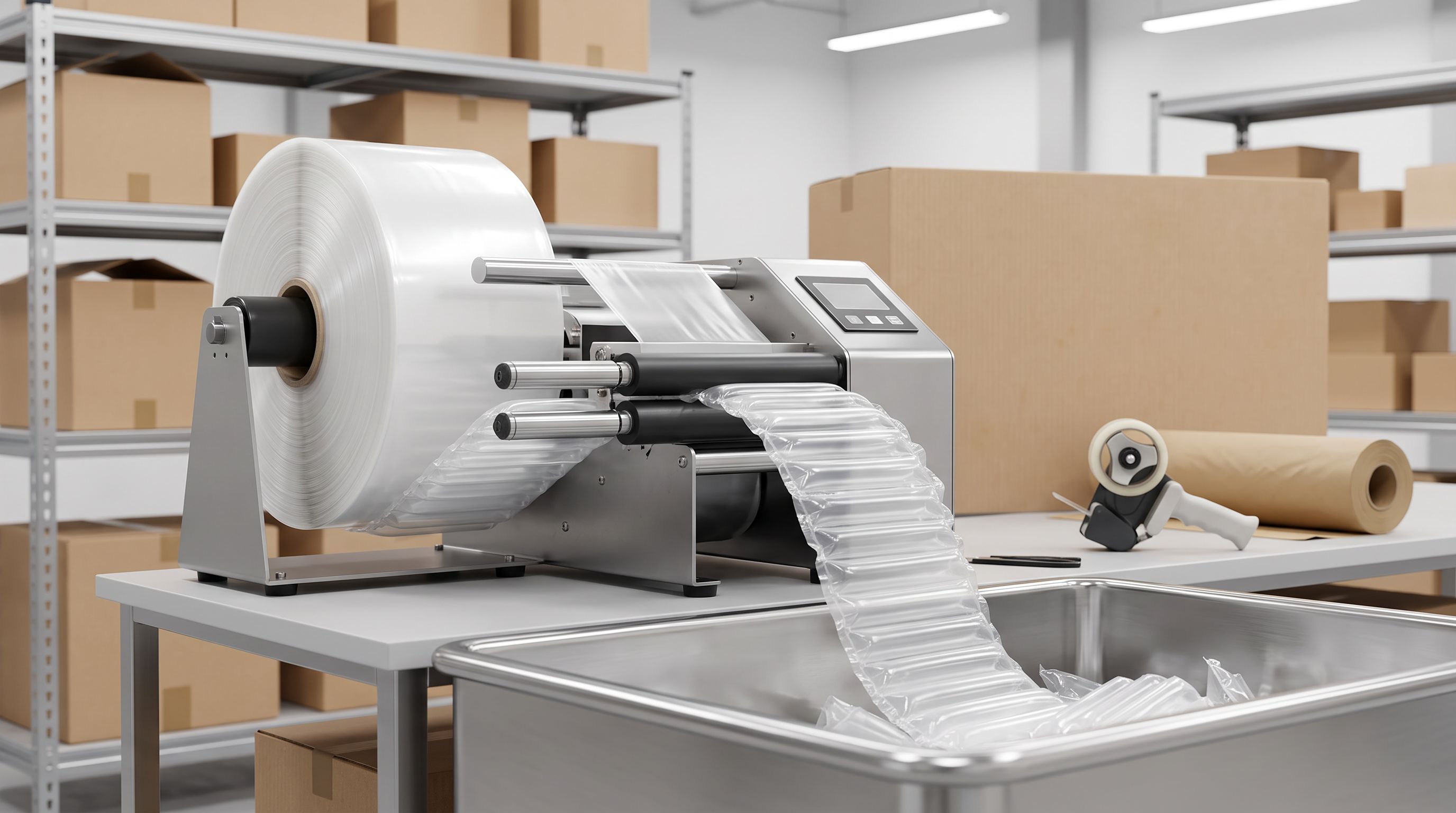
Air pillows and air cushions are void fill and immobilisation solutions specifically. They fill space, prevent movement, distribute impact and recover between shocks. They are not structural blocking for heavy items, and packaging solutions for heavy goods still need proper bracing. Our guides to void fill packaging and choosing the right air pillow size cover specifying that correctly, and protective packaging materials compares the material options.
Building Testing Into Your Packaging Process
You do not need a laboratory to benefit from package testing standards.
Run in-house drop tests during development. A measured drop height and a hard floor will catch most gross failures at almost no cost. Follow the standard sequence so results are comparable.
Use accredited laboratory testing for decisions that carry risk. New product launches, packaging cost reduction programmes, retailer compliance and customer requirements justify formal testing protocols.
Re-test after any change. A different board supplier, a new carton size or a change of void fill material invalidates prior results.
Reconcile testing against real damage data. Your returns and claims data is the ground truth. If they disagree with your test results, investigate the gap. Our guide to shipping damage claims covers capturing that data usefully.
Test the reduced configuration deliberately. The commercial value of packaging testing is knowing how much material you can remove safely. That only comes from testing designs that are lighter than your current one.
What Package Testing Standards Are Worth
Package testing standards convert packaging from an opinion into a measurement. They let you compare two packaging solutions objectively, satisfy a retailer or carrier requirement with evidence, and reduce packaging materials with a defensible basis rather than a hope.
For most operations the practical programme is modest: informal drop testing during development, formal ISTA or ASTM testing at decision points, and a standing habit of reconciling test results against actual damage data.
AIRFILL Technologies supplies air pillow and air cushion packaging systems used as the void fill and immobilisation layer inside tested packaging designs. If you are validating or reducing your packaging and want to work through the void fill specification, talk to our team.