Most businesses that ship physical products are paying for packaging twice — once for the materials, and again for the storage space, labor, and dimensional weight charges those materials quietly create. On-demand packaging systems were built to close that gap. Instead of buying pre-made boxes and bulk void fill in fixed sizes, you produce the right-sized protection at the moment of packing, tailored to each order.
This guide explains what on-demand packaging is, how the machines and materials work together, and why a growing number of fulfillment operations are making the switch. If your packaging process feels like it's fighting your margins, this is the system worth understanding.
What Is On-Demand Packaging?
On-demand packaging is a method of producing protective materials — air pillows, air cushions, void fill, and right-sized boxes — exactly when and where you need them, rather than buying them pre-inflated or pre-formed in bulk. A compact machine sits on or near your packing line and creates packaging on the spot, sized to the product and the parcel.
The shift sounds small. The operational difference is not. Pre-made packaging forces every order into a limited set of box sizes and filler types. On-demand packaging flips that: the packaging adapts to the product, not the other way around. That single change ripples through shipping costs, storage space, labor, and customer satisfaction.
For e-commerce sellers, 3PLs, and manufacturers shipping mixed catalogs, on-demand packaging systems remove the guesswork. You stop over-packing small items and under-protecting fragile ones. Every box leaves the line with protection matched to what's inside it.
How On-Demand Packaging Systems Work
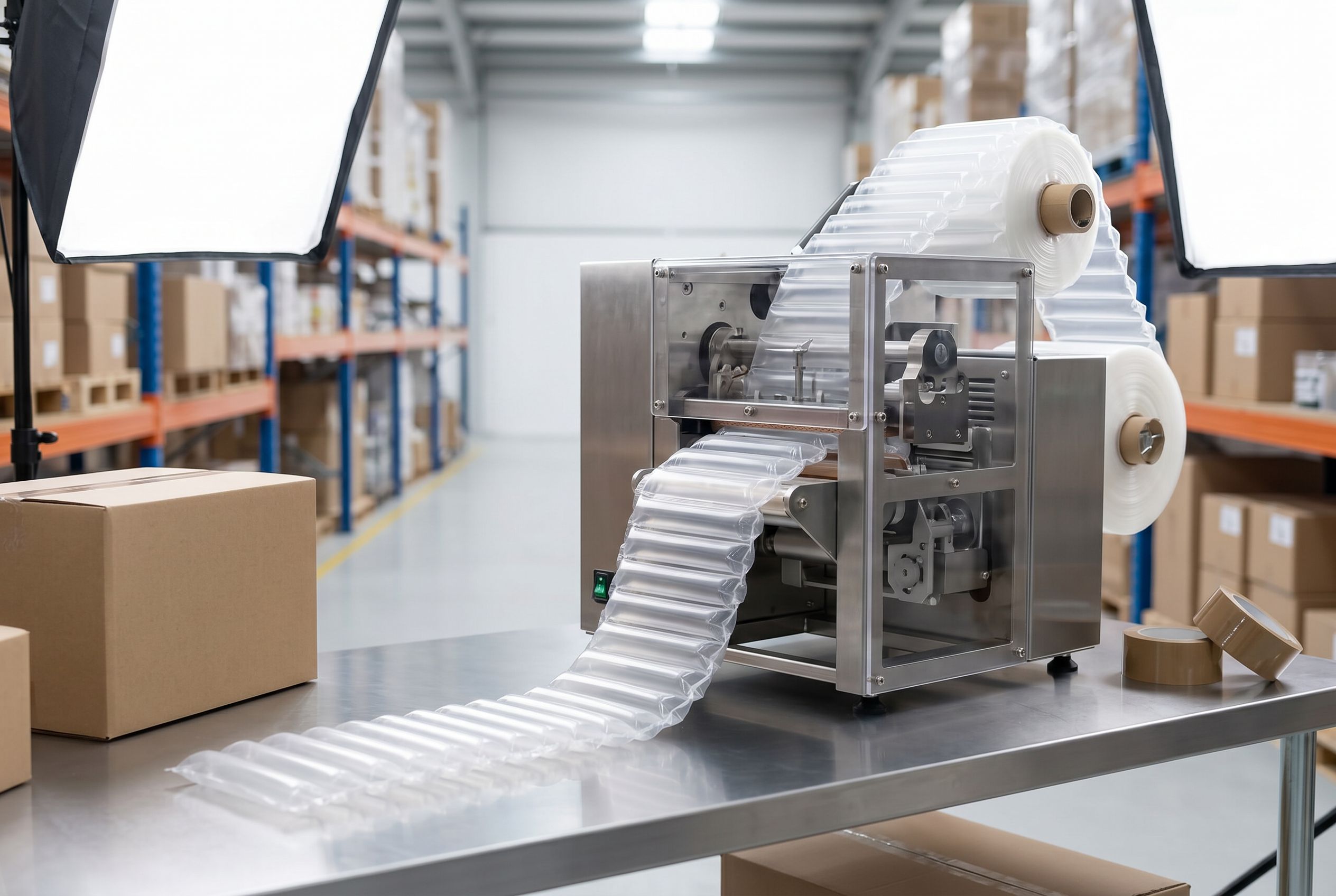
At the center of every on-demand setup is a machine — an air pillow or air cushion inflator, a void fill dispenser, or an automated box-sizing system. Each one converts a compact input (flat film on a roll, or fanfold material) into finished packaging in seconds.
A typical air pillow machine pulls film from a roll, inflates it with air, and seals it into a continuous chain of cushions. The operator tears off what each box needs. Because the film ships flat and compact, one roll replaces many cartons of pre-inflated material — a major reduction in storage space and inbound freight.
Air cushion systems work on the same principle but produce sturdier, segmented cushions designed to wrap or block-and-brace heavier items. Void fill systems focus on filling empty space quickly so products don't shift in transit. (For a deeper look at how void fill works, see our guide to void fill packaging.)
The integration into your packaging process is straightforward. The machine lives at the pack station; the operator inflates material as orders are packed. Throughput rises because there's no walking to a supply shelf, no cutting bubble film by hand, and no hunting for the right box. For high-volume operations, on-demand air cushion machines can save fulfillment centers thousands in labor and material every month.
The Core On-Demand Packaging Solutions
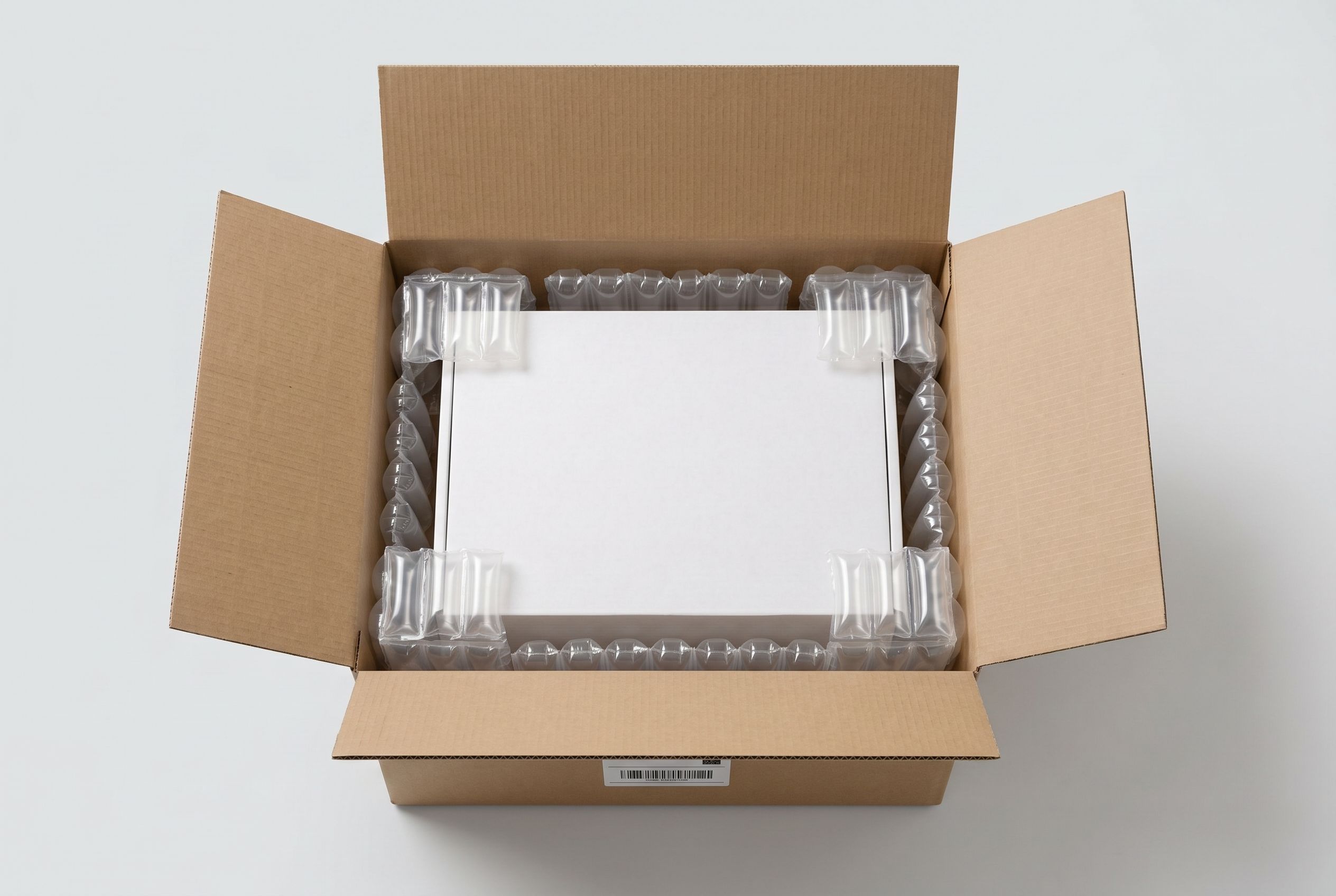
A complete on-demand packaging solution usually combines several material types. Each solves a different protection problem, and the right mix depends on what you ship.
Air Pillows
Air pillows are lightweight, inflated cushions ideal for filling void space and protecting non-fragile to moderately fragile items. They're fast to produce, add almost no weight to a parcel, and store as flat film until needed. For most e-commerce operations, air pillows are the workhorse of the packaging process. Our complete air pillow packaging guide covers sizing, applications, and best practices in detail.
Air Cushions
Air cushions deliver more structured protection. Segmented designs let you wrap products or build a protective barrier inside the box. They suit heavier or higher-value goods where block-and-brace performance matters more than raw fill speed. See our air cushion packaging guide for the full range of applications.
Void Fill
Void fill is about one thing: eliminating empty space so the product can't move. On-demand void fill replaces packing peanuts and loose fill, which are messy to store and slow to apply. Producing it on demand keeps your store room clear and your packing line moving. If you're weighing the options, our comparison of air pillows vs. packing peanuts breaks down cost and protection side by side.
Right-Sized Boxes
The final piece is the box itself. Right-sized boxes match carton dimensions to the order, which cuts the void you need to fill in the first place. Less air shipped means lower dimensional weight charges and less material consumed per parcel. Right-sized boxes and on-demand void fill work together: the smaller the box, the less fill each parcel needs.
Why Switch: The Key Benefits
The case for on-demand packaging comes down to measurable operational gains, not marketing claims. Here are the benefits operations consistently point to.
Lower shipping costs. Right-sizing and lightweight air pillows reduce dimensional weight, the metric carriers use to price parcels. Smaller, lighter packages cost less to ship — and that saving repeats on every order.
Reclaimed storage space. Flat film and fanfold materials take a fraction of the room that pre-made boxes and bulk peanuts demand. Many operations free up significant warehouse space simply by changing how packaging arrives and is stored.
Reduced labor. A streamlined packaging process with materials produced at the station cuts the steps per package. Faster packing means higher throughput without adding people, which is where much of the real cost reduction comes from.
Better product protection. Packaging matched to each product means fewer damage claims, fewer returns, and the customer satisfaction that comes from a parcel that arrives intact.
A smaller environmental footprint. Using only the material each order needs reduces waste, and right-sizing means less air and less raw material moving through the supply chain.
On-Demand vs. Bulk Packaging: The Real Comparison
The honest comparison isn't "on-demand is always cheaper per unit." Bulk peanuts and bubble film can look inexpensive on the invoice. The difference shows up in total cost.
Bulk packaging hides costs in storage space, labor time, over-sized boxes, and damage claims from inconsistent protection. On-demand packaging systems trade a slightly higher material-system cost for lower costs across all four of those categories. When you add up the full picture — not just the price of the film — on-demand typically wins for any operation shipping at consistent volume.
There's also a flexibility benefit. With bulk purchasing, you commit capital to a fixed mix of box sizes and fill before you know your order profile. On-demand packaging lets the machine produce whatever the next order needs, so you're never overstocked on the wrong size.
Reducing Shipping Costs and Dimensional Weight
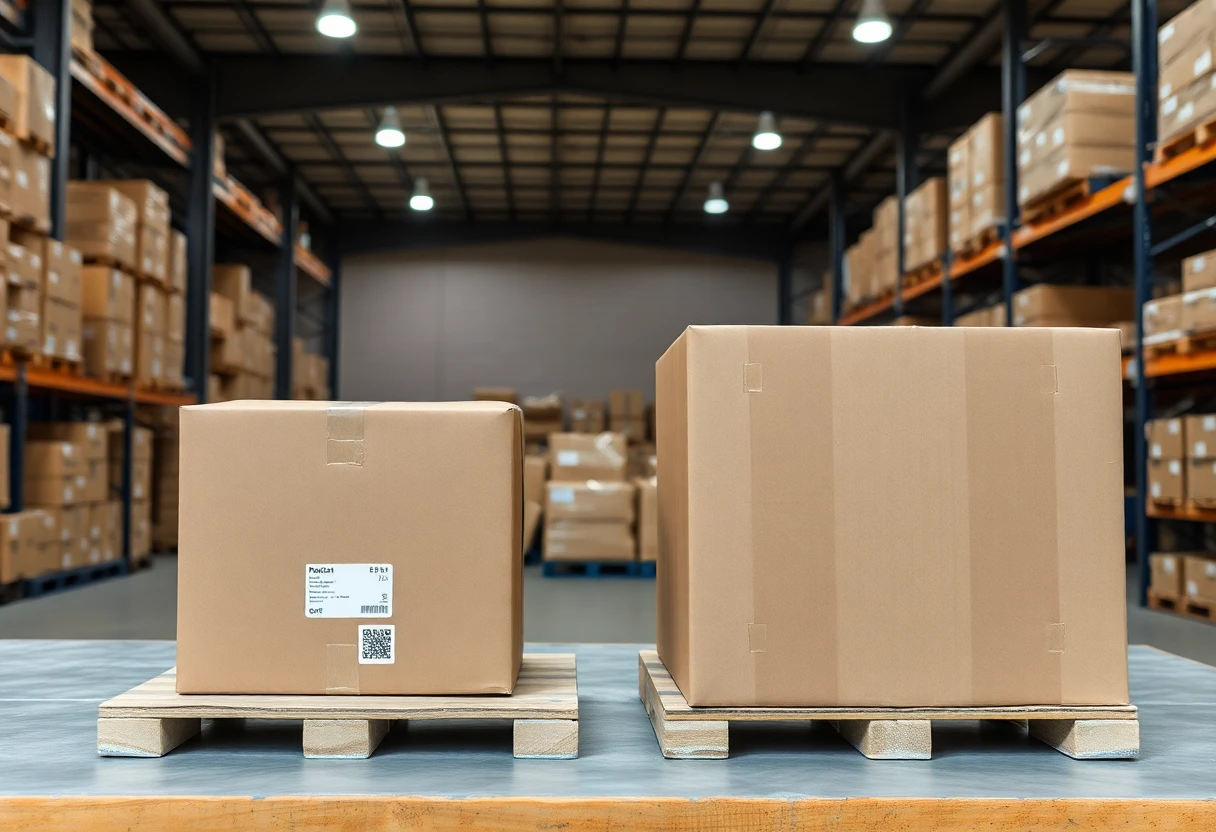
Dimensional weight is where many businesses overpay without realizing it. Carriers charge based on the greater of actual weight or volumetric size. Ship a small item in an oversized box filled with peanuts, and you're paying to ship air.
On-demand packaging attacks this directly. Right-sized boxes shrink the parcel; air pillows and air cushions fill only the remaining void with near-zero added weight. The result is a package priced closer to what the product actually weighs — a recurring reduction in shipping costs that compounds across your order volume. For a high-throughput shipper, even a small per-parcel saving becomes a meaningful number across a year.
Storage Space and Labor Efficiency
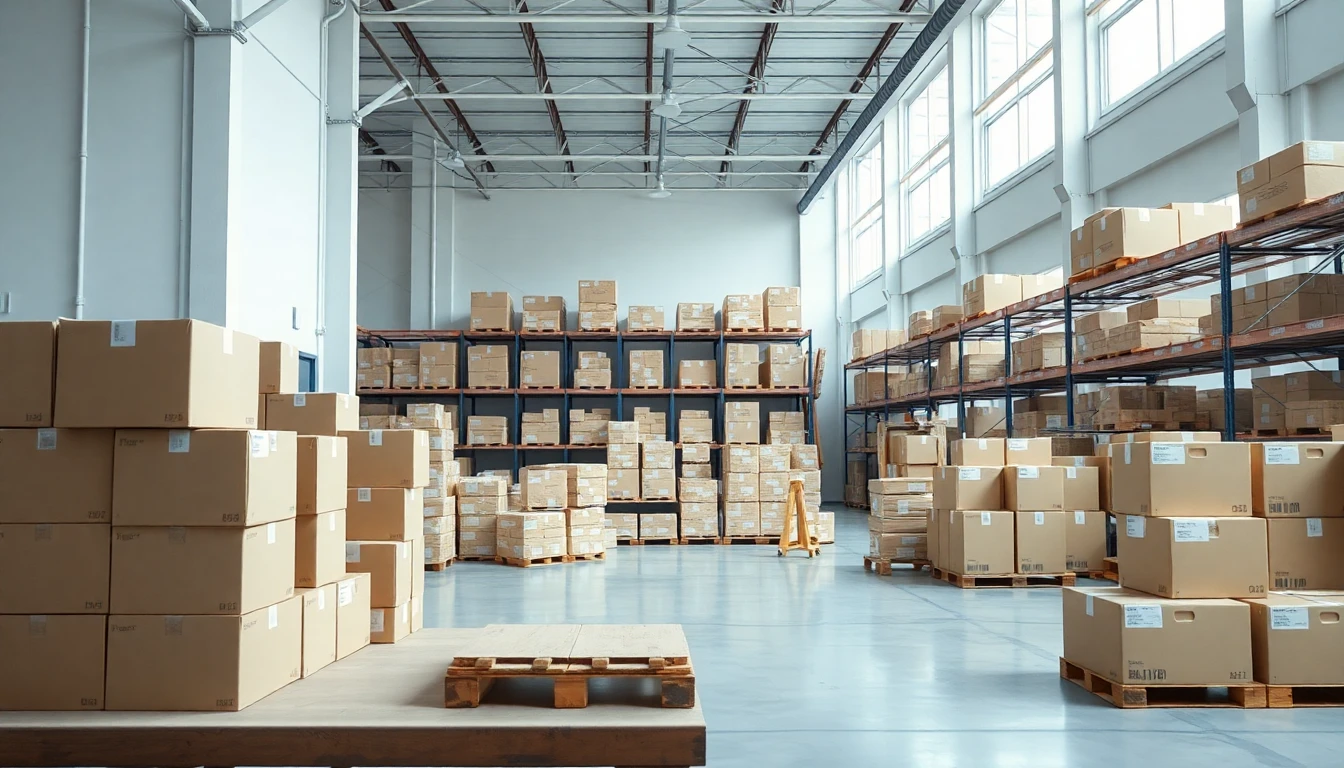
Walk through most packing operations and you'll find a corner consumed by cartons of pre-inflated cushioning or bags of loose fill. That's working capital sitting as inventory and floor space.
On-demand systems replace it with compact rolls of film. The footprint shrinks, reorder frequency drops, and the packing line gets faster because operators produce material at the point of use. For high-throughput environments and peak periods, that labor efficiency is often the deciding benefit — the system keeps pace when order volume spikes instead of becoming the bottleneck.
Sustainability Through Right-Sizing
Sustainability and cost reduction point in the same direction here. Using only the packaging each order requires means less material produced, shipped, and ultimately disposed of. Right-sizing reduces both the box and the fill.
AIRFILL's EcoGuard line extends this with curbside-recyclable materials, and our films are available in BPA-free and RoHS-compliant options for regulated supply chains. These are real, verifiable attributes — not vague eco claims — and they help operations meet sustainability commitments without compromising product protection.
On-Demand Packaging for E-Commerce and Peak Periods
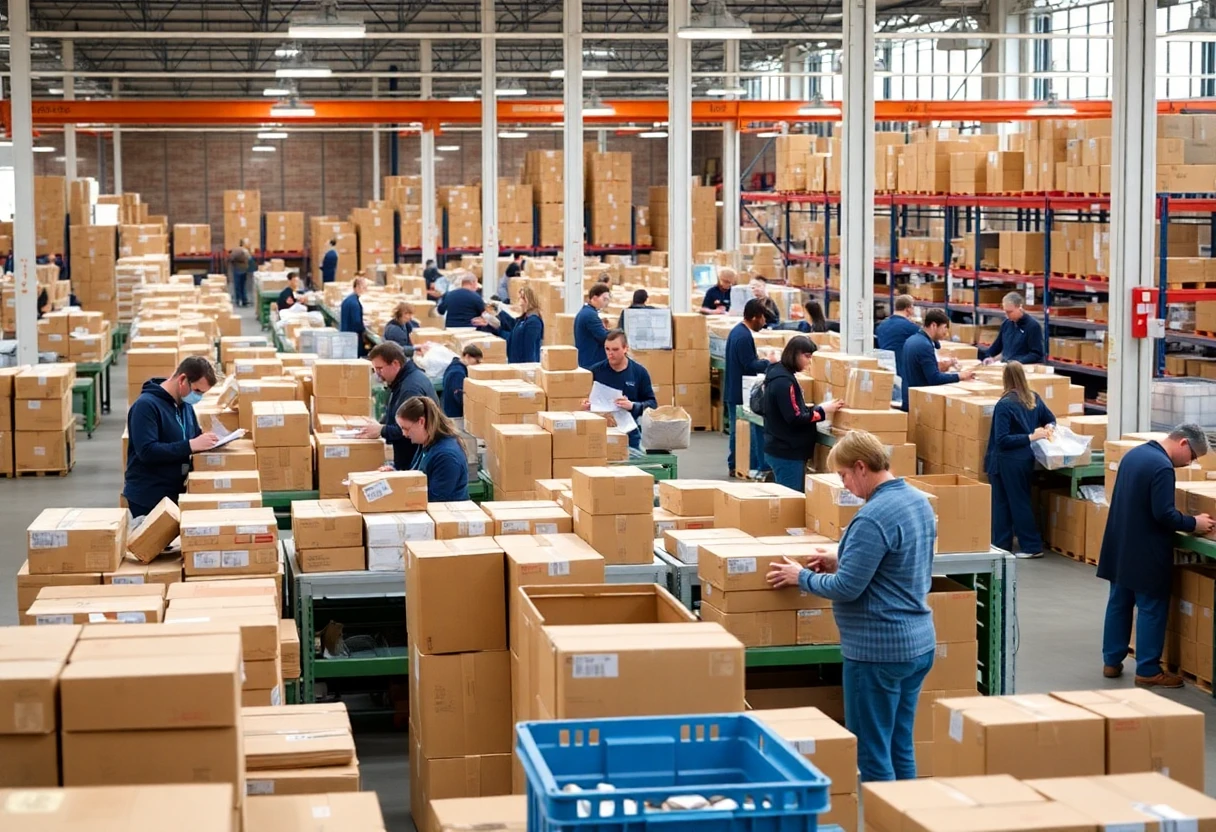
E-commerce demand is rarely flat. Volume spikes around promotions, holidays, and peak periods, and packaging is often the bottleneck that can't scale fast enough.
On-demand packaging systems handle variability well. Because material is produced as needed from compact film, you're not gambling on how many pre-made boxes of each size to stock before a peak. The system flexes with order volume, which keeps throughput high when it matters most and avoids the dead inventory that bulk purchasing leaves behind after the rush. Our inflatable packaging guide for e-commerce goes deeper on scaling packaging for online sellers.
Improving Customer Satisfaction
Packaging is the first physical touchpoint a customer has with your brand. A right-sized, well-protected, professional parcel signals competence. An oversized box rattling with loose fill signals the opposite — and damaged goods erode trust immediately.
By matching protection to the product, on-demand packaging reduces damage in transit and the returns that follow. Fewer damaged deliveries means higher customer satisfaction, better reviews, and lower reverse-logistics cost. The packaging that protects your product also protects your reputation.
Is On-Demand Packaging Right for Your Business?
On-demand packaging delivers the strongest return for operations that ship at consistent volume, handle a range of product sizes, or face high dimensional-weight charges and damage claims. Startups and lower-volume sellers can still benefit, but the payback accelerates with throughput.
The way to know is a straightforward analysis of your current packaging process: your material spend, your average box-to-product size ratio, your damage rate, and the labor time per package. Those four numbers usually reveal whether on-demand is the right packaging solution for you.
For qualifying high-volume operations, AIRFILL also offers a no-cost machine program — but the first step for any business is understanding the fit.
Frequently Asked Questions
How much space does an on-demand packaging machine need?
Most air pillow and void fill machines have a small footprint that fits at or beside a standard pack station. The bigger space saving comes from replacing bulk pre-inflated stock with compact rolls of film.
Is on-demand packaging more expensive than buying in bulk?
Per unit of film, sometimes. On total cost — including storage space, labor, dimensional weight, and damage claims — on-demand packaging typically costs less for businesses shipping at steady volume.
What products is on-demand packaging best for?
Air pillows and void fill suit most e-commerce goods; air cushions handle heavier or higher-value items; right-sized boxes benefit any operation shipping a range of product sizes.
Can on-demand packaging be sustainable?
Yes. Right-sizing reduces material use, and AIRFILL's EcoGuard curbside-recyclable and BPA-free options help meet sustainability and compliance requirements.
Getting Started With AIRFILL Technologies
AIRFILL Technologies designs on-demand packaging systems — air pillows, air cushions, void fill, and right-sized solutions — tailored to how your operation actually ships. We help you match the right materials and machines to your products, your volume, and your cost targets.
If your packaging is costing more than it should in shipping, storage, labor, or damage, the next step is simple: talk to a packaging specialist for a free consultation. We'll review your current process and show you where on-demand packaging can reduce cost and improve protection — no commitment required.
Request a free consultation or call to speak with an AIRFILL packaging specialist today.