As businesses face mounting pressure to reduce environmental impact while maintaining superior product protection, sustainable air-filled packaging emerges as a revolutionary solution that transforms how companies approach protective packaging strategies. This innovative technology combines exceptional performance with environmental responsibility, creating a paradigm shift in the packaging industry.
The modern business landscape demands packaging solutions that protect fragile items during transit while minimizing carbon footprint and supporting sustainability efforts. Traditional protective packaging materials, such as bubble wrap, foam peanuts, and paper void fill, often fall short of these dual requirements, consuming excessive raw materials and creating a substantial environmental impact.
AirFill Technologies has positioned itself at the forefront of this transformation, developing cutting-edge, sustainable air-filled packaging solutions that deliver superior protection while dramatically reducing environmental impact. Since 2018, the company has pioneered innovations that help businesses achieve their sustainability goals without compromising product safety or cost effectiveness. AirFill Technologies is recognized for its pioneering role and extensive experience in providing air cushion packaging solutions for the logistics and shipping industry in the USA.
Understanding Sustainable Air-Filled Packaging
Sustainable air-filled packaging represents a fundamental reimagining of protective packaging, utilizing materials composed of 99% air with minimal plastic film to create lightweight, durable cushioning systems. This revolutionary approach transforms how businesses protect products during shipping and delivery, offering an eco-friendly alternative to traditional materials.
Air cushions, air pillows, and inflatable void fill systems work by creating protective barriers of compressed air that absorb impact and fill empty spaces within packages. These solutions are specifically designed to be placed inside a box, where they secure and protect items during shipping by preventing movement and reducing the risk of damage. Unlike conventional materials that rely on substantial raw materials, these systems achieve superior protection through engineered air compression technology, requiring only thin polymer films to contain the protective air medium.
The reduction in carbon footprint compared to traditional packaging materials is substantial. While bubble wrap and foam require a significant amount of plastic and energy-intensive manufacturing processes, air-filled packaging systems minimize material usage by utilizing air as the primary protective medium. This approach typically reduces plastic consumption by 95% compared to equivalent foam protection and eliminates the transportation weight associated with pre-expanded materials.
AirFill Technologies has demonstrated an unwavering commitment to developing cutting-edge, sustainable solutions since its establishment in 2018. The company’s client-first approach focuses on understanding each customer’s unique packaging challenges and delivering customized air-filled packaging systems that maximize environmental benefits while ensuring optimal product protection. Through continuous innovation and investment in sustainable materials research, AirFill Technologies has established itself as an industry authority in eco-friendly protective packaging.
Types of Air-Filled Packaging
Air-filled packaging encompasses a range of innovative solutions designed to protect products by filling empty spaces within boxes and mailers during shipping. The most common types include air pillows, air cushions, and inflatable packaging bags, each offering unique benefits for different packaging strategies.
Air pillows are lightweight, flexible pouches filled with air, making them an eco-friendly alternative to traditional bubble wrap. They are typically used to fill empty spaces around fragile items such as glassware, electronics, or cosmetics, preventing movement and reducing the risk of damage during transit. Made from durable and often biodegradable materials, air pillows provide cost-effective protection while supporting sustainability efforts.
Air cushions are designed for applications that require extra cushioning and support, especially for heavier or more delicate items. These packaging solutions are engineered to absorb shocks and impacts, making them suitable for a wide range of products, from automotive parts to high-value consumer goods. Air cushions can be customized in size and thickness to match the specific needs of each shipment, ensuring optimal protection and efficient use of space.
Inflatable packaging bags offer another layer of versatility, as they can be shaped to fit around irregularly shaped items or used as protective mailers. These bags are particularly effective for shipping fragile items that require both cushioning and secure containment, such as bottles or specialty glassware.
By utilizing air as the primary protective medium, these solutions minimize the use of raw materials and reduce environmental impact, making them a wise choice for businesses seeking innovative, cost-effective, and sustainable packaging options.
Designs and Functionality
The design and functionality of air-filled packaging solutions are central to their effectiveness and appeal for modern businesses. Air pillows and air cushions are designed to be lightweight and compact, enabling easy storage and rapid deployment at the packing station. Their thin, flexible construction allows them to be stored flat and inflated on demand, efficiently filling empty spaces in boxes and mailers to secure products during delivery.
Inflation is typically a quick and straightforward process, often performed directly at the packing station or just before shipping. This on-demand approach not only streamlines operations but also reduces the need for bulky storage of pre-inflated materials. Many air-filled packaging solutions are designed with customizable shapes and sizes, enabling businesses to tailor protection to the specific dimensions and fragility of each item. For example, air pillows with increased thickness provide enhanced cushioning for delicate products, while specialized air cushions can be shaped to cradle unique or irregularly shaped items.
Sustainability is also a key aspect of modern air-filled packaging design. Many solutions are made from recyclable or biodegradable materials, supporting broader sustainability efforts and reducing the environmental impact of packaging waste. The lightweight nature of these materials further contributes to lower shipping costs and a reduced carbon footprint.
Overall, the thoughtful design and advanced functionality of air-filled packaging solutions make them an ideal choice for businesses seeking efficient, sustainable, and highly protective packaging strategies.
Environmental Benefits of Air-Filled Packaging Systems
The environmental advantages of sustainable air-filled packaging extend far beyond simple material reduction, encompassing comprehensive sustainability benefits that address multiple aspects of packaging’s environmental impact. These systems deliver measurable improvements in resource conservation, waste reduction, and carbon emissions across the entire packaging lifecycle.
Material reduction represents the most significant environmental benefit, with air-filled packaging systems using up to 95% less plastic than traditional protective packaging materials. This dramatic reduction stems from the fundamental design principle of utilizing air as the primary protective medium, requiring only minimal plastic film to contain and direct the cushioning effect. Where conventional foam might require several ounces of material per cubic foot of protection, air cushions achieve equivalent performance with mere fractions of an ounce.
The recyclability advantages of polyethylene and biodegradable film options further enhance the environmental benefits. Modern air-filled packaging films utilize mono-material PE structures that integrate seamlessly with existing recycling infrastructure. At the same time, advanced biodegradable alternatives provide end-of-life solutions for businesses that prioritize complete sustainability. These materials typically qualify for store drop-off recycling programs where available, providing clear pathways for responsible disposal. In addition to being recyclable, air cushions are also reusable, allowing them to be used multiple times before being disposed of. This reusability further reduces waste and supports sustainable packaging practices.
Shipping weight reduction and associated fuel savings create substantial transportation-related environmental benefits. Air-filled packaging systems add minimal weight to shipments, typically contributing less than 0.1 ounces per cushion compared to 2 ounces for equivalent foam protection. This weight reduction translates directly into fuel savings across delivery networks, with large-scale implementations showing measurable decreases in transportation emissions.
AirFill Technologies has developed an extensive eco-friendly film portfolio that includes compostable options that decompose within 6-12 months in commercial composting facilities, as well as recycled content films containing 30-50% post-consumer waste materials. The company’s climate-neutral packaging options incorporate carbon offset programs that neutralize remaining emissions, providing businesses with comprehensive sustainability solutions that exceed industry standards.
Advanced Sustainable Materials
The evolution of sustainable air-filled packaging materials represents a significant advancement in environmental packaging technology, with innovations that address both performance requirements and end-of-life considerations. These advanced materials demonstrate how modern engineering can deliver superior protection while minimizing environmental impact throughout the packaging lifecycle.
Biodegradable film options represent a breakthrough in sustainable packaging technology, engineered to decompose within 6-12 months in commercial composting facilities while maintaining the durability and air retention properties required for adequate product protection. These films utilize advanced polymer chemistry to achieve controlled decomposition rates, ensuring package integrity during transit while enabling rapid breakdown in appropriate composting environments.
Recycled content films containing 30-50% post-consumer waste materials demonstrate the viability of circular economy principles in protective packaging applications. These innovative materials incorporate recycled plastic bottles and other post-consumer waste streams, diverting materials from landfills while reducing demand for virgin plastic production. The engineering challenges of maintaining film strength and air retention with high recycled content have been successfully addressed through the use of advanced resin blending and processing techniques.
Climate-neutral packaging options, combined with carbon offset programs, provide businesses with comprehensive sustainability solutions that address emissions throughout the entire packaging lifecycle. These programs calculate the carbon footprint of packaging production, transportation, and disposal, then invest in verified offset projects that neutralize net emissions. This approach enables businesses to achieve carbon-neutral packaging goals while supporting renewable energy and reforestation initiatives.
AirFill Technologies’ material innovations consistently exceed industry standards through proprietary film engineering and sustainable sourcing practices. The company’s research and development efforts focus on maximizing recycled content percentages while maintaining superior performance characteristics, resulting in films that deliver exceptional puncture resistance, air retention, and seal integrity. As an example of branded, advanced air cushion and protective film systems, AirWave is known for its versatility, environmental sustainability, and integration into logistics and packaging processes. This commitment to innovation ensures that customers receive packaging solutions that meet both environmental and performance requirements without compromise.
Cost-Effectiveness and Operational Efficiency
The financial advantages of sustainable air-filled packaging extend well beyond initial material costs, encompassing comprehensive operational efficiencies that deliver substantial return on investment across multiple business functions. These systems transform packaging operations by reducing storage requirements, minimizing shipping costs, and improving labor productivity through streamlined processes.
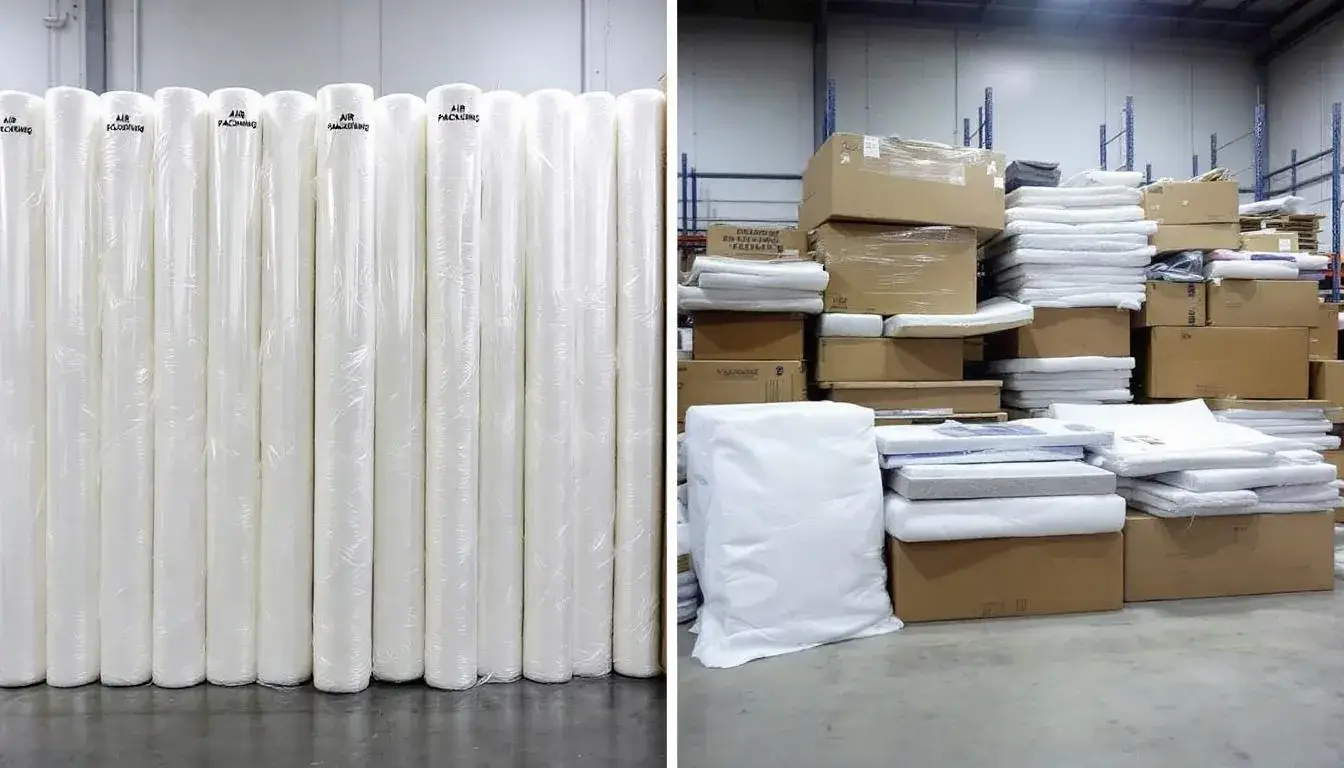
Storage space savings represent one of the most immediate and measurable benefits, with deflated air packaging requiring 99% less warehouse space compared to traditional protective materials. This dramatic space efficiency stems from the flat-packed nature of uninflated films, which occupy minimal storage volume until activated at the packing station. A single roll of air packaging film can replace multiple pallets of foam peanuts or bubble wrap, freeing valuable warehouse space for inventory or other business functions.
Shipping cost reductions from lightweight protection deliver ongoing financial benefits that compound over time. Air cushions typically weigh 0.1 ounces per cushion, compared to 2 ounces for foam equivalent protection, which reduces package weights that directly impact dimensional shipping charges. For high-volume shippers, these weight reductions can result in significant annual savings through lower shipping costs and reduced fuel surcharges.
Labor efficiency improvements with on-demand inflation systems streamline packaging operations while reducing worker fatigue and repetitive stress. Automated inflation eliminates the manual handling required for loose fill materials like peanuts, while programmable systems ensure consistent cushioning without operator variability. Modern inflation systems can produce 15-65 feet per minute of protective packaging, enabling faster pack station throughput with minimal training requirements.
ROI analysis reveals 20-40% packaging cost reductions with AirFill Technologies’ solutions, as compared to the total cost of ownership, encompassing materials, storage, labor, and shipping expenses. These calculations incorporate not only material costs but also the operational efficiencies and space savings that contribute to overall business productivity. The payback period for inflation equipment typically ranges from 6 to 18 months, depending on shipping volume and current packaging costs.
Incorporating sustainable air-filled packaging into a comprehensive shipping strategy can further enhance product safety and operational efficiency by ensuring that packaging solutions are tailored to the specific needs of each shipment.
Superior Protection Performance
The protective capabilities of sustainable air-filled packaging systems rival or exceed traditional materials through advanced engineering principles that optimize shock absorption and impact distribution. These systems utilize precisely controlled air compression to create protective barriers that adapt to product contours while maintaining consistent cushioning performance throughout the shipping process.
Shock absorption capabilities through air compression technology provide superior protection by distributing impact forces across larger surface areas. When packages experience drops or impacts, compressed air within cushions gradually releases energy rather than transmitting shock directly to protected products. This controlled energy dissipation protects fragile items more effectively than rigid foam materials that can transfer impact forces through direct contact.
Multi-chamber designs prevent total deflation if punctured, ensuring continued protection even when individual chambers are compromised. Advanced air cushions incorporate segmented chambers with independent seals, so puncture of one section does not affect the protective capability of adjacent chambers. This redundancy provides reliability for long-distance shipping and multiple handling scenarios where puncture risk is elevated.
Damage reduction rates versus traditional materials demonstrate measurable improvements in product protection performance. Independent drop tests show that properly sized air cushions can reduce damage rates by 30-50% compared to loose fill materials and provide equivalent protection to foam with significantly less material mass. These improvements translate directly into reduced returns, replacements, and customer service costs.
AirFill Technologies has developed proprietary film strength and seal integrity testing protocols that ensure consistent performance across diverse shipping conditions. The company’s quality control processes include puncture resistance testing, air retention evaluation, and temperature cycling to verify performance under real-world conditions. This comprehensive testing approach ensures that customers receive packaging solutions that deliver reliable protection throughout their distribution networks. Accessories, such as specialized nozzles or film dispensers, can further enhance the functionality and compatibility of air cushion systems, allowing for efficient integration with various packaging setups and supporting customizable, eco-friendly protection.
Customizable Protection Solutions
The versatility of air-filled packaging systems enables customized protection strategies that address specific product requirements while optimizing material usage and cost effectiveness. These customizable solutions demonstrate how advanced packaging technology can adapt to diverse business needs without sacrificing environmental benefits or protective performance.
Void fill, wrapping, and cushioning configurations provide comprehensive protection options for diverse product types ranging from electronics to glassware to automotive parts. Void fill applications utilize air pillows to eliminate empty spaces within packages, preventing product movement during transit. Wrapping configurations create protective barriers around individual items, while dedicated cushioning systems provide targeted impact protection for specific vulnerable areas.
Size customization options from 4×8 inches to 18×24 inches enable precise matching of protective packaging to product dimensions and shipping container specifications. This size flexibility ensures optimal material usage by eliminating oversized cushions that waste space and materials while providing adequate protection for products ranging from small electronics to large automotive components.
Specialized applications for electronics, glassware, and automotive parts demonstrate the adaptability of air-filled packaging systems to demanding protection requirements. Electronics applications often require anti-static properties and precise fit tolerances, while glassware demands exceptional shock absorption and multi-directional impact protection. Automotive parts may require oil resistance and temperature stability across varying environmental conditions.
Air-filled packaging can also be combined with materials like shredded Kraft paper to enhance the presentation and visual appeal of packaged products, making them more attractive to customers and improving overall packaging aesthetics.
AirFill Technologies’ custom engineering capabilities address unique packaging challenges through collaborative design processes that analyze specific product vulnerabilities and shipping environments. The company’s engineering team works directly with customers to develop tailored solutions that optimize protection while minimizing material usage and cost. This client-first approach ensures that each implementation delivers maximum value through precisely matched packaging specifications.
AirFill Technologies’ Sustainable Innovation Leadership
AirFill Technologies has established itself as an industry leader through proprietary technology development and a client-first approach that prioritizes customer success over transactional relationships. The company’s commitment to innovation and service excellence creates comprehensive solutions that address both immediate packaging needs and long-term sustainability goals.
The company’s proprietary inflation systems produce 15-65 feet per minute output, enabling high-volume operations while maintaining precise control over cushion dimensions and air pressure. These systems incorporate advanced automation features that ensure consistent performance while minimizing operator training requirements. Programmable controls allow fine-tuning of inflation parameters to optimize protection for specific products and shipping conditions.
The client-first approach manifests through comprehensive on-site consultations and packaging optimization studies that analyze current packaging processes and identify improvement opportunities. AirFill Technologies’ technical specialists conduct detailed assessments of product fragility, shipping environments, and operational constraints to develop customized recommendations that maximize benefits while ensuring smooth implementation.
Case studies demonstrate 30-50% packaging waste reduction for Fortune 500 clients across diverse industries. These implementations showcase measurable improvements in sustainability metrics while maintaining or improving product protection performance. Success stories include electronics manufacturers reducing packaging materials by 40% while improving damage rates, and consumer goods companies achieving carbon footprint reductions of 35% through air-filled packaging adoption.
Industry certifications, including ISO 14001 environmental management compliance, demonstrate AirFill Technologies’ commitment to environmental responsibility across all business operations. These certifications provide customers with confidence that their packaging partner maintains the highest standards for environmental management while delivering innovative solutions that support their own sustainability initiatives.
Industry Applications and Market Trends
The sustainable packaging market continues expanding rapidly as businesses respond to regulatory pressures, consumer demands, and corporate sustainability commitments. E-commerce growth drives a 25% annual increase in sustainable packaging demand, creating opportunities for innovative solutions that balance protection requirements with environmental responsibility.
Applications across electronics, pharmaceuticals, automotive, and consumer goods sectors demonstrate the versatility and effectiveness of air-filled packaging systems. Electronics applications benefit from lightweight protection that reduces shipping costs while providing superior shock absorption for delicate components. Pharmaceutical products require reliable protection that maintains package integrity throughout complex distribution networks. Automotive parts demand durable protection that withstands industrial handling environments, while consumer goods applications prioritize an unboxing experience alongside protection performance.
Regulatory trends push businesses toward sustainable packaging by 2025, with legislation in multiple jurisdictions establishing packaging waste reduction targets and recycled content requirements. Extended producer responsibility programs increasingly hold manufacturers accountable for packaging end-of-life costs, creating economic incentives for sustainable packaging adoption. These regulatory drivers complement consumer preferences for environmentally responsible packaging, creating market momentum for innovative solutions.
AirFill Technologies stays ahead of compliance requirements and sustainability mandates through proactive monitoring of regulatory developments and investment in next-generation sustainable materials. The company’s research and development efforts anticipate future requirements while ensuring current solutions meet evolving standards for environmental performance and recyclability.
Challenges and Limitations
While air-filled packaging offers numerous benefits, there are also challenges and limitations that businesses should consider when integrating these solutions into their packaging strategy. One of the primary concerns is the potential for air leakage or punctures, which can compromise the protective qualities of the packaging. Although modern air pillows and cushions are made from durable materials, sharp objects or rough handling during transit can occasionally cause deflation.
Another limitation is that air-filled packaging may not be suitable for very heavy or oversized items, as the level of support and protection provided by air alone may not be sufficient. In such cases, businesses may need to combine air-filled packaging with other protective materials to ensure optimal safety for their products.
Additionally, the initial investment in air-filled packaging systems and inflation equipment can be higher than traditional packaging materials. However, these upfront costs are often offset by long-term savings in storage, shipping, and reduced product damage, making air-filled packaging a cost-effective solution over time.
To address these challenges, companies are continually innovating with new raw materials and design improvements. The development of biodegradable and recyclable films helps reduce the environmental impact of packaging waste, while custom-engineered solutions are being created to meet the specific needs of fragile or unusually shaped items, such as artwork or sensitive electronics. By investing in research and sustainable practices, the industry is making air-filled packaging increasingly durable, environmentally friendly, and suitable for a wider range of applications, ensuring that businesses can protect their products and the planet simultaneously.
Implementation and Getting Started
Successful implementation of sustainable air-filled packaging requires systematic assessment and planning to ensure optimal results and smooth operational integration. AirFill Technologies provides comprehensive support throughout the implementation process, from initial assessment through ongoing optimization and support.
The packaging assessment process determines optimal air-filled solutions through detailed analysis of current packaging costs, product protection requirements, and operational constraints. This assessment includes product fragility testing, shipping environment analysis, and cost modeling to identify the most suitable air packaging configurations and equipment specifications.
Machine options range from entry-level AirPro Mini systems suitable for low-volume operations to high-volume AirPro Industrial systems capable of supporting large-scale fulfillment operations. Entry-level systems provide cost-effective solutions for businesses testing air packaging adoption, while industrial systems deliver the throughput and automation features required for high-volume implementations.
Training and support programs ensure successful implementation through comprehensive operator education and ongoing technical assistance. AirFill Technologies provides on-site training for packaging personnel, equipment maintenance guidance, and responsive technical support to address operational questions and optimization opportunities.
Financing options and ROI timeline expectations accommodate different business sizes and financial requirements. Flexible financing arrangements enable businesses to implement sustainable packaging solutions while managing cash flow requirements, with payback periods typically ranging from 6-18 months, depending on current packaging costs and shipping volume.
Businesses interested in exploring sustainable air-filled packaging solutions can contact AirFill Technologies for a comprehensive packaging assessment that analyzes current costs, identifies improvement opportunities, and provides detailed implementation recommendations. This no-obligation consultation process provides the foundation for informed decision-making about sustainable packaging adoption.
The future of protective packaging lies in solutions that deliver superior performance while minimizing environmental impact. Sustainable air-filled packaging represents this future today, offering businesses the opportunity to achieve their sustainability goals while improving operational efficiency and cost effectiveness. AirFill Technologies stands ready to partner with forward-thinking companies in this transformation, providing the technology, expertise, and support needed to successfully implement sustainable packaging solutions that protect products, reduce costs, and preserve our planet for future generations.