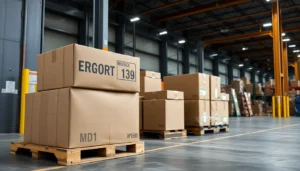
Shipping large items punishes guesswork. A carton that measures an inch over a threshold, a pallet built two inches too tall, or a large package tendered to the wrong service can turn a routine shipment into one that costs several times what it should.
This guide covers the practicalities as a business: where the parcel and freight boundary actually sits, how dimensions drive cost more than weight does, which packaging methods hold up for heavy items, and where each approach stops working.
Parcel or Freight: The 150 lbs Decision
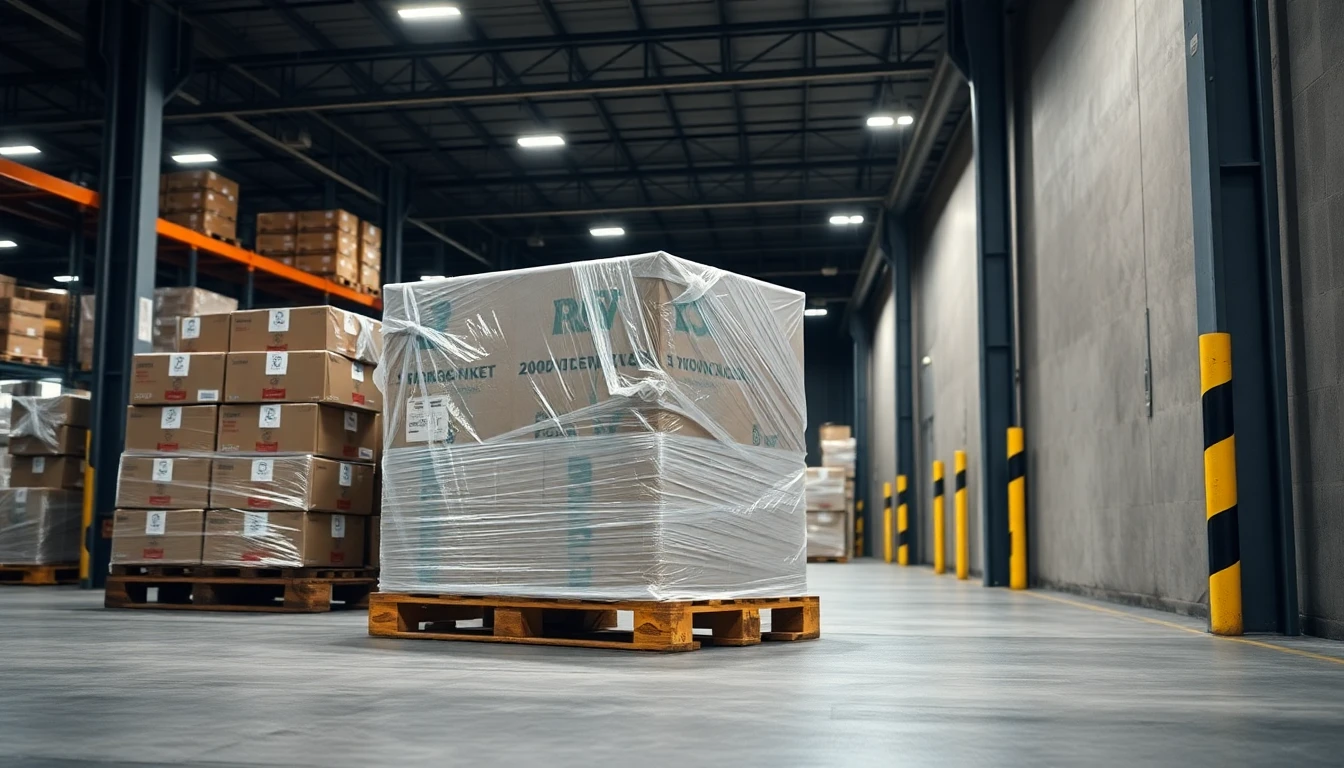
The first decision when you ship large items is which network the shipment belongs in, and it is largely settled by three numbers.
Weight. Most parcel carriers cap a single package at 150 lbs. Above that, the shipment moves to freight.
Length. Parcel services generally cap the longest side at 108 inches.
Girth. Length plus girth, calculated as length plus twice the width plus twice the height, is typically capped at 165 inches.
Exceed any one of the three and the package either moves to freight or attracts significant surcharges. A shipment can be well under 150 lbs and still be a freight shipment because it is simply too big.
There is also a grey zone worth understanding. A large package that technically qualifies for parcel service near the upper thresholds often costs more through parcel, once oversize and additional handling surcharges are applied, than the same goods palletized and moved as LTL freight. Running the comparison for your regular large item shipments is usually worth the hour it takes.
Dimensions, Dim Weight and the Large Package Surcharge

For large items, carriers do not primarily charge for what the shipment weighs. They charge for the space it occupies.
Dimensional weight converts the cubic size of a package into a billable weight using a carrier divisor. The carrier bills the greater of actual weight and dim weight. For large items, which tend to be bulky relative to their mass, dim weight almost always wins.
The consequence is direct: empty space inside a box costs the same as product. A large carton packed with air is billed at the same rate as one packed solid. Our guide to reducing dimensional weight charges works through the calculation and the right-sizing response in detail.
On top of dim weight, large package surcharges apply once a package crosses defined size thresholds. These are flat additions, and they are substantial. Two things follow:
Measure before you commit to a carton. A package one inch over a threshold pays the full surcharge. Dropping to the next carton size down, where the product allows, can remove it entirely.
Rationalise your carton range. Operations shipping oversized items out of large boxes chosen at random pay a large package surcharge they never needed to incur. Heavy packages are worst affected, because the surcharge lands on top of an already high base rate. A defined set of carton sizes matched to your actual product dimensions is the cheapest cost reduction available.
Packaging Methods for Large and Heavy Items
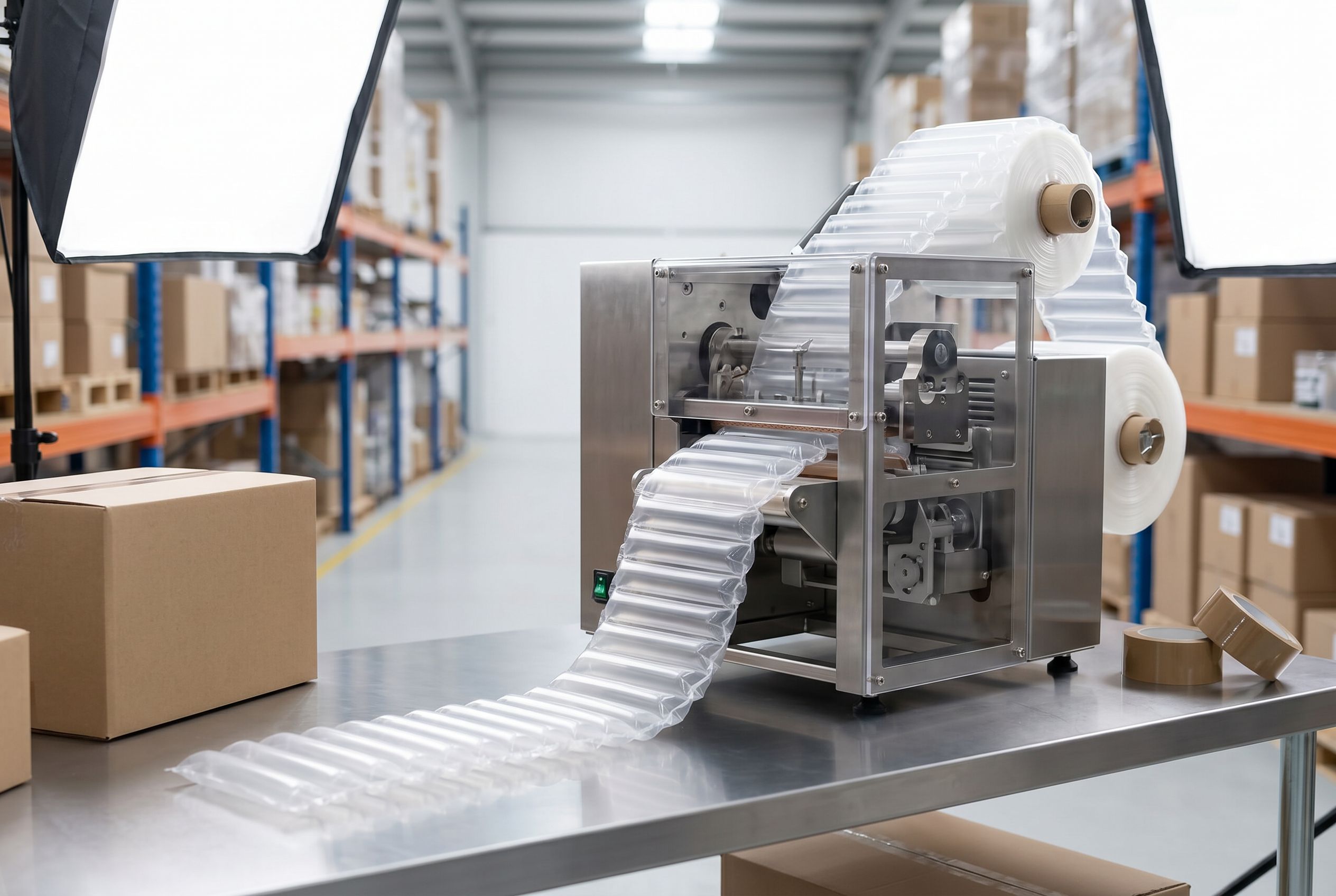
Protection for a heavy item works differently than for a small one. The forces involved scale with mass, and a method that works for a two-pound product will not hold a sixty-pound one.
Effective large item packaging separates into three jobs.
Structural containment. The carton has to carry the load. For heavy items that means double wall or triple wall corrugated, correct edge crush specification, and reinforced closure. A single wall carton holding a heavy item will fail at the seams regardless of what is packed inside it.
Blocking and bracing. A heavy item must be prevented from moving under its own momentum. This is the job of foam blocks, corrugated inserts, corner braces, or moulded supports positioned to carry load paths. Blocking and bracing is what keeps a heavy item from becoming a projectile inside its own box.
Void fill and cushioning. Once the item is contained and braced, the remaining space needs filling so nothing shifts and so impact is distributed rather than concentrated.
This distinction matters, and it is where a lot of large item packaging goes wrong. Void fill materials, including air pillows, are designed for the third job. Air cushions fill space, immobilise contents against movement, and distribute light to moderate impact well. They are not a substitute for structural blocking on a genuinely heavy item, and specifying them that way produces failures.
Used correctly, on the other hand, air cushions solve a real problem in large package shipping. Large cartons contain large voids, and filling that volume with loose or dense material adds weight and cost. On-demand air cushions fill significant volume with almost no added weight, which matters when your billing is driven by dimensions and every pound of packaging is a pound you pay to move. Our overview of void fill packaging covers where each void fill type performs.
For furniture and similarly bulky goods, a typical build is a structural double wall carton, corner and edge protection on the load-bearing points, surface protection against abrasion, and air cushions filling the remaining space so the piece cannot move.
Shipping Large Items Without Overpaying
A handful of operational habits account for most of the achievable savings when you ship large items regularly.
Measure the packed carton, not the product. Dim weight is calculated on the outer dimensions after packing. Bulging sides from over-packing push a carton into a higher band.
Ship at the right density. Where a product can be disassembled or nested safely, a smaller shipping profile is worth the extra pack time on high-volume SKUs.
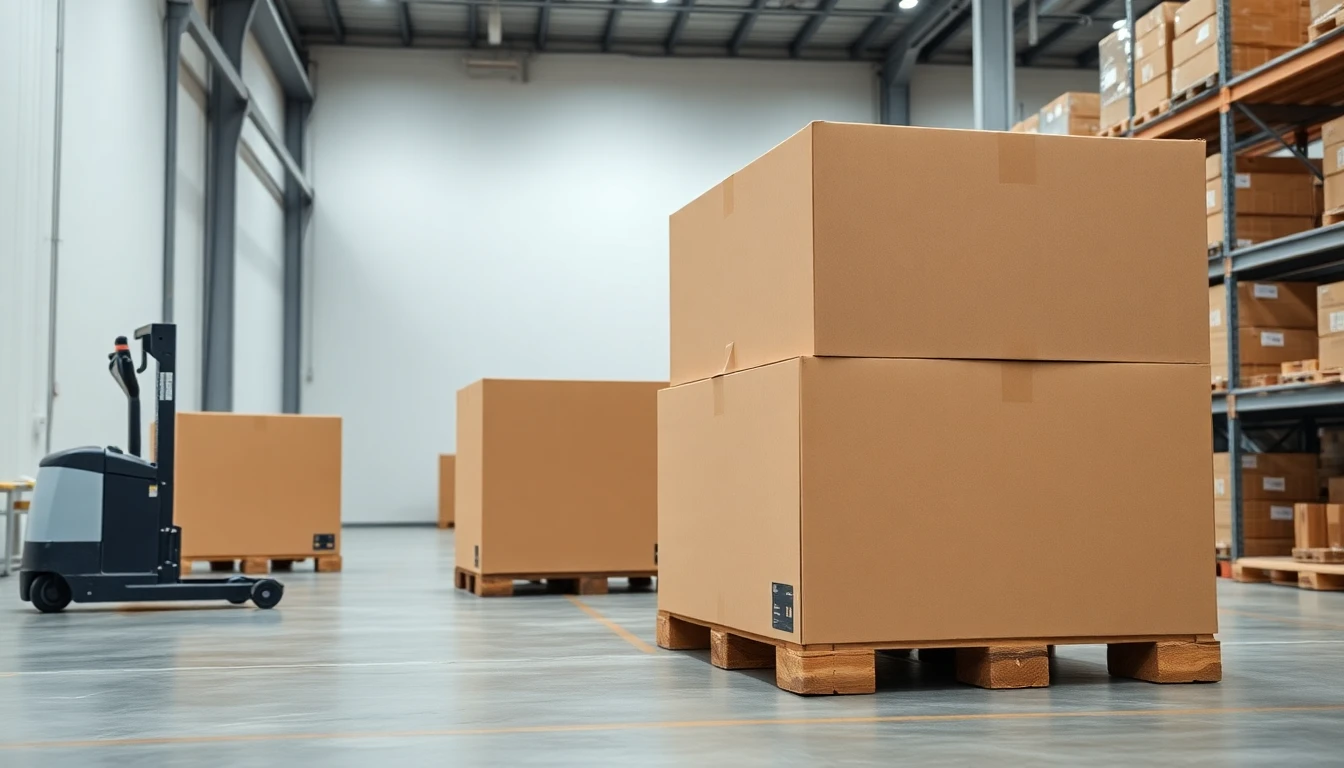
Palletize when parcel stops making sense. Multiple large packages travelling to one destination are usually cheaper consolidated onto a pallet as freight than tendered individually.
Negotiate on your actual profile. Carriers price against shipping profiles. If oversize packages are a meaningful share of your volume, that belongs in the conversation rather than accepting published surcharge tables.
Track shipping costs by SKU. Landed shipping costs per SKU, including any large package surcharge, tells you which products are quietly unprofitable to ship. That number frequently justifies a packaging redesign on its own.
Compare Carriers: The Cheapest Way to Ship Heavy and Large Items
There is rarely one cheapest way to move a large package. The right shipping method depends on weight, dimensions, distance and how much handling the goods can tolerate, so it pays to compare carriers on your actual profile rather than on headline rates.
Parcel ground services are usually cheapest for a single large package under the size and weight thresholds, and they include tracking and delivery density that freight does not match. Major carriers all publish oversize thresholds; the differences between them are small but they are not identical, and a package that is oversize with one carrier may not be with another.
Freight shipping takes over above the thresholds. LTL freight prices on class, weight and distance rather than dimensions, which makes it markedly better for dense, heavy items and for anything palletised. The trade-off is handling: freight shipments move through terminals on forklifts, so packaging has to survive stacking and mechanical handling. Weight limits are effectively set by the pallet and the equipment rather than by a parcel threshold, which is why oversized shipments almost always end up here.
Flat Rate Shipping for Dense Heavy Stuff
Flat rate shipping is worth checking only at the small end of large. Flat rate boxes cap out well below most oversize packages, but for dense heavy items that happen to fit, flat rate can beat dimensional pricing outright because it ignores weight within the box.
Freight services with white glove or liftgate options matter when the delivery point has no dock. Adding a liftgate at booking costs far less than a failed delivery and a redelivery fee.
The practical approach for any business shipping heavy goods regularly is to rate the same shipment three ways once, document the crossover points, and give the packing team a simple rule rather than asking them to judge it per order.
Packing a Heavy Item: Sturdy Boxes and Heavy Duty Packing Tape
Technique matters more as weight increases, because the failure modes change from cosmetic to structural.
Start with a sturdy box. For a heavy item that means double wall corrugated at minimum, and triple wall as weight climbs. A sturdy box rated for the load is not an upgrade, it is the precondition for everything else working. Reusing a single wall carton for a heavy item is the most common cause of a burst seam in transit.
Close it with heavy duty packing tape. Standard office tape fails under load. Heavy duty packing tape at least two inches wide, applied with the H-taping method along the centre seam and both edge seams on top and bottom, is the standard. Heavy items in particular should have the bottom taped as thoroughly as the top, because that is the seam carrying the weight.
Protect surfaces before filling voids. Bubble wrap or foam sheeting against the product prevents abrasion and finish damage during vibration. This is a separate job from void fill and it is not optional on finished goods like furniture.
Brace the load paths. Corner blocks, edge protectors and corrugated inserts positioned where the weight bears keep a heavy item from shifting under its own momentum.
Fill every remaining void. Once contained and braced, remaining space needs filling so nothing moves. Air cushions do this without adding weight you then pay to ship.
Double box high-value goods. An inner carton suspended inside an outer carton with cushioning between them is the most reliable configuration for anything fragile and expensive.
Splitting Bulky Items Into Multiple Smaller Packages
Sometimes the answer to an oversize problem is not a better box but fewer things in it.
Splitting one oversize package into multiple smaller packages frequently costs less overall, because you avoid large package surcharges entirely and each carton falls into standard dimensional bands. It also reduces damage exposure, since smaller cartons are handled normally rather than manually wrangled.
The maths is worth running whenever a shipment sits just over a surcharge threshold. Two mid-size cartons often beat one oversize carton plus its surcharge, even after the second shipping label.
Splitting works well for products that ship as components or sets. It works poorly where the item is genuinely one piece, or where multiple packages travelling separately risk arriving incomplete. If you do split a shipment, mark the cartons as a set and reference them to one order so receiving can reconcile them.
Handling Heavy Parcels: Labelling and Damage Exposure
Large items are handled differently, and packaging has to anticipate it.
Team lift and mechanical handling. A package over 50 lbs should carry a team lift marking, and heavier shipments require mechanical handling. Marking is not cosmetic; it changes how the package is moved.
Expect the package to be placed on every face. Large packages are rotated, stood on end and stacked. Protection has to be equal on all six sides because you cannot control orientation.
Stacking load. In a freight environment, your carton may carry the weight of whatever is placed on top. Board grade must account for compression, not just impact.
Document condition at handover. For freight, damage must be noted on the delivery receipt before signing. A clean signature makes a later claim very difficult to win. Our guide to shipping damage claims covers the process and documentation.
Large shipments also carry disproportionate damage exposure. The goods are usually higher value, replacement shipping costs more, and the customer experience of a damaged large item is worse. Packaging spend on large items should be evaluated against that exposure rather than against cost per carton in isolation.
Building a Repeatable Process for Shipping Heavy Goods
For a business shipping large items at any volume, consistency is worth more than any individual optimisation.
Document a pack specification per SKU. Carton size and grade, blocking method, cushioning, and closure. Large item packing should never be improvised at the bench.
Standardise carton sizes deliberately. Match them to your real product dimensions, chosen to sit below surcharge thresholds wherever possible.
Validate with drop testing. Drop test a representative sample of each large package configuration. Failures show you exactly which of the three jobs, containment, bracing or void fill, is under-specified.
Put void fill at the packing station. On-demand systems produce cushions where they are needed rather than consuming floor space as pre-inflated volume, which matters most when the cartons are already large. Our overview of on-demand packaging systems explains how that works in practice, and packaging for high-volume shippers covers throughput at scale.
Review the surcharge line on your invoices. Oversize and additional handling charges are the clearest signal that your carton programme needs attention.
Getting Large Item Packaging Right
Shipping large items well comes down to three decisions made deliberately rather than by default: the right network for the shipment, the right carton size to stay under the thresholds that trigger surcharges, and a packaging build that contains, braces and fills in the correct order.
Get those right and the cost difference is significant, because on large packages you are paying for volume on every leg and paying twice whenever something arrives damaged.
AIRFILL Technologies supplies air pillow and air cushion systems that fill large void volumes with minimal added weight, produced on demand at the packing station. If you ship large items and want to work through the void fill side of your packaging, contact our team.