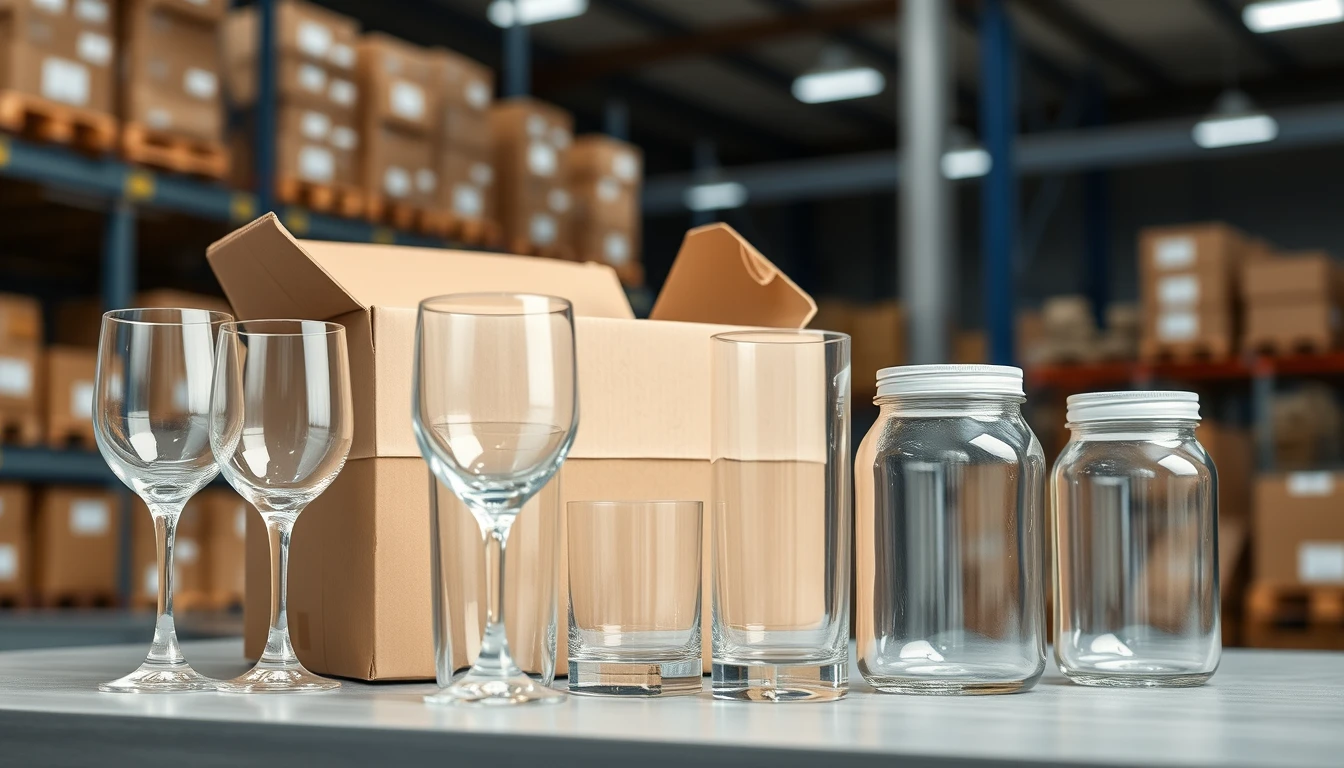
Glass is the least forgiving category in shipping. A box that protects a pair of sneakers perfectly will destroy a set of wine glasses, because glass fails from forces that other products simply absorb: point impact, compression, and vibration over the length of a shipping network.
The good news is that glassware breakage is a packaging problem, not bad luck. Businesses shipping glass items reliably are not lucky. They follow a repeatable method built on three things: wrapping each item individually, eliminating movement with the right packing materials, and putting a second box between the glass products and the outside world.
This guide covers how to ship glass safely at commercial volume, which packaging materials matter, and where operations lose money to breakage without realizing it.
Why Glass Items Break in Transit
Shipping networks are rougher than most businesses assume. A box is sorted, dropped, conveyed, stacked, and vibrated across hundreds or thousands of miles. Glass items fail in four specific ways:
- Point impact. A drop concentrates force on one spot. Glass cannot deform to absorb that energy, so it fractures.
- Product-to-product contact. Two glass items touching inside the same box will chip or crack each other from vibration alone, even if the box is never dropped.
- Compression. Boxes get stacked. If the outer box collapses, the load transfers straight to the glass products inside.
- Sustained vibration. Hours of conveyor and trailer time works packaging loose. A box packed tight on day one can rattle by delivery if the packing materials settle.
Understanding those four failure modes separates packaging that survives shipping from packaging that only looks protective on the bench.
How to Ship Glass: The Core Method
Nearly every durable standard for shipping glass reduces to the same sequence: wrap, fill, double box, seal.
Wrap Each Item Individually
Wrap each item individually before it goes near the shipping box. This is the step operations skip when they are busy, and it causes the most breakage. Two unwrapped glasses in the same box will find each other.
Whether you use packing paper, foam sheets, or bubble wrap, the requirement is identical: a continuous protective layer with no exposed glass, paying particular attention to rims, handles, stems, and any protruding feature. Those chip first.
For stemware and thin-walled glass products, fill the interior cavity as well. Recycled paper or packing paper inside a glass supports it from within, and a glass supported inside and out resists compression far better than one supported only from outside.
When shipping multiple glass items in the same box, add cardboard dividers. Dividers do what no amount of fill can: they guarantee separation even if the packing materials shift. For shipping multiple items of real value, dividers are not optional.
Void Fill: How to Add Cushioning Around Glass Products
Once each item is wrapped, the enemy is empty space. Any empty spaces inside the box give the glass room to accelerate, and glass that can move is glass that can break.
Void fill packaging closes that space. Air pillows suit glass items particularly well because they combine three useful properties:
- They conform. Inflated cushions flow around irregular shapes such as stems and handles, immobilizing the item instead of bridging over it.
- They stay put. Unlike packing peanuts, which migrate and settle in transit, they hold position, so the box that arrives is packed the way it left.
- They add almost no weight. More than 99% air, which matters when carriers bill on dimensional weight.
That last point compounds. Glassware ships in relatively large boxes for its weight, so businesses shipping glass are frequently paying dimensional weight already. Heavy packing materials on top make it worse. Our guide to reducing dimensional weight charges covers how right-sized boxes and lightweight fill work together.
Choosing the right cushion size matters as much as the material. Cushions that are too large bridge a gap without filling it; too small and they vanish into the corners. Our guide to choosing the right cushion size covers matching dimensions to product geometry.
Double Boxing: The Standard for Shipping Glass Items
Double boxing is the single highest-impact change most businesses shipping glassware can make:
- Pack the wrapped glass items into an inner box with cushioning between and around them.
- Place that inner box inside a larger box, centered, with at least two inches of cushioning on every side, including top and bottom.
- Fill the gap between the two corrugated boxes so the inner box cannot shift.
- Seal both boxes properly along every seam.
The physics is simple. The outer box absorbs and distributes impact; the cushioned gap decelerates the inner box over a longer distance; the inner box arrives having felt a fraction of the original force. Two layers of corrugated cardboard plus a cushioned gap is dramatically stronger than one box packed twice as full.
Use new, sturdy boxes for the outer layer. Used boxes have already absorbed compression cycles, and their edge crush strength is degraded in ways you cannot see. For heavier glass products, double walled corrugated boxes are worth the added cost.
Sealing: Packing Tape and the Final Check
Sealing gets rushed and it matters. Use strong packing tape rated for shipping, not office tape, and apply the H-taping method: seal the center seam and both edge seams on the top and the bottom of the box. The bottom is where failures happen, because that is where the weight sits.
Before the box goes out, gently shake it. If you feel or hear internal movement, open it and add cushioning. That two-second check catches most under-packed boxes.
Choosing Packaging Materials for Glass Products
Different packing materials solve different parts of the problem, and most operations need a combination. Choosing the right packaging materials is less about finding the best one and more about assigning each the job it does well.
| Material | Best role for glass | Watch out for |
|---|---|---|
| Air pillows | Filling empty spaces; immobilizing wrapped items; the cushion layer in a double box | Not a substitute for individual wrapping |
| Packing paper | Individual wrapping; filling interior cavities | Adds weight; compresses over long transit |
| Bubble wrap | Individual wrapping of high-value or irregular glass items | Bulky to store; adds dimensional volume |
| Foam sheets | Separating stacked flat glass products | Higher cost per unit; storage footprint |
| Corrugated boxes | Structural protection, inner and outer | Edge crush strength degrades when reused |
| Cardboard dividers | Separating multiple glass items in the same box | Must be sized correctly to work |
| Packing peanuts | Loose fill | Migrates and settles in transit; messy for the customer |
Where Bubble Wrap Fits
Bubble wrap remains one of the most useful materials for glassware, and it is worth being precise about its role. Bubble wrap is a wrapping material: it goes directly against the product to provide a protective layer and shock absorption at the surface. It is not a void fill.
For fragile glassware, bubble wrap around each item plus void fill around that combination is a stronger package than either alone. Where bubble wrap struggles is storage footprint and dimensional volume, which is why many operations use bubble wrap for high-value glass products and packing paper for the rest. We compare the options directly in air pillows vs bubble wrap and air pillows vs packing peanuts.
Corrugated Boxes and Foam Sheets
The outer box does more structural work than any other component. Single-wall corrugated is adequate for light glass items in a double box; double walled is the safer choice for heavier glass products or larger boxes, since a bigger box has more unsupported span to collapse.
Foam sheets earn their place with flat glass items: picture frames, glass panels, shelving. Stacked flat glass needs a protective layer between each piece, and foam sheets do that more reliably than paper, which can slip.
Ceramics, Stoneware, and Other Fragile Items
Ceramics and stoneware behave differently from glass despite being grouped with it. They are typically heavier, which increases the force generated in a drop, and they concentrate stress at handles, spouts, rims, and feet.
Two adjustments follow. First, increase the cushioning, because a heavier item needs a longer distance to decelerate. Second, pay closer attention to the bottom of the box, since heavier items are more likely to break in a bottom-first drop. The approach in our guide to packaging fragile items applies, with more cushioning per unit.
Mixed shipments, where glass travels with heavier goods, need the heavier item packed so it cannot move toward the glass in any orientation. In practice that means dividers or a separate inner box rather than simply more fill.
Labels, Insurance, and Documentation
Fragile stickers are worth applying and worth being realistic about. In a highly automated shipping network most boxes are sorted mechanically, and a fragile label does not change how a conveyor handles them. Treat labeling as a marginal benefit at manual-handling stages, not as protection. Orientation arrows are the same: useful, worth adding, but assume the box spends part of its journey upside down.
Two practical points on the commercial side. Shipping insurance is worth carrying on valuable glass items, but carriers routinely deny claims when packaging is judged inadequate, so proper packaging is a prerequisite for the claim rather than an alternative to it. And for international shipping, proper documentation matters as much as the packaging, since a box held at customs sits in handling far longer than one moving straight through.
Building a Repeatable Process for Shipping Glass
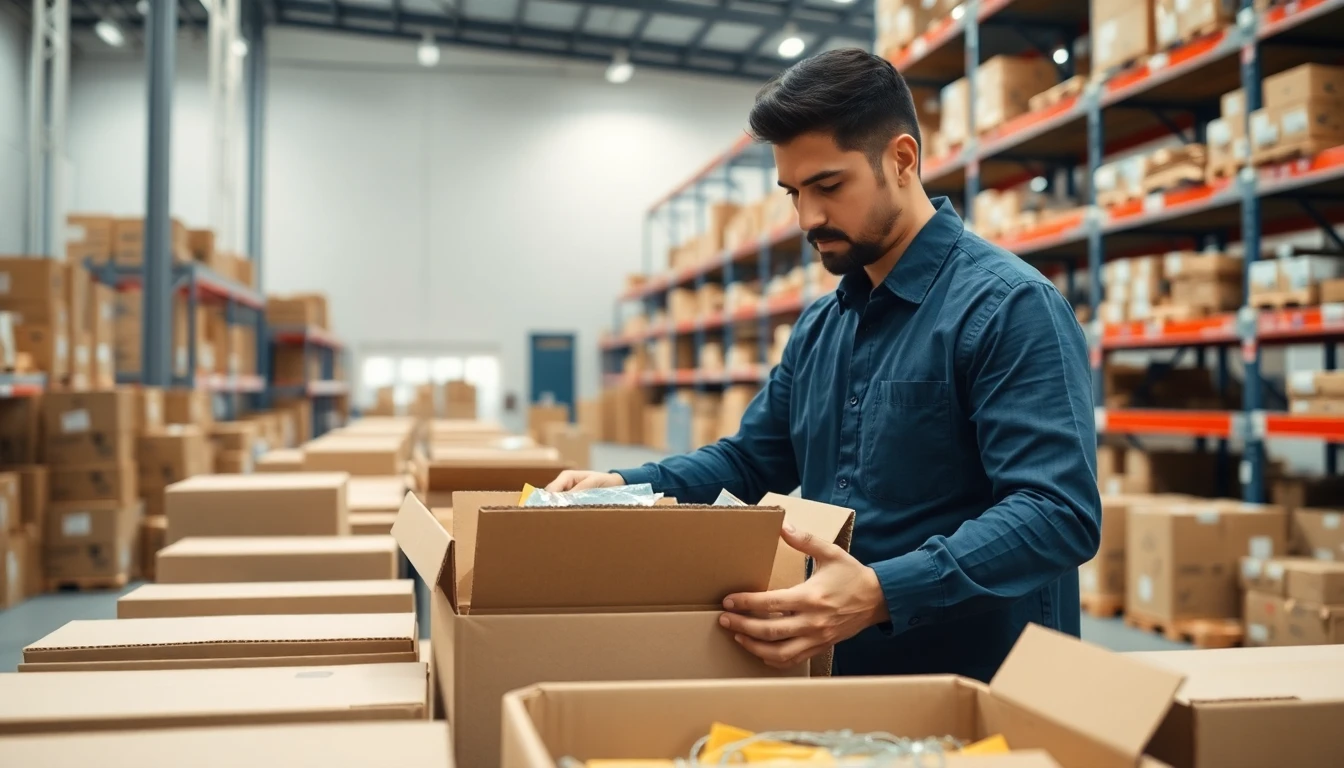
At volume, the biggest source of breakage is not the wrong material. It is inconsistency between packers.
Operations that reduce glassware breakage tend to do these things:
- Write the standard down. Document box sizes, wrap method, and cushioning thickness per product, and keep it at the station.
- Standardize box sizes. Fewer box options means less improvisation and better fit.
- Bring void fill to the packer. Cushions produced on demand at the station mean packers use the right amount instead of whatever is closest.
- Test the actual box. Drop-test a real packed box from a realistic height on each face and corner before committing a configuration.
- Track breakage by product. Damage claims cluster in a few items. Fixing those specifically beats adding material everywhere.
That last point is where the money is. Adding cushioning across the board raises material and dimensional weight cost on every shipment, including the ones that were never breaking. Targeting the glass products that actually fail is cheaper and significantly more effective. Our guide to reducing shipping damage rates covers that analysis.
The Hidden Cost of Glassware Breakage
A broken glass item costs far more than the product. Replacing it means cost of goods, a second round of packaging materials, a second shipment, claim-processing labor, and customer service time. For a repeat-purchase business, breakage also puts the customer relationship at risk at exactly the moment they expected something to arrive safely.
That is why glassware is usually where investing in proper packaging pays back fastest. The per-box cost difference between adequate and reliable packaging is small. The cost of one breakage is not. If you suspect your current setup costs more than it saves, our post on the 5 signs your business is overspending on packaging is a useful checklist.
Talk to a Packaging Specialist About Your Glassware
There is no universal configuration for shipping glass items. The right answer depends on product geometry, box sizes, order profile, and where breakage actually occurs in your operation.
AIRFILL Technologies works with businesses shipping glass products and other fragile items to build packaging around on-demand air cushion void fill, so packers have the right materials at the right moment and boxes go out packed consistently. For background, see our ultimate guide to air pillow packaging.
Talk to a packaging specialist for a free consultation. We will review how your glassware ships today and where the breakage is coming from.
AIRFILL Technologies — 1816 Railroad Street, Corona, CA 92878 · (844) 247-3455
Frequently Asked Questions
What is the best protective packaging for glassware?
A combination: individual wrapping with packing paper, foam sheets, or bubble wrap to isolate each item, void fill to eliminate movement inside the box, and double boxing so an outer box absorbs impact before it reaches the glass. No single material does all three jobs.
Do I really need to double box glass items?
For most glass products moving through a shipping network, yes. Double boxing with at least two inches of cushioning on every side is the most reliable single improvement, because it decelerates the inner box over a longer distance rather than transferring impact straight to the product.
How do I ship multiple glass items in the same box?
Wrap each item individually, then separate them with cardboard dividers so they cannot touch, then fill all remaining empty spaces so nothing shifts. Product-to-product contact causes chips even when the box is never dropped.
How much cushioning should surround a glass item?
A common working standard is at least two inches on every side, including top and bottom, between the product and the outer box wall. Heavier items such as ceramics and stoneware generally need more, since greater mass generates more force in a drop.
Do fragile stickers actually help?
Marginally. Most sorting is automated, so a fragile label has limited effect on handling. Apply them, but design the packaging to survive without them, and remember that shipping insurance claims can be denied if packaging is judged inadequate.