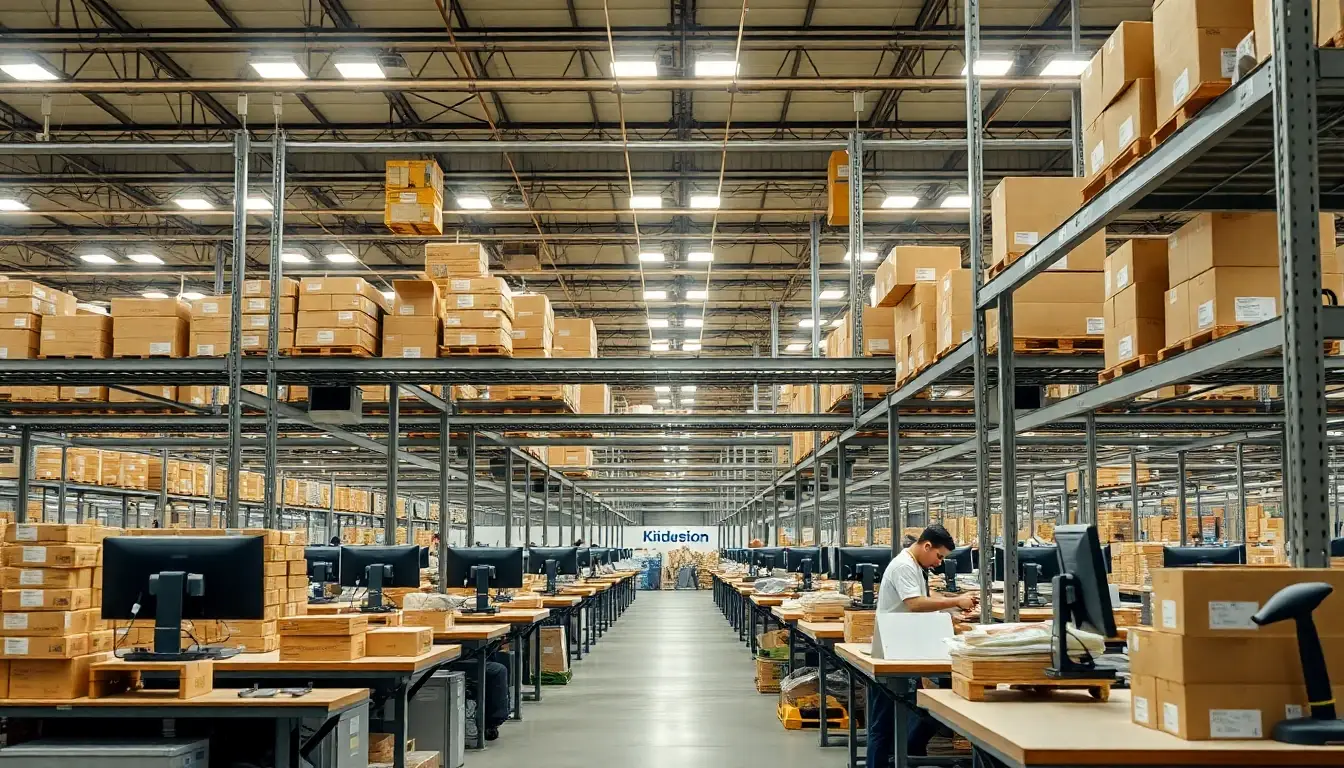
The packing station is where every order in a warehouse turns into a shipment. It is also where small inefficiencies multiply. A packer who walks a few steps for tape, searches for the right box, or reaches overhead for void fill repeats that motion on every order, every shift.
A well organized packing station removes those wasted movements, reduces errors and makes output more predictable. This guide covers how to approach packing station setup: the layout, the equipment, the packing materials and the ergonomic design choices that make a warehouse packing station efficient.
Why Packing Station Setup Matters
In most fulfillment operations, picking gets the attention and packing gets whatever space is left. That is a mistake, because the packing process is where several costs are decided at once.
- Labor. Packing is repetitive manual work. Unnecessary movement at the station adds time to every order.
- Damage. Inconsistent packing is a leading cause of shipping damage and costly returns.
- Shipping costs. The box a packer chooses decides the dimensional weight of the shipment.
- Order accuracy. The packing station is the last point where a wrong item or a missing item can be caught before it reaches the customer.
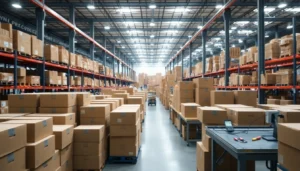
Poorly designed packing stations show up as slow throughput, inconsistent packages and delayed shipments during peak periods. Traditional packing stations that grew piece by piece often have supplies stored wherever there was room, which forces packers to work around the station instead of at it.
Key Benefits of an Efficient Packing Station
An efficient packing station delivers benefits that compound across the whole fulfillment process:
- Faster packing because every tool and material is within reach.
- Fewer errors because scanning and verification are built into the workflow.
- Consistent protection because packing materials are standardized.
- Lower worker fatigue because the station fits the people using it.
- Better use of warehouse space because the packing area is planned rather than improvised.
Together these boost productivity without adding headcount, which matters most when order volume spikes.
Planning the Packing Area
Before buying equipment, plan where packing fits in the warehouse floor and in the order fulfillment process.
Map the flow. Picked orders should arrive at the packing area from one side and packed orders should leave toward the shipping area and loading docks on the other. Orders should never travel backward or cross the path of incoming totes.
Decide how much space each station needs. Space requirements depend on order profile. A station packing small parcels needs far less room than one packing furniture components. Leave room for incoming totes, outgoing packed orders and supply replenishment.
Plan for growth. Leave room to add stations during peak season. Many warehouses run additional stations at peak, so design one standard station that can be replicated quickly.
Separate specialty packing. Oversized, fragile or high-value orders often need a dedicated station with different box sizes and more cushioning.
Packing Station Layout: Everything Within Arm’s Reach
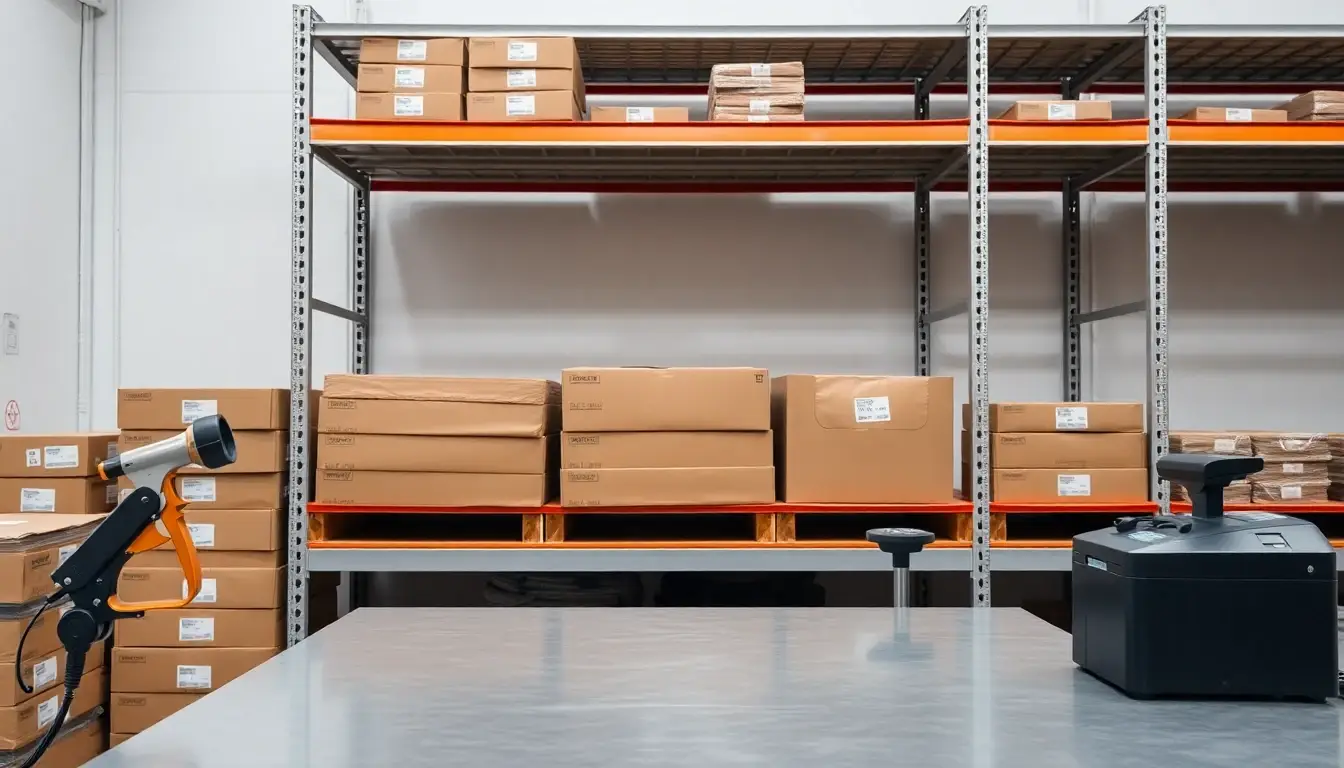
The core principle of packing station layout is simple: the packer should be able to reach everything they use frequently without stepping away from the station.
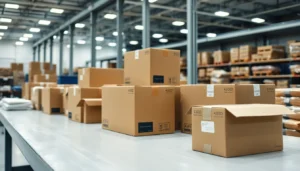
- Packing table at the center. A solid packing table at the appropriate height is the work surface. Its size should suit the largest order the station typically handles.
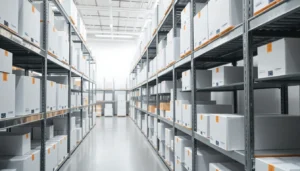
- Boxes above or beside. Store the most used box sizes on shelves above the table or in slots beside it so packers can find supplies without walking.
- Void fill and cushioning overhead or at the side. Packing materials should feed down or across into the work area, not sit in a bin on the floor.
- Tape guns and tools at hand. Tape, knives and other essential tools live in fixed locations, so they are always in the same place.
- Label printers and screens at eye level. Label printing, shipping labels and order details should be visible without bending or turning away from the box.
The goal is minimizing touches and reach. Every item handled twice, and every step away from the station, is time lost on every order.
Equipment and Technology for Warehouse Packing
The right equipment turns the packing station into a reliable part of the fulfillment operation.
Barcode scanners. Scanning items at the packing station verifies the order before it ships, reducing errors and supporting order accuracy.
Warehouse management systems. Integrating the packing station with your warehouse management systems puts order details, box recommendations and shipping information on screen for each order.
Label printers. A dedicated printer at each station avoids queues and lets packers print the shipping label the moment the order is verified.
Scales. An integrated scale confirms the weight before the label prints, which catches missing items and wrong products.
Void fill systems. On-demand void fill equipment at the station produces cushioning as it is needed, rather than storing bulky pre-made material.
Packing Materials and Void Fill at the Point of Use
Packing materials are where many warehouse packing operations lose both time and money.
Standardize box sizes. A small set of box sizes that covers most orders reduces decision time and storage. Too many sizes slows packers down. Too few creates oversized boxes and higher dimensional weight charges. Our guide to reducing dimensional weight charges explains the trade-off.
Choose appropriate packaging for each product family. Fragile items, heavy items and simple goods need different protection. A written spec at the station removes guesswork.
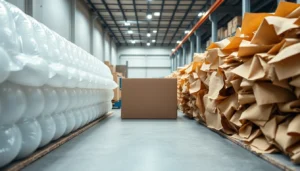
Bring void fill to the packer. Bulky pre-filled material such as packing peanuts or pre-inflated bubble wrap takes up significant warehouse space and has to be restocked constantly. On-demand air cushion systems inflate film at the station, so a compact roll replaces bins of bulky fill and packers pull exactly what they need. See our overview of on-demand packaging systems for how they work.
Control consumption. When void fill is easy to dispense, packers use a consistent amount. When it is hard to reach, they either under-fill or over-fill. Both cost money. Our guide to what void fill packaging is compares the main options.
Ergonomic Design: Protecting the People Doing the Packing
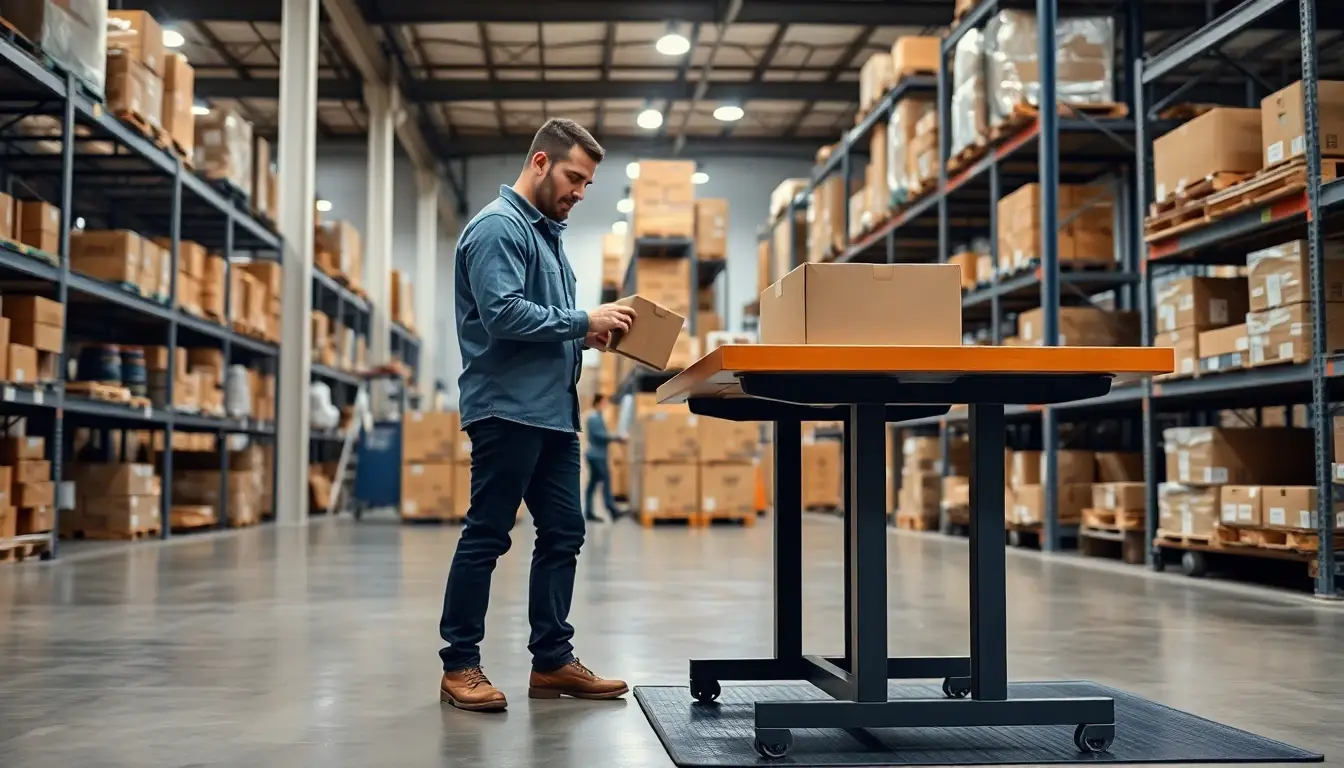
Packing is physical work repeated hundreds of times a shift. Ergonomic design reduces physical strain and keeps output steady across the whole shift.
- Appropriate height. Adjustable packing tables let each packer work at a comfortable height, reducing bending and shoulder strain.
- Anti fatigue mats. Packers who stand all shift benefit from anti fatigue mats that reduce strain on legs and back.
- Comfortable seating where possible. For seated packing tasks, comfortable seating with good support helps.
- Good lighting. Bright, even lighting reduces eye strain and helps packers spot damaged products and incorrect items.
- Reduce lifting and reaching. Keep heavy supplies at waist height and lightweight materials overhead.
Ergonomic workstations are not a luxury. Worker fatigue leads to mistakes and injuries, and both show up in costs.
Quality Control at the Packing Station
The packing station is the last point of quality control before an order leaves the building.
- Scan every item against the order.
- Check the weight against the expected total.
- Inspect products for visible damage before they are packed.
- Follow the spec for box size and cushioning.
- Seal and label consistently so carriers can read and handle the package correctly.
Carefully packed orders reduce costly returns and support customer satisfaction. For more on what causes damage after the box leaves, see our guide to shipping damage claims.
Scaling Packing Operations for Peak Periods
Peak periods test every part of the packing process. The operations that cope best prepare in advance.
- Build stations to a standard so additional stations can be set up quickly with the same layout.
- Stock supplies ahead of time. Running out of boxes or void fill during peak stops the line.
- Train temporary staff on the standard station so they become productive quickly.
- Use compact materials so supply storage does not crowd out packing space.
Our guide to peak season packaging covers peak planning in more detail, and our post on packaging for high-volume shippers covers automation for larger operations.
Talk to a Packaging Specialist About Your Packing Stations
There is no single correct packing station setup. The right design depends on your products, order profile, warehouse space and volume.
AIRFILL Technologies helps fulfillment teams bring on-demand air cushion void fill to the packing station, so packers have the right protection within arm’s reach and every order is packed the same way. For background on the technology, see our ultimate guide to air pillow packaging.
Talk to a packaging specialist for a free consultation about your packing operations.
AIRFILL Technologies · 1816 Railroad Street, Corona, CA 92878 · (844) 247-3455
Frequently Asked Questions
What should be included in a packing station?
A packing table at an appropriate height, the most used box sizes within reach, packing materials and void fill, tape guns, a barcode scanner, a label printer, a scale and a screen showing order details.
How do you make a packing station more efficient?
Put everything within arm’s reach, standardize box sizes and packing materials, integrate scanning and label printing, and design the flow so orders move in one direction from picking to shipping.
How much space does a packing station need?
It depends on the largest orders the station handles. Plan for the table, incoming and outgoing orders, and supply storage, and design one standard station that can be repeated.
What is the best void fill for a packing station?
It depends on your products, but on-demand systems save warehouse space because material is produced at the station from compact rolls rather than stored pre-filled.