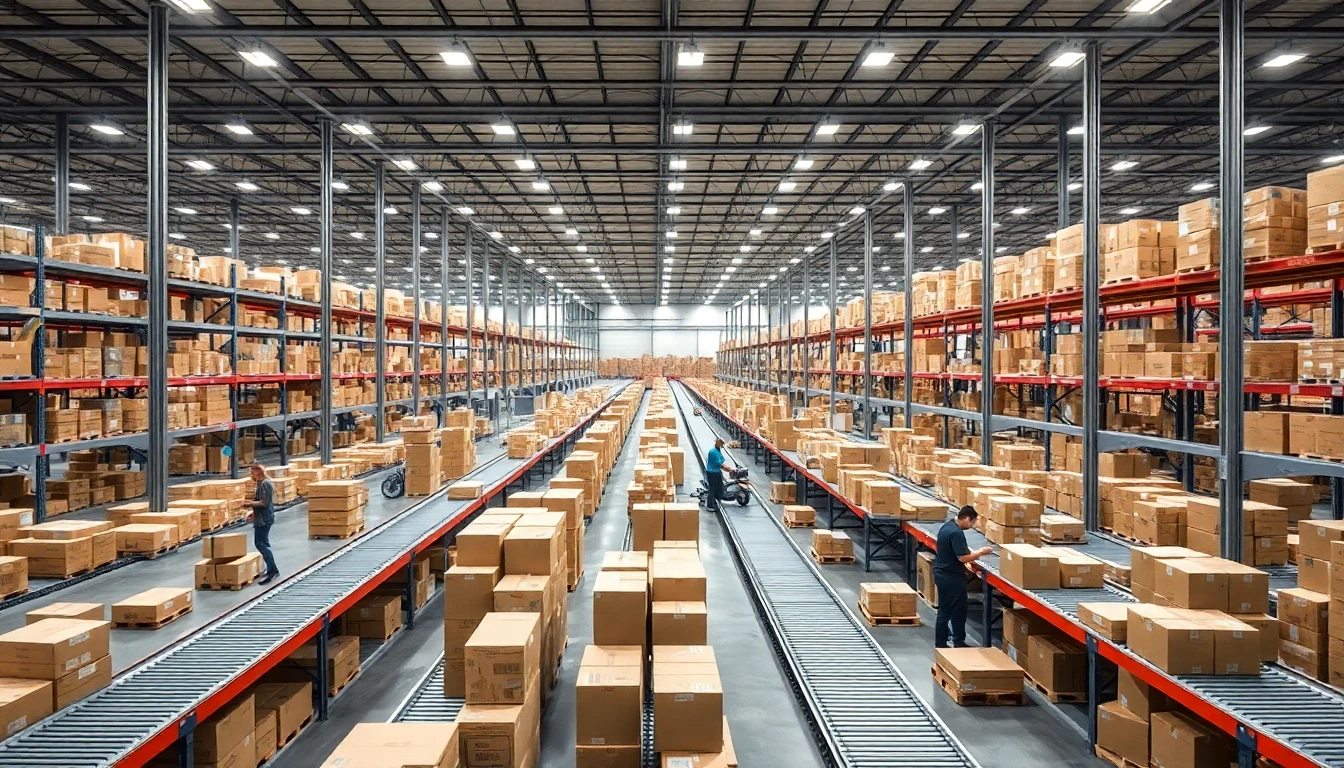
At low volume, packaging is a materials decision. At high volume, packaging becomes an operations decision, because every choice multiplies across tens of thousands of boxes and every inefficiency compounds into labor hours, shipping costs, and missed ship windows.
High volume shipping operations run into the same constraints in roughly the same order. Labor becomes the bottleneck. Storage space runs short. Dimensional weight quietly inflates shipping costs. Packing consistency degrades exactly when volume peaks and customers are least tolerant of a damaged delivery. The packaging process either absorbs that pressure or becomes the thing that breaks.
This guide covers what changes about packaging at scale, which packaging solutions actually move the numbers, and how automation fits into high volume packaging operations.
What Changes When Packaging Operations Scale
A packaging process that works at 200 boxes a day frequently fails at 2,000, and not because anyone did anything wrong. The economics invert.
- Labor becomes the dominant cost. At high volume production levels, the seconds a packer spends per box matter far more than the unit price of the packaging materials they use.
- Small inefficiencies multiply. Five extra seconds per box across 2,000 daily shipments is more than two and a half hours of labor every day.
- Storage becomes a constraint. Pre-formed void fill that was a minor inconvenience at low volume consumes a meaningful share of warehouse space at scale.
- Shipping costs dominate. At high volume, dimensional weight and box size drive a larger share of total cost than packaging materials do.
- Consistency degrades under pressure. When a packaging line is behind schedule, packers improvise, and improvisation is where damage rates and unhappy customers come from.
- Labor shortages bite hardest at peak. Operations that depend on adding headcount for peak seasons are exposed when that headcount is not available.
Identifying which of these is the binding constraint matters, because the fix differs for each. Most businesses assume the problem is material costs when it is actually labor, storage, or dimensional weight.
Increase Throughput: Where Packaging Processes Lose Time
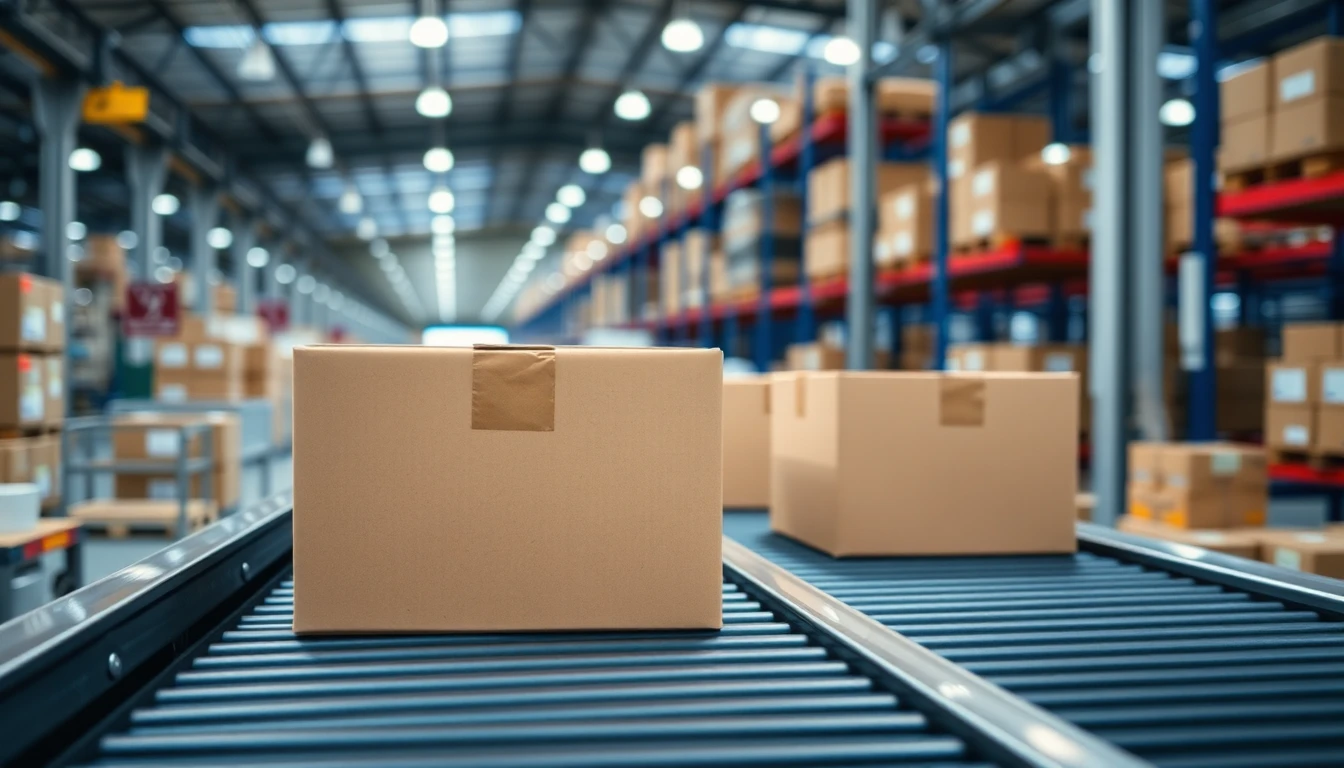
Watch a packing station for an hour and the lost time is rarely in the packing itself. It is in everything around it: walking for packaging materials, waiting for a supply run, deciding which of eight boxes to use, wrestling with a material that will not cooperate.
Improved efficiency at the station usually comes from a short list of changes to the packaging process:
- Bring packaging materials to the packer. Any step that requires leaving the station is lost throughput.
- Reduce the decision load. Fewer box sizes and a documented standard per product means less hesitation and fewer wrong boxes.
- Produce void fill on demand. Inflating cushions at the point of use removes the walking and the storage problem at once.
- Sequence the station logically. Box, product, protection, seal, label, in one direction with no backtracking.
- Fix the exceptions. The products that require special handling consume time out of proportion to their shipping volume.
- Eliminate manual processes that add no value. Decanting bulk materials into bins is handling that produces nothing.
Each change is small alone. Together they separate operations that can increase throughput during peak seasons from those that must add headcount to survive them.
High Volume Packaging Solutions at the Packing Station
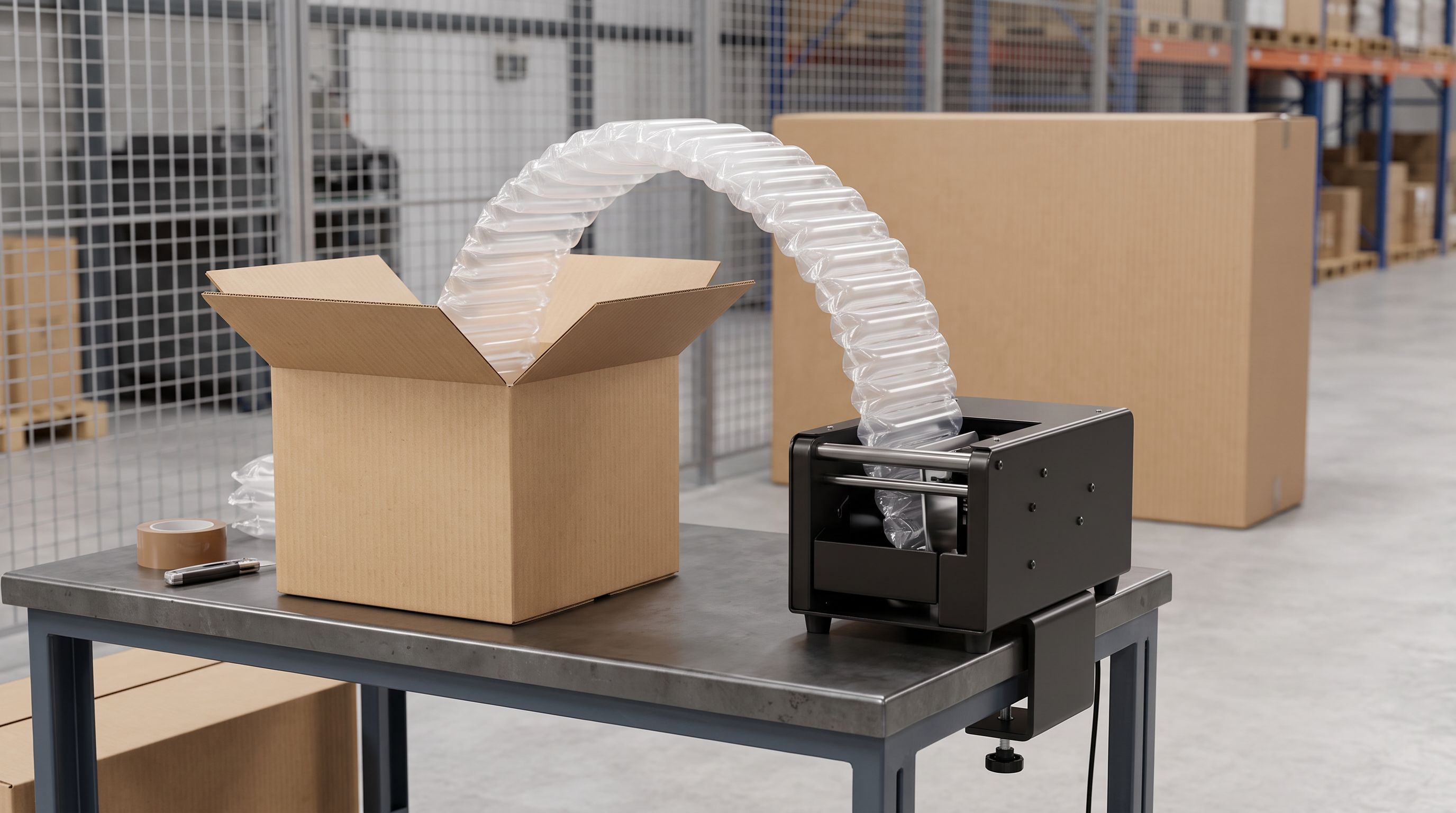
For high volume shippers, on-demand air cushion systems address several constraints simultaneously, which is why these packaging solutions appear so consistently in operations at scale.
Storage space. Air pillow film ships and stores flat, then inflates at the station. Because the cushions are more than 99% air, you store film instead of storing volume. A pallet of film replaces a very large quantity of pre-inflated or loose fill, and valuable warehouse space is rarely free at high volume.
Labor. Cushions are produced continuously at the point of use. The packer reaches, takes what the box needs, and moves on. No refilling bins from bulk containers, no walking, no waiting on a supply run mid-shift. This is where packaging automation delivers the clearest cost savings.
Shipping costs. Air weighs effectively nothing. Void fill that adds no billable weight matters at volume, particularly for businesses already paying dimensional weight rates on most boxes.
Consistency. When the right packaging materials are immediately available in unlimited supply, packers use the right amount. Most under-packing at high volume is a materials-availability problem, not a training problem, and it shows up directly in customer satisfaction.
Material waste. On-demand systems produce what each box needs rather than committing a fixed quantity per shipment, which reduces packaging waste and material costs together.
Our detailed look at how air cushion machines save fulfillment centers covers the operational math, and on-demand packaging systems explains how these automated systems work.
Where Packaging Automation Fits
Packaging automation covers a wide range, from fully automated packaging lines that form, fill, and seal boxes to targeted automation at a single step. Most businesses do not need to automate everything, and the ones that try often spend heavily for modest gains.
The practical sequence for most high volume operations:
- Standardize first. Automation applied to a chaotic packaging process automates the chaos. Fix box sizes and packing standards before adding equipment.
- Automate the highest-frequency manual step. For most shippers that is void fill production, because it happens on every single box.
- Connect to your systems. Warehouse management systems that tell the packer which box to use eliminate the most common decision error.
- Automate box forming and sealing once volume justifies it.
- Revisit right-sizing. Automated systems that cut boxes to product height address dimensional weight structurally, though they carry meaningful capital cost.
Starting at step two is what makes automation cost effective for most operations. Void fill automation is comparatively inexpensive, requires no change to the rest of the packaging line, and touches every box that goes out the door.
Right-Sized Boxes and Shipping Costs
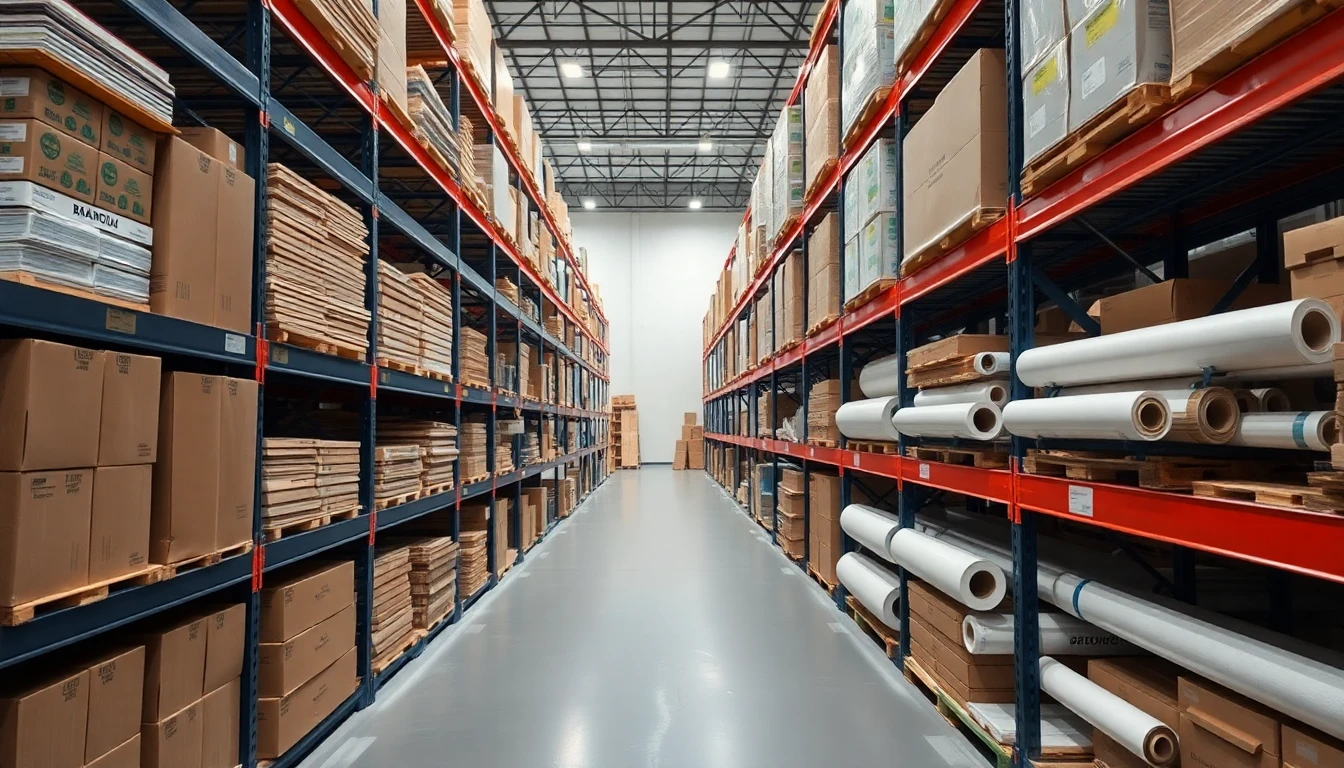
For most high volume shippers, freight is the largest line in the fulfillment budget, and packaging drives more of it than expected.
Two levers matter most:
Right-sized boxes. Carriers bill on the greater of actual or dimensional weight, so oversized boxes mean paying for air on every shipment. Reducing a box by an inch in each dimension changes what you pay on every shipment permanently. Our guide to reducing dimensional weight charges covers the calculation.
Lightweight protection. Once the box is right, the fill inside should not undo the gain. Heavy void fill adds actual weight to every box, and at high volume that compounds into a substantial shipping cost line.
The two work together. Right-sized boxes need less fill, and lightweight fill keeps a smaller box from crossing back over the dimensional threshold. Reducing box sizes across a catalog is one of the few changes that cuts costs and packaging waste at the same time.
Damage Rates Are a Volume Problem Too
At high volume, a damage rate that sounds small is expensive. At 2,000 shipments a day, a one percent damage rate is 20 replacements daily, each carrying product cost, a second round of packaging materials, a second shipment, and customer service labor. It also costs customer satisfaction at the exact moment a customer was expecting something to arrive intact.
Reducing that rate at scale is less about adding material and more about consistency across the entire packaging process. The boxes that fail are usually the ones packed differently from the standard, which is why materials availability at the station and a documented packing standard do more for damage rates than a blanket increase in cushioning.
Adding cushioning to every box is the expensive way to solve it, because you pay on all the shipments that were already fine. Our guide to reducing shipping damage rates covers targeting specific failures instead.
Evaluating Your Current Setup
If you are assessing whether your current packaging setup is holding the operation back, the useful questions are operational rather than commercial:
- How many seconds does a packer spend per box, and how much of that is not packing?
- How many pallet positions are consumed by packaging materials and void fill?
- What share of boxes is billed on dimensional weight rather than actual weight?
- Where does the packaging process break down when shipping volume spikes?
- Which products produce a disproportionate share of damage claims?
- Can packers get materials without leaving the station during a peak wave?
- How much inventory of packaging supplies are you carrying, and why?
Those answers point at the constraint. Cost effective change addresses the binding constraint rather than the most visible line item on an invoice. For a structured approach to the whole program, see our guide to building a packaging strategy that scales.
A Note on Machine Programs for Qualifying Accounts
For genuinely high volume operations, AIRFILL offers a no-cost machine lease program. This is a qualified offer for high-volume and enterprise accounts, not a general promotion, and eligibility depends on sustained shipping volume. If your operation is at that scale, our overview of how no-cost machine lease programs work explains the structure. If you are unsure whether your volume qualifies, a specialist will tell you directly.
Talk to a Packaging Specialist
Packaging for high volume shippers is an operations problem with a materials component, not the reverse. The right packaging solutions depend on your throughput, storage constraints, box profile, and where the process breaks under peak load.
AIRFILL Technologies works with fulfillment centers, third-party logistics providers, and high volume shippers to build packaging operations around on-demand air cushion void fill.
Talk to a packaging specialist for a free consultation. We will look at your current setup and where the throughput and costs are actually going.
AIRFILL Technologies — 1816 Railroad Street, Corona, CA 92878 · (844) 247-3455
Frequently Asked Questions
What packaging works best for high volume shipping operations?
On-demand void fill systems paired with a small number of right-sized boxes. At high volume the binding constraints are labor, storage space, and dimensional weight rather than the unit cost of packaging materials, and on-demand packaging solutions address all three.
How does packaging automation increase throughput?
By removing everything that is not packing from the packer's cycle: walking for packaging materials, waiting on refills, and deciding which box to use. Producing void fill at the station keeps the packer at the station and makes packaging processes repeatable.
How do high volume shippers cut costs on shipping?
Right-size the boxes first, since carriers bill on dimensional weight and oversized boxes mean paying for air on every shipment. Then use lightweight protection so the fill does not add billable weight back. Together these reduce costs on every box.
Does on-demand void fill really save warehouse space?
Yes, substantially. Air pillow film stores flat on compact rolls and inflates only at the point of use, so you store film rather than volume. Pre-inflated and loose fill consume storage proportional to the air inside them.
How should packaging automation be sequenced?
Standardize boxes and packing standards first, then automate void fill because it touches every box, then connect warehouse management systems so packers are told which box to use, then consider automated box forming and sealing as volume grows.
Who qualifies for the no-cost machine lease program?
It is a qualified offer for high-volume and enterprise accounts based on sustained volume, not a general promotion. A packaging specialist can confirm whether your operation qualifies.