
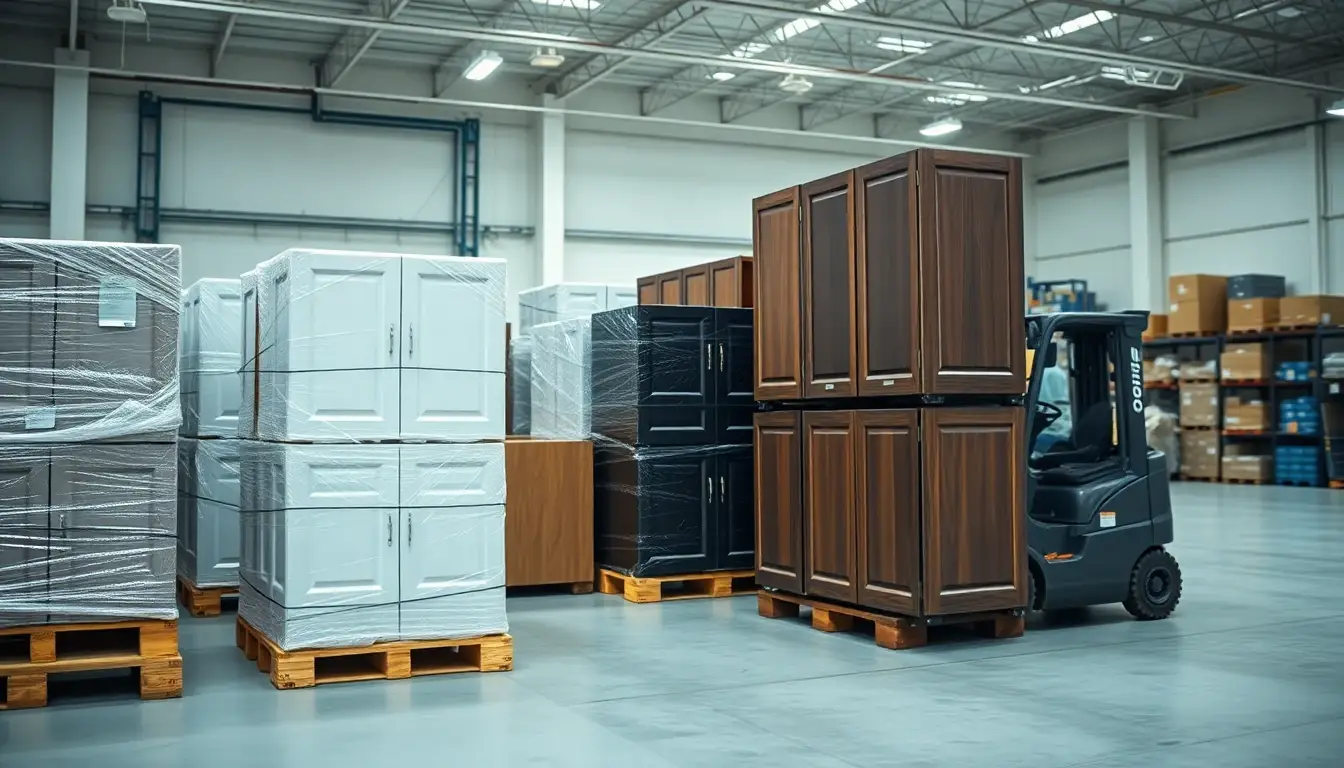
Cabinets are one of the harder products to ship well. They are large, heavy for their size, finished on most visible surfaces, and built around corners and edges that take the first hit in any drop. A single chipped face frame or cracked door can hold up a new kitchen installation for days while a replacement is built and shipped.
For cabinet manufacturers, distributors and retailers that sell to contractors and homeowners, shipping cabinets reliably is part of the product. This guide covers how to ship cabinets: how to package assembled and ready-to-assemble units, how freight shipping works for a cabinet shipment, and where damage usually happens.
Why Shipping Cabinets Is Different
Most shipping damage guides assume a small box moving through a parcel network. Cabinets do not fit that model.
Size and weight push most orders onto freight. A base cabinet or a tall pantry unit usually exceeds parcel size limits, so most cabinet orders move by truck on a pallet rather than as individual boxes.
Corners and edges are prone to damage. The corners of a cabinet box carry the impact when a unit is set down hard, tipped, or bumped by a forklift. A crushed corner on the carton often means a dented or split corner on the cabinet.
Finished surfaces show everything. Painted and stained faces scuff and mar easily. Damage that would be cosmetic on industrial goods is a rejected delivery on kitchen cabinets.
Doors, drawers and hardware are separate failure points. Hinged doors can swing open and crack. Drawers can slide out. Hardware left loose in the box scratches every surface it touches.
How to Package Assembled Cabinets
Assembled cabinets are the most common format for semi-custom and custom work, and the most demanding to protect.
Secure doors and drawers first. Tape or band doors closed using a tape that will not lift the finish, and secure drawers so they cannot slide in transit. Better still, remove doors and drawer fronts and package them separately as flat pieces.
Protect the finish. Wrap finished faces in a non-abrasive layer such as foam sheet or poly film before anything rigid touches them. Bubble wrap works as a surface layer, though the bubble pattern can mark soft or freshly applied finishes, so many shops cover the face with a smooth sheet first.
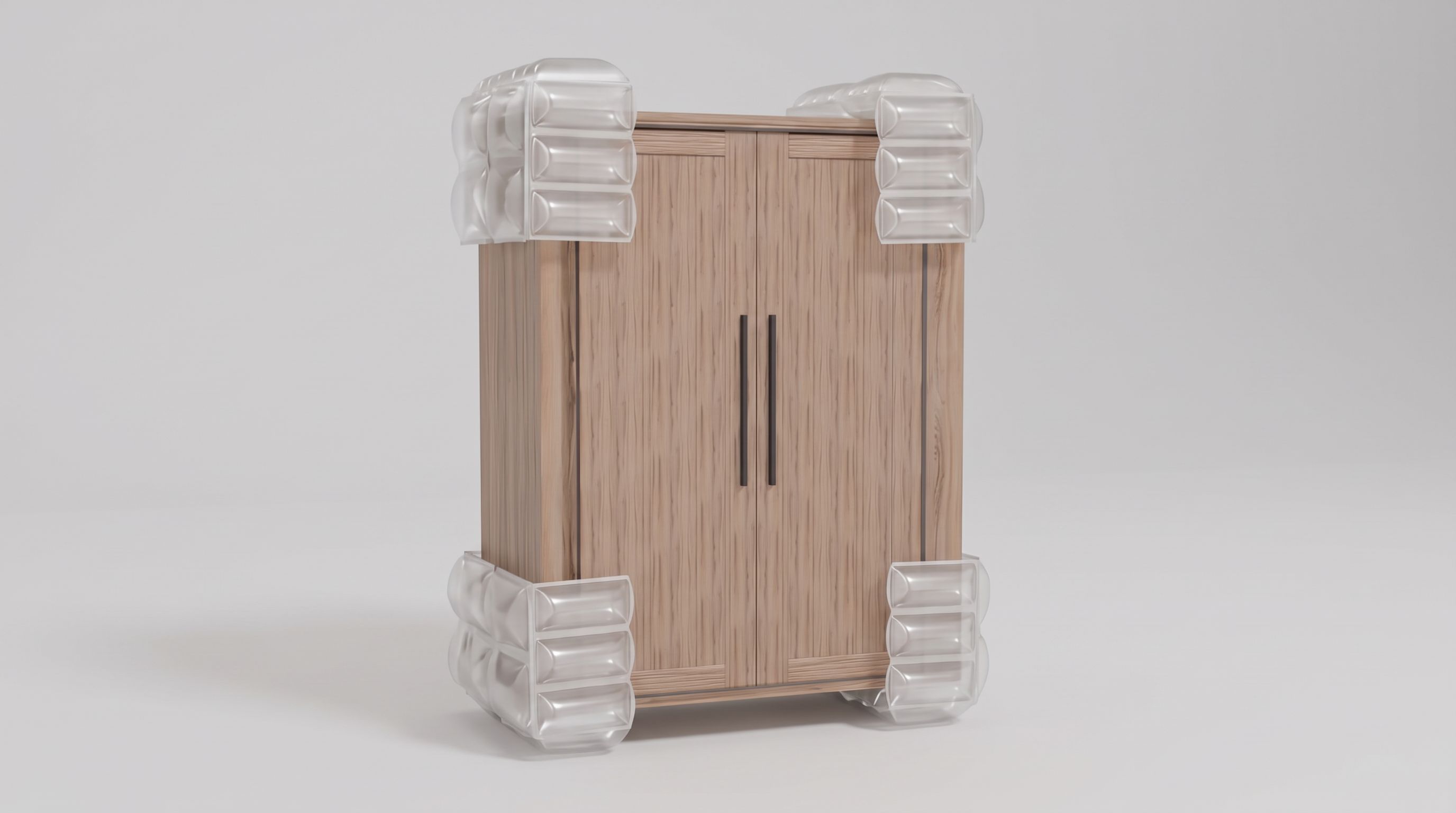
Build up the corners and edges. This is where most damage starts. Corner protectors, edge boards, or air cushion wraps applied to each corner absorb the impact of a hard set-down before it reaches the cabinet. Air cushions add protection without adding much weight, which matters on a product that already ships heavy.
Box it with clearance. Use a cardboard box or a double-wall corrugated carton sized to leave room for cushioning on every side. Fill the remaining void so the cabinet cannot shift inside the box.
Bag the hardware. Pulls, hinges, shelf pins and screws go in a labeled bag, taped inside a drawer or to the interior back panel, never loose in the carton.
Label orientation. Mark the top and the front of the box. Cabinets are often damaged when a box is laid on its face, because the face is the most fragile surface and the one carriers cannot see.
For a broader look at cushioning choices, our guide to air pillow vs foam inserts compares the two for heavier products.
Packing Flat Pack and RTA Kitchen Cabinets
Ready-to-assemble (RTA) kitchen cabinets ship as flat panels, which makes them far easier to stack and much cheaper to move. The risks are different.
- Panel edges chip. Laminated and painted panels chip at the edges when panels shift against each other. Separate finished panels with sheet material and keep them from moving.
- Box crush. Flat pack boxes are often stacked high in warehouses and trucks. A carton that crushes at the corners transfers the load to the panels inside.
- Missing parts. A missing hardware pack stops an installation just as surely as a damaged panel. Pack hardware securely and check it at the packing station.
Because RTA cartons are dense and uniform, they are well suited to pallet loads. Stack them flat, square to the pallet edge, and support the top layer so a strap does not crush the corners.
Freight Shipping for a Cabinet Shipment
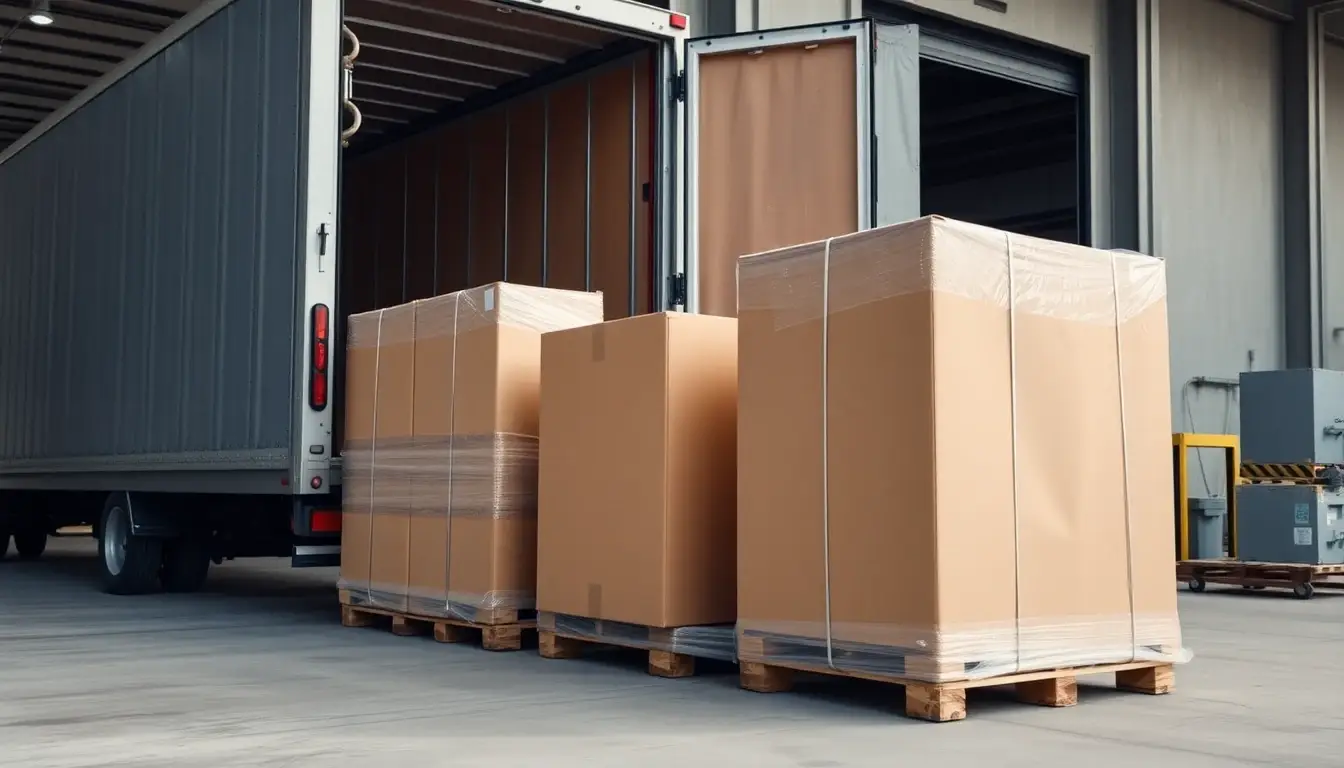
Freight shipping is the default for most cabinet orders. Understanding how it works helps you package for it.
Less-than-truckload (LTL). Your pallet shares a truck with other cargo and moves through terminals where it is unloaded and reloaded. Every transfer is another forklift move and another chance for impact. Package for multiple handlings, not one.
Full truckload and dedicated delivery. Large orders for a construction project or a store restock may justify a full truck. Fewer transfers mean less handling, but loading and unloading still carry risk.
White glove and blanket wrap. Some carriers offer blanket-wrapped service, where cabinets travel wrapped in moving blankets and strapped inside the truck without full boxing. It reduces packaging material but relies heavily on careful handling by the driver and crew.
Crating. For high-value custom cabinets, a wooden crate gives rigid protection on every face. It costs more and adds weight, so it is usually reserved for pieces where the cabinet itself justifies it.
Whichever service you use, build the pallet properly. Stack heavier units on the bottom, keep cartons inside the pallet footprint so edges do not overhang, strap the load, and stretch or shrink wrap it so the pallet moves as a single unit. A pallet with overhanging corners will have damaged corners.
Our guide on how to ship large items covers freight classes and carrier choices in more detail.
Delivery and Inspection: The Last Point of Risk
Many cabinet shipments are damaged in the final stage, not on the highway.
Plan the delivery. Residential and job site deliveries often need a lift gate, a delivery appointment, and a clear path from the truck to the floor where the cabinets will sit. Tell the carrier in advance, because a driver without a lift gate has fewer good options.
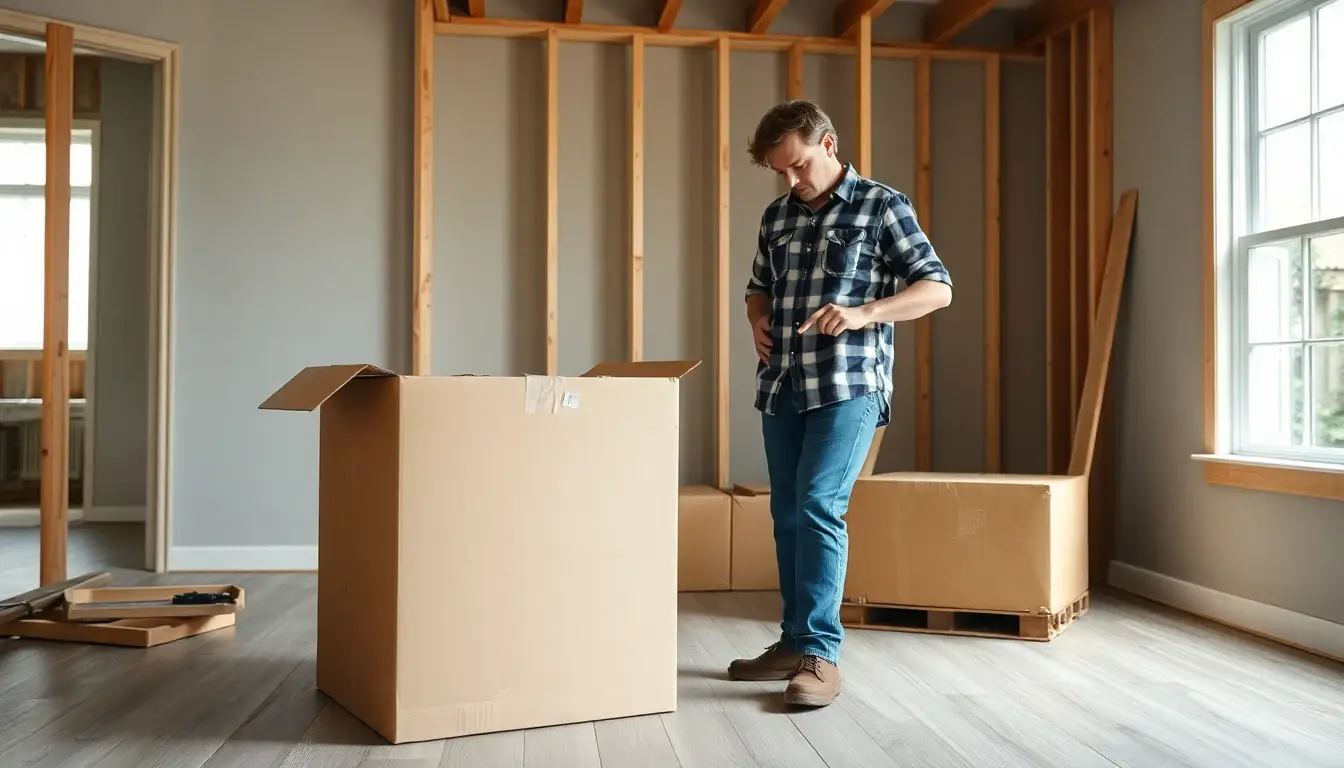
Inspect before signing. The customer or contractor should inspect each box before they sign the delivery receipt. Note visible damage, crushed corners or torn cartons on the receipt itself. A clean signature makes a later claim much harder.
Keep cabinets boxed until installation. On an active construction site, cabinets sitting unboxed get bumped by tools, ladders and other trades. Leave them in their packaging until the installer is ready.
Use tracking. Share tracking information with the customer so someone is ready to receive the shipment. Unattended deliveries left on a driveway are exposed to weather and handling by whoever moves them next.
If damage does occur, documentation is everything. Our guide to shipping damage claims explains how to file and how to prevent repeat losses.
Building a Repeatable Cabinet Packaging Process
Cabinet companies that ship consistently well tend to share the same habits.
- Standardize packaging by cabinet type. Base, wall, tall and vanity units each get a written packing spec and a matching carton size.
- Make cushioning available at the station. On-demand air cushion void fill and corner protection at the packing station means packers use the right amount on every unit instead of whatever is nearby.
- Test a packed unit. Drop and tip-test a real packed cabinet before committing to a configuration. Our overview of package testing standards explains what those tests prove.
- Track damage by product and carrier. Damage tends to cluster around a few units, finishes or lanes. Fixing those specifically is more effective than adding material to every box.
- Right-size the carton. Oversized boxes cost more to ship and allow movement. See our guide to reducing dimensional weight charges.
Talk to a Packaging Specialist About Shipping Cabinets
There is no single best way to ship cabinets. The right approach depends on whether you ship assembled or flat pack units, which finishes you use, and how your orders move from your facility to the customer.
AIRFILL Technologies works with casework and cabinet businesses to protect corners, edges and finished surfaces with on-demand air cushion packaging that is light, consistent and quick to apply at the packing station. For background on the technology, see our ultimate guide to air pillow packaging.
Talk to a packaging specialist for a free consultation. We will look at how your cabinets ship today and where damage is coming from.
AIRFILL Technologies · 1816 Railroad Street, Corona, CA 92878 · (844) 247-3455
Frequently Asked Questions
What is the best way to ship cabinets?
For most orders, palletized freight shipping with each cabinet boxed, corners and edges reinforced, doors and drawers secured, and the pallet strapped and wrapped. High-value custom pieces may justify crating or a blanket-wrapped dedicated delivery.
Can you ship cabinets by parcel?
Small wall cabinets and RTA cartons sometimes fit parcel limits, but most assembled cabinets exceed them. Parcel networks also involve more automated handling, so freight is usually the safer choice for larger units.
Should doors be removed before shipping cabinets?
Removing doors and drawer fronts and packing them flat protects the hinges and reduces the risk of a door swinging open in transit. If doors stay on, secure them closed and protect the face.
Who is responsible if cabinets arrive damaged?
That depends on your terms and the carrier contract. What matters most in practice is that damage is noted on the delivery receipt at the time of delivery, with photos, so a claim can be supported.