Most fulfillment operations are losing money on packaging and they do not realize it. Not because the materials are expensive on paper, but because the system around those materials is inefficient. Pre-inflated cushions take up space. Foam inserts require storage and slow down the packing line. And when volume spikes, the whole thing compounds.
Air cushion machines solve a problem that a lot of operations managers have just learned to live with. This post breaks down how they work, where the savings actually come from, and what to look for when evaluating a system for your facility.
What Is an Air Cushion Machine?
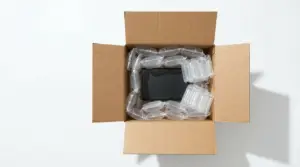
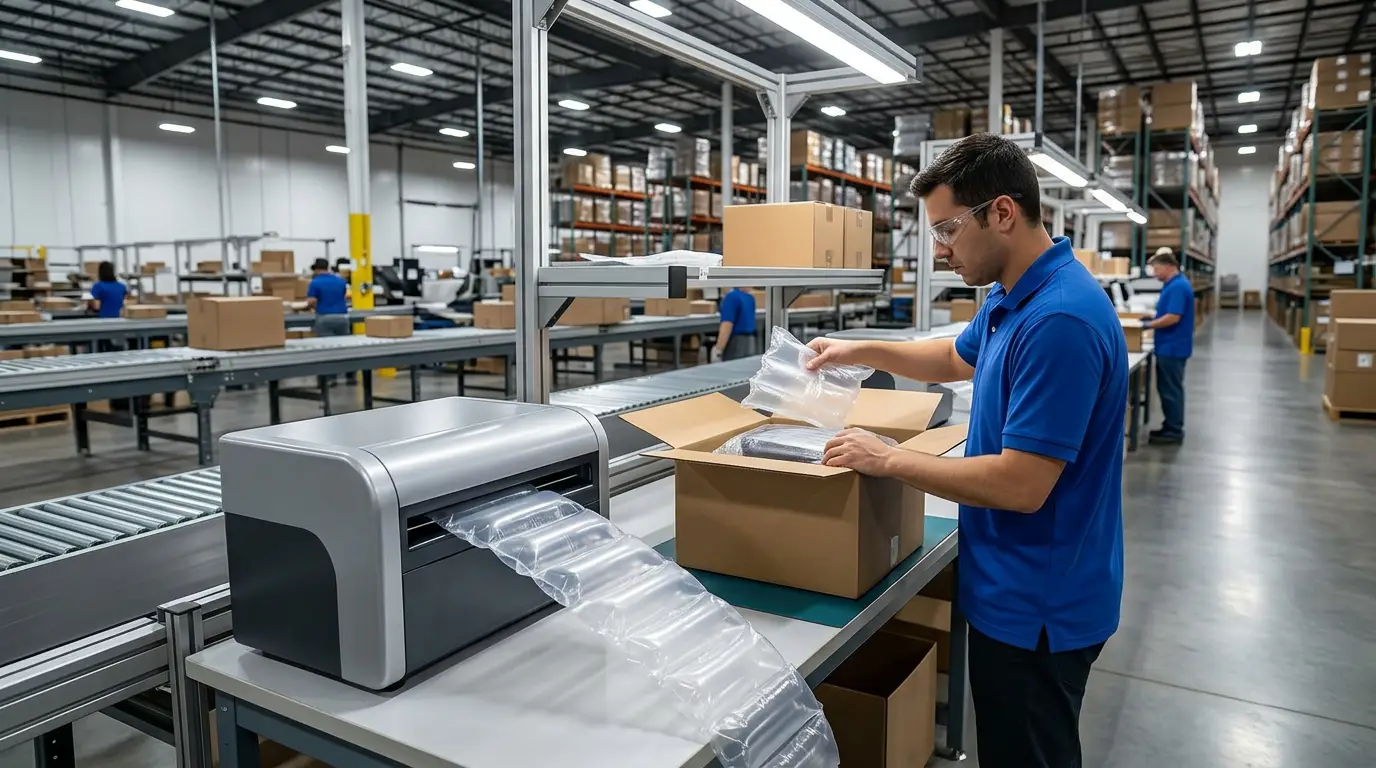
An air cushion machine is an on-demand inflation system that produces air-filled cushions directly on the packing floor. Instead of ordering pre-inflated packaging that ships bulky and takes up warehouse space, you receive compact film rolls and inflate exactly what you need, when you need it.
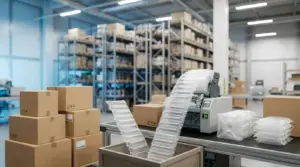
The machine pulls film from the roll, inflates it, and seals it into interconnected cushions in a continuous strip. Packers tear off what they need per order. There is no pre-sorting, no storage of bulky pre-expanded material, and no scrambling for a resupply when a pallet of pre-inflated cushions runs out faster than expected.
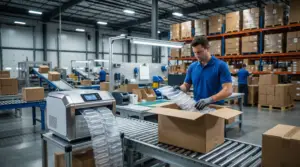
Modern air cushion systems are designed to sit right at the packing station. Some are tabletop units for lower-volume lines. Others are floor-mounted with higher output for operations running hundreds or thousands of shipments per day.
Where the Savings Come From
The numbers matter here, so it is worth walking through each cost category specifically rather than making vague claims about efficiency.
Labor Costs
This is usually the biggest line item people underestimate. When packers are hand-cutting foam inserts, digging through a bin of packing peanuts, or untangling a block of pre-inflated material, they are not packing. Every extra step in the process adds time per order, and that time adds up fast at any real volume.
With an air cushion machine positioned at the station, the packer pulls a strip, tears it to length, and places it. The motion is simple and repeatable. Facilities that have made the switch consistently report meaningful reductions in pack time per order, which translates directly into labor savings or higher order output with the same headcount.
Material Costs
Film rolls for air cushion machines are dense and inexpensive to ship. You are not paying to transport air. Pre-inflated packaging, by contrast, ships at a significant volume-to-value ratio, which means you are spending real freight dollars moving mostly empty space to your warehouse.
On-demand inflation also cuts waste from over-packing. Packers tend to grab more material than necessary when working from a bulk supply. When cushions are produced per order, usage stays much closer to what is actually needed.
Storage Footprint
A pallet of film rolls occupies a fraction of the floor space that the equivalent volume of pre-inflated cushions or foam inserts requires. For fulfillment centers where floor space is a real operational constraint, this is not a small thing. Reclaiming that space has measurable value, whether it goes to more pick locations, staging area, or simply less congestion around the packing line.
Damage Claims
Air cushions are consistent. Every cushion produced by the machine is inflated to spec, which means the protection level does not vary based on how a packer grabbed a handful of peanuts or how a foam insert was positioned. Fewer variables in the packing process means fewer damaged shipments, and fewer damaged shipments means fewer return authorizations and replacement costs.
A Note on Damage CostsIndustry data puts packaging-related damage at roughly 11% of total shipping spend for operations that have not addressed their void fill systematically. Even a 2 to 3% reduction in damage claims on a high-volume shipping operation represents significant savings annually.
On-Demand vs. Pre-Inflated: A Direct Comparison
|
Factor |
On-Demand Air Cushion Machine |
Pre-Inflated Cushions |
|---|---|---|
|
Storage space required |
Minimal (film rolls) |
High (bulky, pre-expanded) |
|
Freight cost to receive |
Low (dense rolls) |
High (paying to ship air) |
|
Pack speed |
Fast (continuous strip output) |
Moderate (sorting, untangling) |
|
Consistency of protection |
High (machine-inflated to spec) |
Variable (handling dependent) |
|
Waste per order |
Low (produce what you need) |
Higher (over-use common) |
|
Scalability during peaks |
Easy (add film rolls) |
Difficult (resupply lag) |
Who Benefits Most from Air Cushion Machines
Not every operation has the same pain points, but air cushion machines tend to deliver the most obvious returns in a few specific situations.
High-volume fulfillment centers shipping hundreds of orders per day will see the labor savings compound quickly. Shaving just 30 seconds per order at 500 orders a day is over four hours of labor daily. At any reasonable labor rate, that math is hard to ignore.
Operations with space constraints get an immediate win from switching off pre-inflated or foam-based materials. The footprint difference between a pallet of film rolls and the equivalent packaging volume in pre-inflated cushions is dramatic and visible from day one.
Facilities dealing with seasonal spikes benefit from the flexibility. Film rolls are easy to stock ahead of peak periods and take up almost no room. There is no scrambling to find warehouse space for a truckload of pre-inflated material before Q4 hits.
Companies with ESG reporting requirements also gain a cleaner sustainability story. Air cushion film is available in curbside recyclable and BPA-free options, which gives procurement teams documented, audit-ready materials to reference in their reporting.
What to Look for in an Air Cushion Machine
The machine itself is only part of the equation. Here is what actually matters when you are evaluating systems.
Output Rate
Match the machine’s cushion output to your packing line speed. A machine that cannot keep up with your packers creates a bottleneck that cancels out the efficiency gains you are looking for.
Film Compatibility
Some machines are locked to proprietary film, which limits your options and hands pricing control to the manufacturer. Look for systems that work with a range of film types so you maintain flexibility as your needs change.
Ease of Use
If the machine requires significant training or frequent maintenance interventions, the labor savings get eaten up by downtime and troubleshooting. The best systems are designed to be operated by anyone on the floor with minimal onboarding.
Machine Access and Program Support
High-volume operations should ask specifically about no-cost machine lease programs. Several packaging suppliers, including AIRFILL Technologies, offer qualified clients access to air cushion inflation equipment at no cost as part of a packaging supply agreement. This removes the capital investment barrier entirely and lets you evaluate the system based on operational results before making any long-term commitment.
Account Management
A machine sitting on your floor without support is a liability. Look for a supplier that provides a dedicated account manager who handles onboarding, monitors your usage, and stays ahead of resupply so you are never caught short on a busy week.
Making the Switch
Most operations can transition to an on-demand air cushion system without disrupting their packing workflow. The machines are compact, the film rolls integrate easily into existing station layouts, and training is minimal.
The harder part is usually the internal conversation about switching costs and existing vendor relationships. That is why a no-cost machine program matters: it lowers the barrier to trying the system without committing capital or locking into a long-term arrangement before you have seen the results firsthand.
If your facility is still running pre-inflated cushions, foam inserts, or packing peanuts as its primary void fill solution, the savings available from switching to an on-demand air cushion system are almost certainly larger than you expect. The labor math alone tends to close the case.
For more on how air cushion packaging fits into a broader protective packaging strategy, see our full breakdown: What Is Void Fill Packaging? Types, Benefits and Best Practices. And for a complete look at air pillow and air cushion systems from AIRFILL Technologies, visit our Air Pillow Packaging Ultimate Guide.
Want to see what an air cushion machine could save your operation? Talk to an AIRFILL packaging specialist today.