Key Takeaways
- Inflatable packaging reduces shipping costs by up to 40% while providing superior protection compared to traditional packing materials
- AIRFILL Technologies’ EcoGuard and AIRFILL Bags offer 100% recyclable, sustainable packaging solutions with zero carbon footprint production
- On-demand inflatable systems eliminate storage space requirements and reduce material waste by 60% versus bulk packaging materials
- The global air cushion packaging market is projected to reach $1.2 billion by 2027, growing at 6.8% CAGR
- No-cost lease programs make advanced inflatable packaging technology accessible to businesses of all sizes
Introduction to Advanced Inflatable Packaging Solutions
Recent industry studies reveal that businesses implementing advanced inflatable packaging solutions experience up to 95% damage prevention rates and achieve substantial cost reductions. These inflatable packaging systems solve key shipping and product protection challenges by providing tailored solutions for different logistical needs, ensuring both product safety and customer satisfaction. Companies transitioning from traditional materials to air-filled protective packaging report average shipping cost savings of 40% while simultaneously improving their sustainability profile.
What is Inflatable Packaging?
Inflatable packaging represents a fundamental shift in protective packaging philosophy. Rather than relying on solid materials that add significant weight and volume, this technology harnesses the power of sealed air to create highly effective protective barriers. The core principle involves converting compact roll film into inflated cushions on demand, maximizing protection while minimizing material usage.
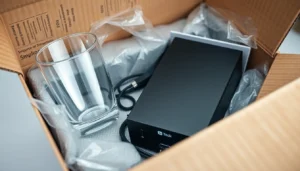
The technology works by utilizing specialized films embedded with one-way valves that allow air in during inflation but prevent leakage afterward. These systems typically use ambient air and low-pressure inflation methods to create customized protective barriers around products. The result is packaging that is up to 98% air and only 2% material by volume, delivering exceptional protection with minimal environmental impact.
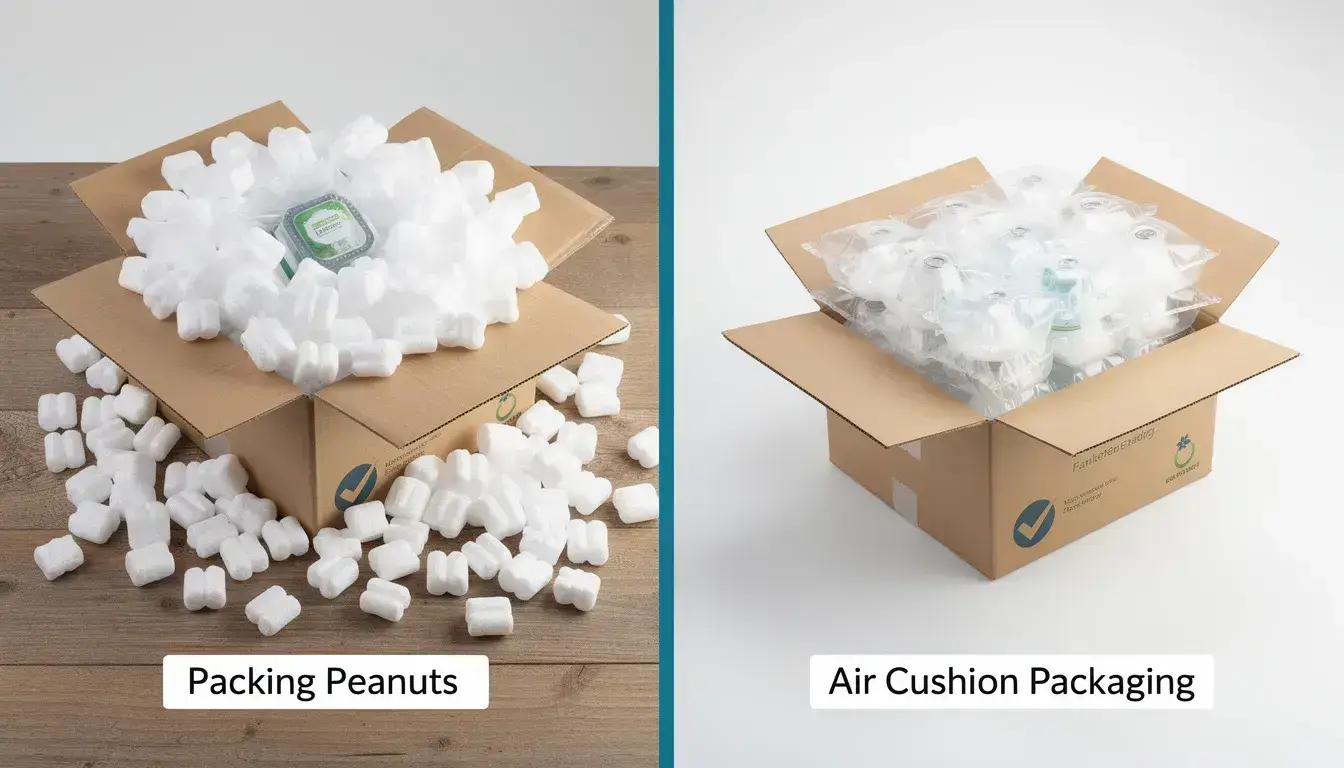
When compared to traditional packaging materials, inflatable solutions offer distinct advantages. Packing peanuts create a mess, can settle during transit, allowing products to shift, and pose disposal challenges. Paper void fill adds significant weight to shipments and lacks the shock-absorption capabilities of air-based systems. Bubble wrap, while effective for protection, requires substantial storage space and is typically pre-inflated, limiting customization options.
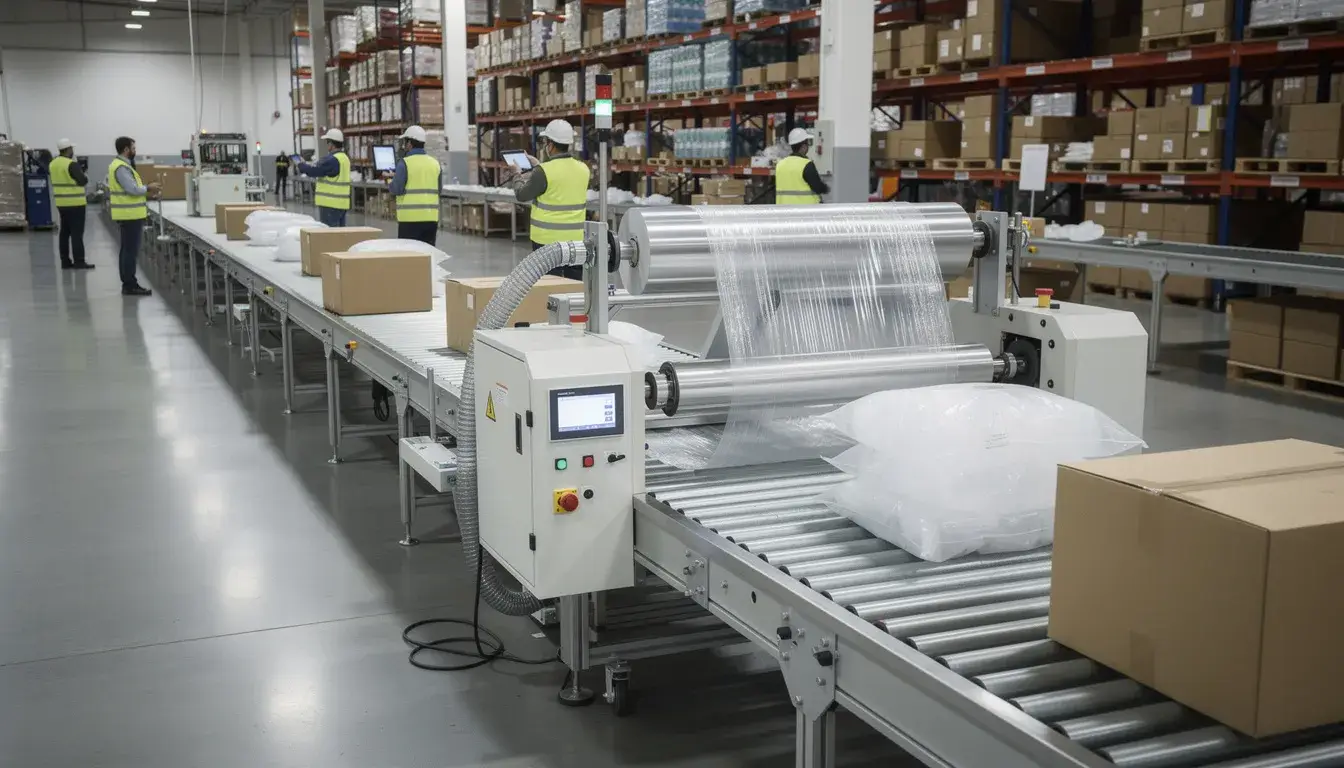
On-demand inflation systems represent the pinnacle of packaging efficiency. Unlike pre-inflated alternatives that consume valuable warehouse space during storage and transportation, on-demand systems ship film rolls that can produce hundreds of meters of protective cushioning when needed. This approach reduces inbound freight costs by up to 90% compared to bulky traditional materials while providing superior customization capabilities at the point of packing.
The environmental advantages of air-based protection systems extend beyond material reduction. The lightweight nature of inflatable packaging significantly reduces transportation emissions, while modern films designed for recyclability support circular economy principles. Additionally, the precision of on-demand systems eliminates overpackaging, ensuring optimal material usage for each shipment.
Types of Inflatable Packaging Solutions
The versatility of inflatable packaging technology has led to the development of specialized solutions designed to address specific protection requirements across various industries and applications.
Air Pillows and Void Fill Applications
Air pillows serve as the foundation of modern void fill strategies. These rectangular cushions efficiently fill empty spaces within shipping cartons, preventing product movement during handling and transit. Modern air pillows can be produced at speeds exceeding 100 units per minute, making them ideal for high-volume operations where efficiency is paramount. The pillows maintain consistent inflation pressure throughout the shipping cycle, providing reliable protection against impacts and vibrations.
Protective Wrapping Systems for Electronics
Sensitive electronics require specialized protection that goes beyond simple void fill. Multi-chamber air column bags create form-fitting protective shells around laptops, tablets, monitors, and other fragile devices. These systems feature interconnected chambers that provide redundancy – if one chamber experiences damage, others maintain protection integrity. The clean, dust-free nature of these systems makes them particularly suitable for electronic components that could be damaged by traditional loose-fill materials.
Heavy-Duty Dunnage Bags for Load Stabilization
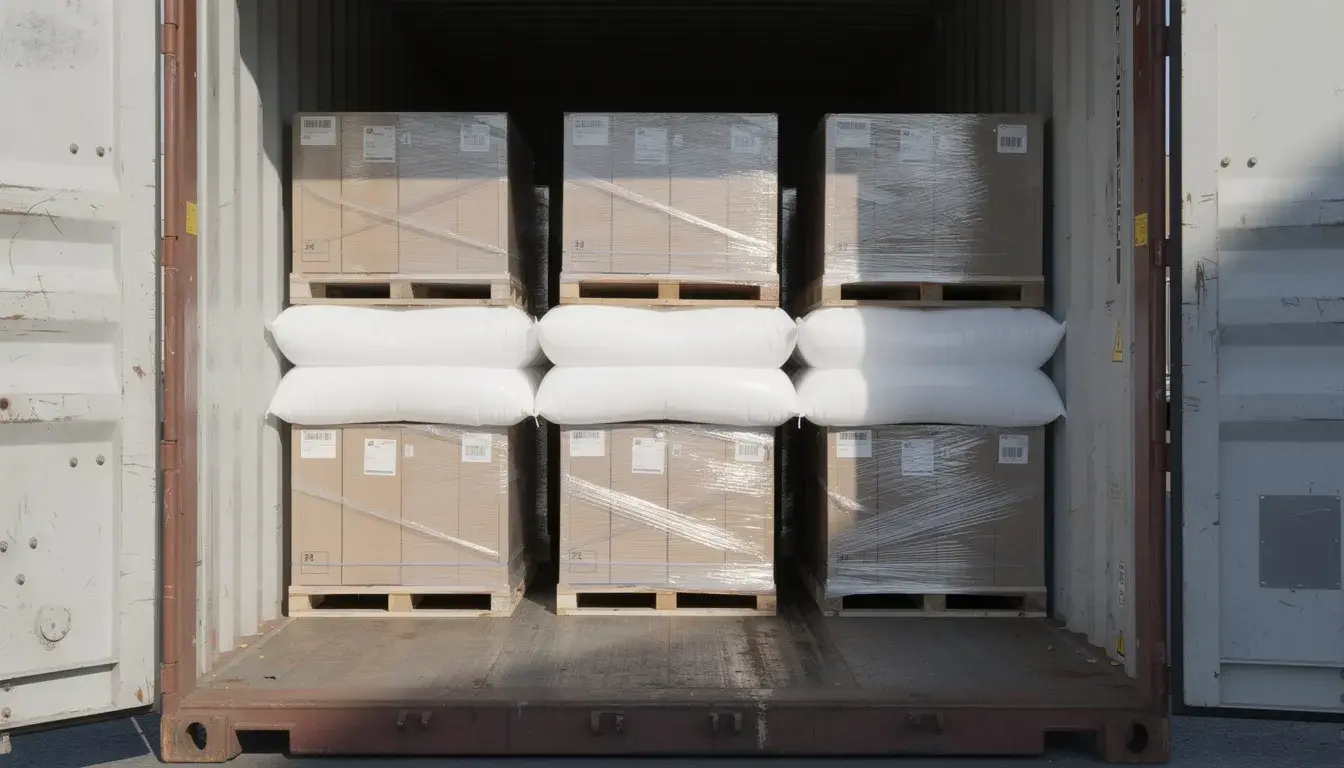
Large-scale shipping operations utilize heavy-duty dunnage bags to secure palletized loads within trucks and shipping containers. These robust inflatable systems prevent load shift during transportation, reducing damage claims and ensuring cargo arrives in optimal condition. The bags can be quickly deployed and adjusted to accommodate various load configurations, providing flexible solutions for diverse shipping requirements.
Specialized Wine and Beverage Protection Systems
The beverage industry has embraced inflatable packaging for protecting glass bottles during direct-to-consumer shipping. L-type air columns specifically designed for bottles create secure protective chambers that dramatically reduce breakage rates. These systems accommodate various bottle sizes and can protect multiple units simultaneously, making them ideal for wine clubs, craft beverage manufacturers, and specialty retailers.
Custom Inflatable Packaging Designs
Advanced manufacturers offer custom inflatable solutions tailored to unique product requirements. These may include O-type designs for circular items, U-type configurations for irregularly shaped products, or specialized multi-chamber systems for complex assemblies. Custom solutions ensure optimal protection while maintaining material efficiency and sustainability principles.
AIRFILL Technologies Product Showcase
AIRFILL Technologies has developed a comprehensive portfolio of inflatable packaging solutions designed to meet diverse industry needs while maintaining an unwavering commitment to sustainability and performance.
EcoGuard Sustainable Packaging Line
The EcoGuard line represents the pinnacle of sustainable packaging innovation, featuring biodegradable films that maintain superior protective qualities while minimizing environmental impact. These advanced materials decompose naturally at end-of-life while providing exceptional puncture resistance and seal integrity during transit. The EcoGuard line includes specialized films for various applications, from delicate electronics protection to heavy-duty industrial shipping.
EcoGuard products achieve zero carbon footprint production through renewable energy utilization and carbon-neutral manufacturing processes. The line features films manufactured with high percentages of post-consumer recycled content, supporting circular economy principles while delivering premium protection performance.
AIRFILL Bags Specifications and Capabilities
AIRFILL Bags offer versatile protection solutions available in sizes ranging from compact 4”x6” options for small item protection to large-scale 48”x96” configurations for industrial applications. These bags feature advanced valve technology that ensures consistent inflation and long-term seal integrity, even under extreme temperature variations and handling stresses.
The material options include PlantWave bio-based films derived from renewable resources, EcoWave recycled content films, and PaperWave hybrid solutions that combine the benefits of paper and plastic technologies. Each option delivers specific performance characteristics optimized for different application requirements while maintaining environmental responsibility.
On-Demand Inflation Systems and Equipment
AIRFILL’s automated equipment capabilities enable businesses to produce protective packaging at the point of need, eliminating storage requirements and reducing material waste. These systems integrate seamlessly with existing packing lines, producing consistent, quality-controlled inflated packaging at speeds that support high-volume operations.
Roll lengths from 650 to 1000 feet accommodate various operational scales, from small business applications to enterprise-level distribution centers. The equipment features intuitive controls that require minimal training, ensuring rapid implementation and consistent performance across different operator skill levels.
No-Cost Lease Program Access
Recognizing that equipment investment can present barriers to adoption, AIRFILL Technologies offers comprehensive no-cost lease programs that make advanced inflatable packaging technology accessible to businesses of all sizes. This program eliminates capital expenditure requirements while providing access to state-of-the-art equipment, maintenance support, and ongoing technical assistance.
The lease program structure aligns equipment costs with material consumption, creating predictable operational expenses that scale with business growth. Participants receive regular equipment updates and technology improvements, ensuring access to the latest innovations in inflatable packaging technology.
Industry Applications and Use Cases
Inflatable packaging solutions have proven their value across diverse industries, each benefiting from the unique advantages these systems provide in addressing specific protection and efficiency challenges.
E-commerce and Fulfillment Center Applications
E-commerce operations face unique challenges in managing diverse product mixes, unpredictable order compositions, and varying package sizes. Inflatable packaging systems excel in these environments by providing flexible protection that adapts to each shipment’s specific requirements. Fulfillment centers report significant improvements in packing speed, reduced training time for new employees, and substantial reductions in damage-related returns.
The ability to produce packaging on demand eliminates the need to stock multiple sizes of traditional materials, freeing valuable warehouse space for revenue-generating inventory. Additionally, the consistent performance of inflatable systems reduces variability in protection quality, regardless of operator experience level.
Automotive Parts and Electronics Protection
Automotive and electronics industries require packaging that delivers exceptional protection while maintaining cleanliness standards. Inflatable solutions excel in these applications due to their dust-free nature and ability to provide precise protection around complex geometries. Multi-chamber air columns can be configured to protect sensitive components during multi-stage distribution processes, from manufacturing facilities through regional hubs to final delivery.
The static-free properties of advanced inflatable films make them particularly suitable for sensitive electronic components where electrostatic discharge could cause damage. These systems also accommodate the irregular shapes common in automotive and electronic assemblies while providing superior shock absorption compared to rigid alternatives.
Pharmaceutical and Medical Device Shipping
The pharmaceutical industry demands packaging solutions that meet stringent cleanliness and reliability standards while providing exceptional protection for high-value products. Inflatable packaging systems designed for pharmaceutical applications undergo rigorous testing to ensure compatibility with various environmental conditions and regulatory requirements.
These systems protect sensitive diagnostic equipment, laboratory instruments, and pharmaceutical packaging during distribution while maintaining the sterile environments required for medical applications. The consistent performance and reliability of inflatable systems support the quality assurance processes critical to pharmaceutical operations.
Food and Beverage Industry Packaging Needs
Food and beverage manufacturers utilize inflatable packaging for secondary protection of packaged goods, particularly glass containers that require exceptional protection during direct-to-consumer shipping. The clean, non-contaminating nature of inflatable systems makes them suitable for food-related applications where hygiene is paramount.
Specialized bottle protection systems have revolutionized the wine and craft beverage industries by enabling safe direct-to-consumer shipping. These systems dramatically reduce breakage rates while providing a premium unboxing experience that enhances brand perception.
International Shipping and Logistics Requirements
International shipping presents unique challenges, including extended transit times, multiple handling points, and varying environmental conditions. Inflatable packaging systems excel in these demanding applications by maintaining protection integrity throughout extended shipping cycles while accommodating the space and weight constraints critical to international logistics cost management.
The lightweight nature of inflatable systems reduces shipping costs under both dimensional and actual weight pricing models, making them particularly valuable for international commerce where freight costs significantly impact profitability.
Small Business and Enterprise-Level Solutions
AIRFILL Technologies’ solution portfolio scales effectively from small business applications to enterprise-level operations. Small businesses benefit from accessible equipment lease programs and flexible material ordering that support growth without requiring substantial upfront investments. Enterprise customers leverage advanced automation capabilities and custom solution development to optimize their specific operational requirements.
Sustainability and Environmental Benefits
Environmental responsibility has become a critical business imperative, and inflatable packaging solutions offer compelling advantages in supporting corporate sustainability goals while delivering superior operational performance.
100% Recyclable Materials and Biodegradable Options
Modern inflatable packaging films are designed using mono-material constructions that facilitate recycling through existing plastic film collection programs. These materials can be efficiently processed through specialized recycling streams, supporting circular economy principles by converting waste packaging into new products.
Biodegradable options provide end-of-life solutions for applications where recycling infrastructure may be limited. These advanced materials decompose naturally while maintaining the performance characteristics required for effective product protection during their useful life.
Carbon Footprint Reduction Compared to Traditional Packaging
Life cycle assessments consistently demonstrate that inflatable packaging solutions deliver significant carbon footprint reductions compared to traditional alternatives. The primary driver is material efficiency – using up to 98% air rather than solid materials dramatically reduces the energy and resources required for production and transportation.
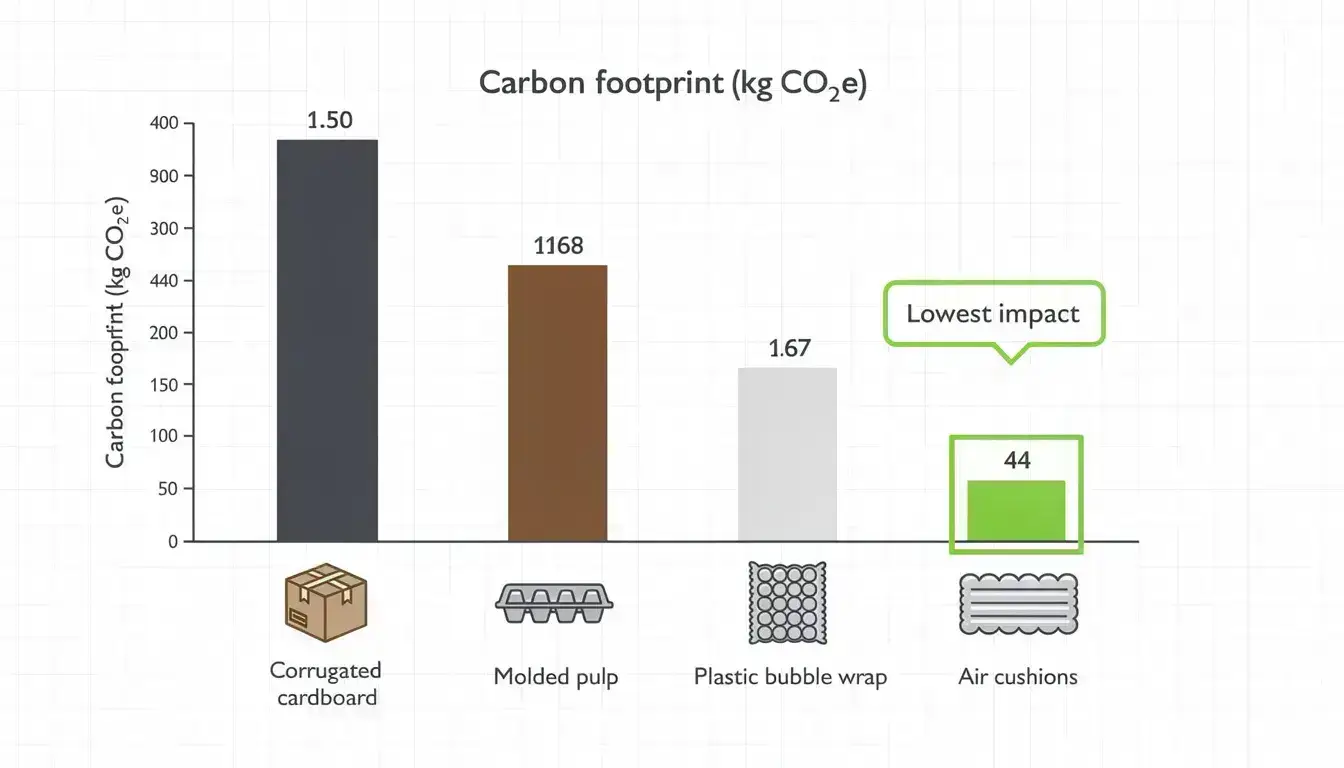
The lightweight nature of inflatable systems reduces transportation emissions throughout the supply chain, from raw material delivery to final product distribution. Companies implementing these solutions typically achieve measurable reductions in their scope three emissions related to packaging and transportation.
Waste Reduction Statistics and Material Efficiency
Organizations transitioning to inflatable packaging solutions report material waste reductions of up to 60% compared to traditional alternatives. This reduction stems from the precision of on-demand systems that eliminate overpackaging and the efficiency of air-based protection that delivers superior results with minimal material input.
The compact storage requirements of film rolls versus bulky traditional materials also reduce packaging-related warehouse space requirements, enabling more efficient facility utilization and reducing overall operational environmental impact.
AIRFILL Technologies’ Sustainable Manufacturing Commitment
AIRFILL Technologies maintains comprehensive sustainability commitments throughout its manufacturing processes. Their facilities utilize renewable energy sources and implement closed-loop water systems that minimize environmental impact. The company actively invests in research and development of next-generation sustainable materials while maintaining rigorous performance standards.
Circular Economy Principles in Design
Product designs prioritize end-of-life considerations from initial development through production. Materials are selected for recyclability and compatibility with existing waste management infrastructure. The company also supports customer education programs that improve recycling participation rates and effectiveness.
Environmental Certifications and Compliance
AIRFILL products meet or exceed relevant environmental certification standards, providing customers with confidence in their sustainability claims. Regular third-party auditing ensures ongoing compliance with evolving environmental standards and regulations.
Cost Savings and Return on Investment
The financial benefits of implementing inflatable packaging solutions extend beyond simple material cost comparisons to encompass operational efficiency improvements, damage reduction, and strategic advantages that impact overall business profitability.
Specific Cost Reduction Examples
Real-world implementations demonstrate compelling cost reduction opportunities across various business models. A mid-size e-commerce retailer shipping 10,000 packages monthly achieved a 40% reduction in packaging material costs and a 25% reduction in shipping expenses by transitioning from paper void fill to air cushion systems. The combined savings exceeded $15,000 annually while improving package protection quality.
An electronics manufacturer reduced damage claims by 85% after implementing air column protection systems, eliminating approximately $50,000 in annual loss mitigation costs. The improved customer satisfaction also contributed to increased repeat purchase rates and positive brand reputation effects.
Labor Cost Reduction Through Automation
Automated inflation systems significantly reduce packaging labor requirements compared to manual handling of bulky traditional materials. Operations report 30-50% improvements in packing speed, enabling existing staff to handle higher volumes or allowing workforce optimization during peak seasons.
The consistent quality output of automated systems also reduces training requirements and minimizes variability in protection effectiveness across different operators, improving overall operational reliability.
Storage Space Savings with On-Demand Systems
On-demand packaging systems deliver dramatic space savings by eliminating the need to warehouse bulky pre-made packaging materials. A single roll of film equivalent to multiple pallets of traditional materials frees valuable warehouse space for revenue-generating inventory.
Organizations typically recover their equipment investment through space savings alone within 12-18 months, with material and shipping cost reductions providing additional ongoing benefits.
ROI Calculations for Different Business Sizes
Small businesses (1,000 packages/month) typically achieve payback within 6-9 months through combined material, shipping, and damage reduction savings. Medium businesses (10,000 packages/month) often see payback within 3-6 months, while enterprise operations (100,000+ packages/month) frequently achieve payback within 1-3 months due to economies of scale and operational efficiency improvements.
| Business Size | Monthly Packages | Typical Payback Period | Annual Savings Range |
|---|---|---|---|
| Small | 1,000 | 6-9 months | $5,000-$15,000 |
| Medium | 10,000 | 3-6 months | $25,000-$75,000 |
| Enterprise | 100,000+ | 1-3 months | $150,000-$500,000+ |
Total Cost of Ownership Analysis
Comprehensive total cost of ownership analysis reveals that inflatable packaging solutions typically deliver 25-40% lower costs compared to traditional alternatives when accounting for material costs, shipping expenses, damage mitigation, labor efficiency, and storage requirements. These savings compound over time as businesses grow and shipping volumes increase.
Market Growth and Industry Trends
The inflatable packaging industry is experiencing unprecedented growth driven by fundamental shifts in commerce, environmental awareness, and technological advancement that position these solutions at the forefront of packaging innovation.
Global Market Size and Projections
The global air cushion packaging market is projected to reach $1.2 billion by 2027, representing substantial growth from current market levels. This expansion reflects increasing adoption across industries and geographic regions as organizations recognize the compelling advantages of inflatable solutions.
Market research indicates that the 6.8% compound annual growth rate (CAGR) significantly exceeds overall packaging industry growth, demonstrating the transformative nature of this technology and its potential to capture market share from traditional alternatives.
E-commerce Growth Driving Packaging Demand
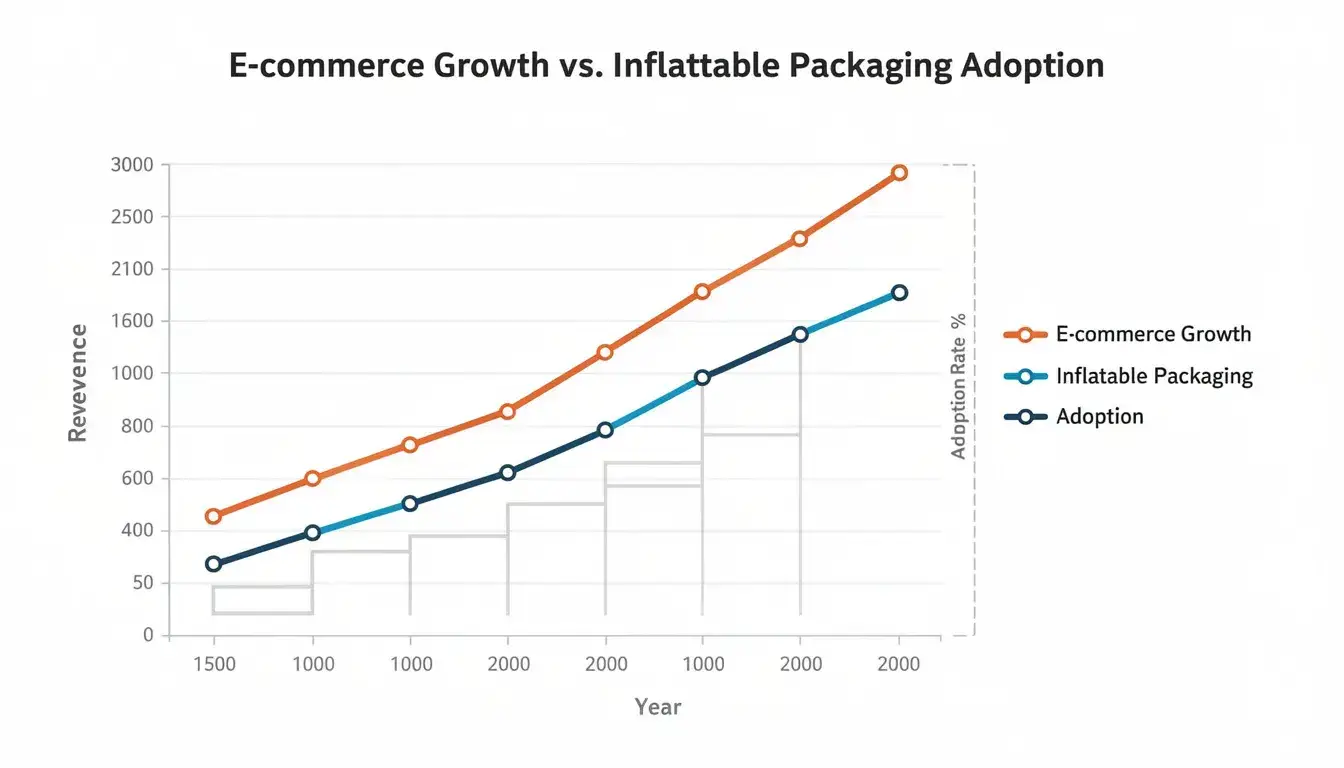
E-commerce continues expanding globally, with package volumes increasing at double-digit rates annually in many markets. This growth creates unprecedented demand for efficient, cost-effective packaging solutions that can accommodate diverse product mixes and varying shipment sizes.
Inflatable packaging systems are particularly well-suited to e-commerce requirements due to their flexibility, automation compatibility, and ability to deliver consistent protection across varying product types and sizes.
Sustainability Trends Influencing Material Choices
Environmental consciousness is driving fundamental changes in packaging material selection criteria. Organizations increasingly evaluate packaging options based on total environmental impact rather than initial cost alone, creating competitive advantages for solutions that deliver both performance and sustainability benefits.
Regulatory trends toward plastic waste reduction and extended producer responsibility are accelerating the adoption of recyclable, material-efficient packaging solutions. Inflatable systems that dramatically reduce material usage while providing superior protection align perfectly with these evolving requirements.
Technological Innovations in Packaging Systems
Continuous innovation in film technologies, valve designs, and automation systems is expanding the capabilities and applications of inflatable packaging. Advanced materials provide improved performance characteristics while maintaining or improving environmental profiles.
Smart packaging technologies that incorporate sensors and tracking capabilities are being integrated with inflatable systems to provide enhanced visibility and control throughout the shipping process.
Get Started with AIRFILL Technologies
Implementing inflatable packaging solutions requires careful assessment of specific requirements and operational considerations. AIRFILL Technologies provides comprehensive support throughout the evaluation, implementation, and optimization process to ensure successful adoption and maximum benefit realization.
Consultation and Assessment Process Overview
The implementation process begins with a thorough assessment of current packaging operations, product requirements, and business objectives. AIRFILL’s experienced team evaluates existing packaging costs, damage rates, operational challenges, and sustainability goals to develop customized recommendations.
This assessment includes a detailed analysis of product protection requirements, volume projections, operational constraints, and integration considerations. The goal is to develop an implementation plan that maximizes benefits while minimizing disruption to existing operations.
No-Cost Lease Program Details and Qualifications
AIRFILL’s no-cost lease program provides access to advanced packaging equipment without capital investment requirements. The program structure aligns equipment costs with material consumption, creating predictable operational expenses that scale with business growth.
Qualification criteria focus on volume commitments and operational requirements rather than financial capacity, making advanced packaging technology accessible to organizations of all sizes. The program includes equipment maintenance, technical support, and regular technology updates to ensure optimal performance throughout the lease period.
Custom Solution Development for Unique Requirements
Complex or specialized protection requirements may benefit from custom solution development. AIRFILL’s engineering team works closely with customers to develop tailored packaging systems that address specific challenges while maintaining cost-effectiveness and environmental responsibility.
Custom development projects leverage AIRFILL’s extensive experience across industries and applications to create innovative solutions that provide competitive advantages through superior protection, operational efficiency, or sustainability performance.
Implementation Timeline and Support Services
Typical implementation timelines range from 2-6 weeks, depending on solution complexity and customization requirements. AIRFILL provides comprehensive support throughout the implementation process, including equipment installation, operator training, process optimization, and ongoing technical assistance.
Post-implementation support includes performance monitoring, optimization recommendations, and access to technical expertise to ensure continued success and adaptation to changing requirements.
Contact Information and Consultation Scheduling
Organizations interested in exploring inflatable packaging solutions can contact AIRFILL Technologies directly at (844) 247-3455 or visit their Corona, California, facilities at 1816 Railroad Street, Corona, CA 92878. The experienced team provides responsive support for inquiries, assessments, and implementation planning.
Immediate consultation scheduling is available through direct contact, enabling rapid evaluation and implementation planning for time-sensitive requirements or urgent operational challenges.
Frequently Asked Questions
How does the no-cost lease program work for AIRFILL equipment?
The no-cost lease program eliminates upfront capital expenditure by providing equipment in exchange for material volume commitments. Customers pay for consumable materials (films) at competitive rates while receiving equipment, maintenance, and technical support at no additional charge. This structure allows businesses to implement advanced packaging technology immediately while maintaining predictable operational costs that scale with volume growth.
What are the main differences between EcoGuard and AIRFILL Bags product lines?
EcoGuard represents AIRFILL’s premium sustainability-focused line, featuring biodegradable films, recycled content materials, and zero carbon footprint production processes. These products are ideal for brands with strong environmental commitments and sustainability reporting requirements. AIRFILL Bags offer versatile, cost-effective protection optimized for performance and efficiency across diverse applications. Both lines deliver superior protection, but EcoGuard emphasizes environmental benefits while AIRFILL Bags prioritize operational efficiency and cost-effectiveness.
Can inflatable packaging be recycled with regular plastic recycling programs?
AIRFILL’s inflatable packaging films are designed using mono-material constructions specifically compatible with existing plastic film recycling programs. However, these materials typically require drop-off at specialized collection points (such as grocery store film collection bins) rather than curbside recycling programs. AIRFILL provides clear disposal instructions and supports customer education programs to improve recycling participation and effectiveness. Some biodegradable options are also available for situations where recycling infrastructure may be limited.
What is the shelf life of uninflated air cushion packaging materials?
Uninflated AIRFILL packaging materials maintain performance characteristics for 18-24 months when stored in appropriate conditions (cool, dry environments away from direct sunlight). The films are designed to resist degradation and maintain valve integrity throughout their shelf life. Proper storage extends material life and ensures consistent inflation performance. AIRFILL provides specific storage guidelines and rotation recommendations to optimize material utilization and minimize waste.
How much space can businesses save by switching from traditional packing materials to on-demand inflatable systems?
Space savings typically range from 85-95% compared to traditional bulky materials like foam, bubble wrap, or paper void fill. A single roll of film equivalent to multiple pallets of conventional materials dramatically reduces storage requirements. For example, one AIRFILL film roll producing 1,000 feet of inflated cushions requires approximately the same storage space as just 2-3 boxes of traditional materials that would provide equivalent protection volume. This space reduction enables businesses to allocate more warehouse area to revenue-generating inventory while reducing handling and logistics costs for packaging materials.