| Key Takeaways
✓ Air pillow packaging replaces bulkier void fill materials like bubble wrap, foam, and crumpled paper — cutting shipping costs and damage rates at the same time. ✓ On-demand auto inflation systems free up 80%+ of the warehouse space you currently dedicate to storing packing materials. ✓ AIRFILL Technologies offers both store drop-off recyclable and curbside recyclable options, all BPA-Free and RoHS Compliant. ✓ Businesses that switch to air pillows typically reduce packaging material costs by up to 40% while improving protection for light-to-medium weight products. ✓ High-volume operations can access AIRFILL’s no-cost auto inflation machine lease — zero upfront equipment investment. |
What Is Air Pillow Packaging?
You packed every box carefully yesterday. Today, a pallet of damaged returns is sitting in receiving, and the void fill your team used clearly didn’t hold up. Customer complaints are stacking up alongside replacement costs, and you’re starting to wonder if there’s a better way to protect products without blowing your packaging budget.
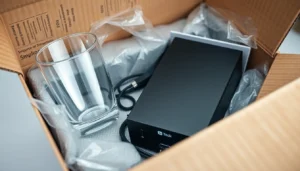
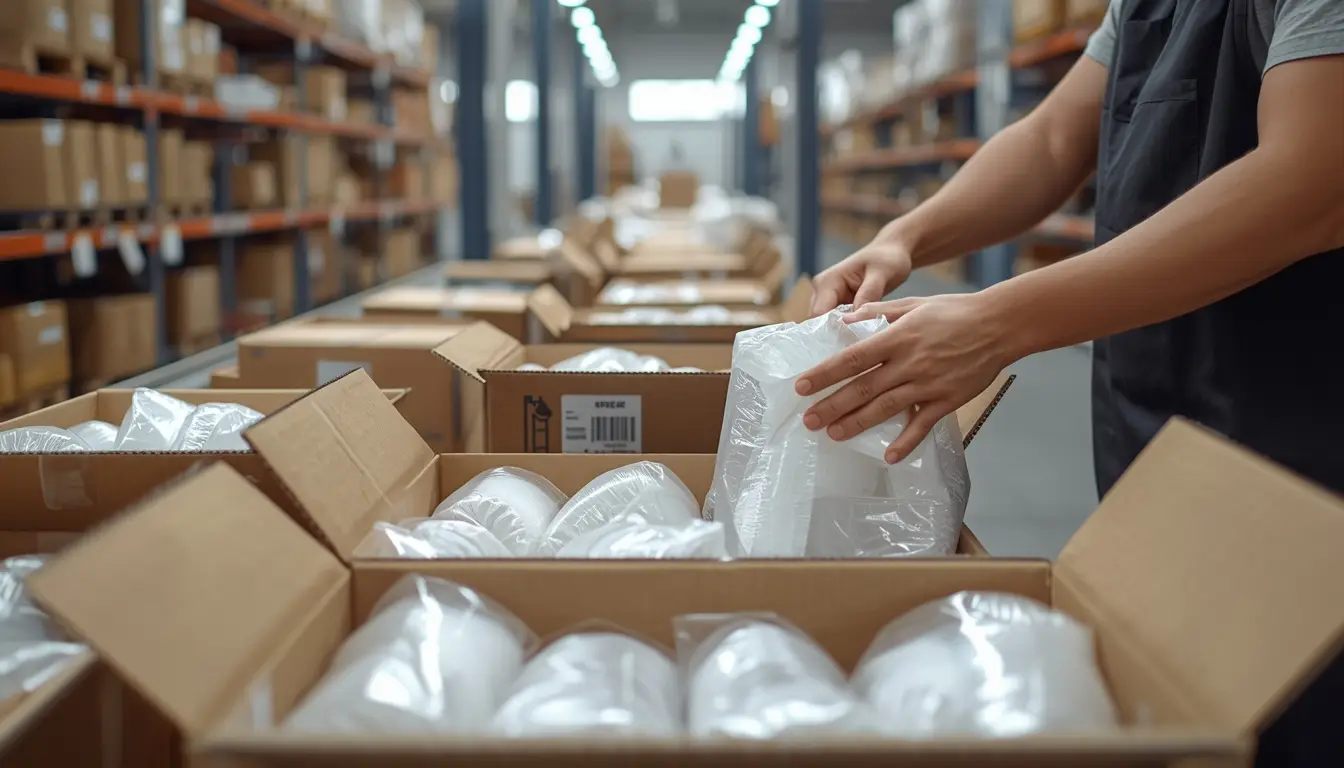
There is. Air pillow packaging uses lightweight, inflatable cushions to fill empty space inside shipping boxes, block and brace products in place, and absorb the shocks and drops that happen in every carrier network. The concept is simple: sealed air chambers create a protective barrier around your product, keeping it centered and cushioned from the moment it leaves your dock until it reaches your customer’s door.
The critical distinction most operations teams miss is the difference between pre-filled pillows and on-demand systems. Pre-filled pillows ship to your warehouse already inflated — meaning you’re paying freight costs to transport air, and dedicating valuable floor space to store bulky bags that take up room you could use for inventory. On-demand systems work differently: flat film arrives on compact rolls, and an auto-inflation machine at your packing station inflates cushions only when your team needs them. The result is dramatically lower storage requirements, zero waste from unused pre-made materials, and a faster packing workflow.
Every AIRFILL air cushion is BPA-Free (free from Bisphenol A, a chemical restricted in food-contact and children’s products) and RoHS Compliant (meeting the Restriction of Hazardous Substances directive that limits lead, mercury, cadmium, and other harmful materials). If you ship electronics, medical devices, toys, or food-adjacent products, these certifications matter — they reduce your compliance burden and simplify procurement approvals.
Why Operations Teams Are Switching to Air Pillows
The materials that worked five years ago may be quietly draining your budget today. Rising parcel damage claims, higher small-parcel shipping rates, shrinking warehouse space, and growing pressure to demonstrate sustainable packaging practices have forced operations teams to rethink their void fill strategy from the ground up.
Here’s what’s driving the switch:
• Reduced damage rates: Better damage protection — air chambers compress on impact and spring back, keeping products centered in the box through drops, vibration, and stacking pressure throughout the shipping journey
• Lower shipping costs: air pillows weigh a fraction of what crumpled paper or foam peanuts add to each box, directly lowering your dimensional weight charges with every carrier
• Faster pack times: operators grab pillows from a continuous chain produced by an auto inflation machine, eliminating the time spent crumpling paper, measuring foam, or tearing bubble wrap to size
• Less waste: recyclable films mean less material heading to the dumpster, which reduces your trash-hauling fees and supports your sustainability reporting
To put this in perspective: a mid-size e-commerce operation shipping 2,000 to 5,000 parcels per day typically sees damage rates drop 20–30% after switching to air pillow packaging. At the same time, consolidating from multiple void fill SKUs (bubble wrap, paper, foam) down to one or two pillow sizes simplifies inventory management and dramatically speeds up onboarding for seasonal hires who no longer need to learn multiple packing methods.
There’s a compliance angle too. Major retailers and marketplaces including Amazon and Walmart now actively track packaging recyclability and right-sizing metrics from their suppliers. Using lighter, recyclable air pillow packaging helps you meet those evolving standards — and avoids the chargebacks and scorecard penalties that come with non-compliance.
Types of Air Pillow Packaging You Can Use
Not every air pillow is built the same. Film type, thickness, and pillow geometry all affect how much protection you get, what it costs per box, and how your end customer can recycle it. Choosing the right configuration starts with understanding what you’re shipping and how your customers handle packaging after unboxing.
AIRFILL Bags, Signature Packs, Premium Packs & Ultra Packs
These are AIRFILL’s core product lines, all store drop-off recyclable at retail locations that accept plastic films. Film thickness varies across the range — lighter gauges work well for standard void fill in e-commerce boxes, while thicker options in the Premium and Ultra lines provide enhanced cushioning for heavier or more fragile items. These products are the go-to choice for fulfillment centers, 3PLs, and high-volume operations that need dependable, everyday protection without overcomplicating their packing process.
EcoGuard Curbside Recyclable Air Cushions
EcoGuard takes recyclability a step further. Your customers can place EcoGuard packaging directly into their residential recycling bin alongside cardboard — no special trip to a drop-off location required. For consumer-facing brands in electronics, beauty, or CPG, this matters: clearly marked curbside recyclable packaging simplifies the post-purchase experience and gives you a genuine sustainability story to feature on product pages, social media, and unboxing content.
EdgeGuard Edge and Corner Protection
Some products need more than void fill. EdgeGuard products use air-based technology to protect the most vulnerable parts of items like framed artwork, appliances, monitors, and flat-panel electronics. Combine EdgeGuard with standard air pillows for full 360° protection inside a single carton — no need for multiple specialty materials.
All AIRFILL products are BPA-Free and RoHS Compliant. Engineers and procurement teams can review detailed specifications in the full product catalog.
Air Pillows vs. Bubble Wrap, Paper, and Foam
If your warehouse still runs on bubble wrap, kraft paper, or foam peanuts, you’re not alone — but you may be spending more than you need to. Material costs, storage footprint, and sustainability pressure are pushing operations teams to compare alternatives head-to-head. Here’s how air pillow packaging stacks up:
Air Pillows vs. Bubble Wrap
Both provide solid cushioning for a wide range of products. The difference shows up in storage and waste. Bubble wrap ships in bulky pre-rolled form that eats warehouse space, while on-demand air pillows inflate from flat film rolls — freeing up the floor area you’d otherwise dedicate to storing rolls. Recyclable air pillows (store drop-off or curbside) also give your customers a cleaner disposal path than standard bubble wrap, which often ends up in landfill.
Air Pillows vs. Crumpled Paper
Paper adds real weight to every box. For parcels over 12 inches in any dimension, that extra weight directly inflates your dimensional weight charges — a cost that compounds across thousands of daily shipments. Paper can still make sense for very heavy items where thin film might puncture, but for light-to-medium products, air pillows win on speed (continuous chain vs. manual crumpling), consistency (uniform cushioning vs. variable paper density), and cost per parcel.
Air Pillows vs. Foam Peanuts
Foam peanuts create mess — for your pack team and your customer. Loose particles spill during packing, complicate the unboxing experience, and carry an increasingly negative brand perception. Many municipalities now restrict or ban expanded polystyrene disposal, creating compliance headaches. Air pillows eliminate all of these issues: clean packing, clean unboxing, simple recycling messaging.
| Material | Protection | Weight | Storage | Recyclability | Pack Speed |
| Air Pillows | Good (light–medium) | Very light | Minimal (flat rolls) | Store drop-off or curbside | Fast (on-demand) |
| Bubble Wrap | Good (fragile) | Light | High (pre-rolled) | Limited options | Moderate |
| Crumpled Paper | Moderate | Heavy | Moderate | Curbside recyclable | Slow (manual) |
| Foam Peanuts | Good cushioning | Light | Very high | Difficult | Moderate |
Where Air Pillow Packaging Works Best
Air pillow packaging is especially effective for products that look and feel durable but are still vulnerable to cosmetic damage, scratching, or breakage during transit. The versatility of inflatable cushions makes them a fit across a wide range of industries — many of which AIRFILL Technologies serves directly.
Industries Using AIRFILL Air Pillow Packaging
• E-commerce and subscription boxes: Apparel, accessories, books, home goods, and direct-to-consumer brands shipping 500 to 10,000+ orders daily rely on air pillows for consistent, adaptable void fill across variable box sizes.
• Electronics and IT assets: Routers, peripherals, laptops, and small devices need blocking and bracing that won’t introduce static or contamination from dusty fillers — air cushions provide clean, inert protection.
• Beverages and glassware: Air pillows supplement dividers for wine, spirits, and specialty drinks, adding a compressible cushion layer that absorbs the lateral forces that cause breakage during carrier sorting.
• Medical devices and pharmaceuticals: BPA-Free, RoHS Compliant materials meet regulatory requirements while eliminating contamination risk from loose packing materials like foam or shredded paper.
• Artwork and framing: EdgeGuard corner protection combined with air pillow void fill provides 360° protection for framed pieces, canvases, and high-value prints.
Scenarios Where Air Pillows Deliver the Most Value
• High-velocity pick/pack stations where operators need reliable void fill within arm’s reach — no walking to storage areas, no waiting for material replenishment
• Multi-SKU orders with variable box sizes where on-demand inflation eliminates overpacking and speeds up packing decisions
• Seasonal volume spikes where temporary staff need a packing method they can learn in minutes, not hours
Review detailed application examples and sectors served on the AIRFILL about page.
How On-Demand Auto Inflation Systems Improve Your Operation
An auto inflation machine sits inline at your packing stations or in a central pack area, feeding flat film from compact rolls, inflating individual air chambers, and heat-sealing them into continuous chains of pillows. Your packers tear off what they need, when they need it. No pre-ordering, no overstock, no wasted material.
Space You Get Back
Rolls of flat film take up a fraction of the floor space that pre-inflated packaging or bubble wrap rolls demand. Operations that switch to on-demand inflation commonly recover 80% or more of the warehouse area they previously dedicated to storing void fill materials. That’s real square footage you can reallocate to inventory, additional pick stations, or staging areas that improve overall throughput.
Faster Throughput, Lower Labor Cost
Auto inflation machines produce continuous pillow chains at speeds up to 20 meters per minute — faster than manual paper crumpling and more consistent than cutting bubble wrap to size. The result is more boxes packed per hour without adding headcount. For operations running two or three shifts, the time savings compound quickly.
AIRFILL’s No-Cost Machine Lease Program
This is where the math gets compelling. Qualifying high-volume customers can lease AIRFILL auto inflation machines with zero upfront hardware cost — you pay only for the film you use. This eliminates the capital expenditure barrier that stops many operations from testing air pillow packaging. It also makes the switch a low-risk pilot: run the machines for 60–90 days, measure the results against your current materials, and scale up only after you’ve validated the savings.
Explore equipment options and service details in the AIRFILL product catalog, or contact AIRFILL Technologies directly to discuss your operation’s specific requirements.
Sustainability and Compliance: Turning Packaging into a Brand Asset
Your packaging is often the first physical thing a customer touches from your brand. In 2026, that touchpoint carries expectations: clear recyclability information, material safety, and visible commitment to reducing waste. ESG reporting requirements are now standard for mid-market and enterprise companies, which means your packaging choices show up in boardroom sustainability metrics — not just on the loading dock.
Two Recyclability Paths, One Simplified Message
AIRFILL Bags, Signature Packs, Premium Packs, and Ultra Packs are store drop-off recyclable at retail locations that accept plastic films. EcoGuard products are curbside recyclable in many U.S. communities — your customer drops them in the recycling bin alongside cardboard, and they’re done. Including clear disposal instructions on packing slips, branded inserts, or carton flaps reinforces your sustainability commitment and reduces contamination in recycling streams.
Sustainability That Shows Up on Your P&L
This isn’t just an environmental story — it’s a financial one. Lighter air pillow packaging directly reduces dimensional weight shipping charges across every parcel you send. Higher recyclability rates can lower your landfill and hauling fees over a 12-month period. And on-demand inflation eliminates the waste that comes from overproducing or over-ordering pre-made void fill materials. These are line-item savings that compound with volume.
Built-In Compliance
Every AIRFILL product is BPA-Free and RoHS Compliant, reducing regulatory risk for brands that ship electronics, toys, food-adjacent items, and medical products. Compliance documentation is available for procurement and legal teams on request.
Explore material science details, recyclability standards, and real-world case studies on the AIRFILL sustainability page.
Practical Steps to Transition to Air Pillow Packaging
Switching your void fill doesn’t require ripping out your entire packing operation. The most successful transitions treat it as a structured, data-driven project with clear milestones and measurable KPIs.
1. Audit your current packaging. Identify your top 10–20 SKUs by shipment volume. Document the void fill type, damage rate, material cost, and pack time for each. This baseline gives you hard numbers to measure improvements against.
2. Define your goals. Establish specific, measurable targets before you start. Examples: reduce damage claims by 25%, cut packaging material SKUs by 30%, or free up 300+ square feet of warehouse space.
3. Run a focused pilot. Start small. Install one or two auto inflation machines at your highest-volume packing stations. Track pack time, damage rates, material usage, and storage footprint for 30–60 days before expanding to additional lines.
4. Standardize your pack-outs. Once the pilot validates the approach, document which pillow sizes and configurations work best for your common box sizes and product families. Create visual packing guides that seasonal and temporary staff can follow immediately.
5. Involve cross-functional teams early. Loop in procurement, operations, and sustainability stakeholders from the beginning. Joint approval on recyclability claims, material specifications, and supplier SLAs prevents delays during rollout.
AIRFILL Technologies provides sample materials, film recommendations, and usage calculators to support your transition. Implementation tips and packaging best practices are published regularly on the AIRFILL blog.
Frequently Asked Questions: Air Pillow Packaging
How do I know if air pillows are strong enough for my heaviest products?
Air pillows perform best for light-to-medium weight products — generally up to 30–40 pounds per carton. Film thickness and pillow geometry can be adjusted for heavier loads, but very dense items may need a hybrid approach: air pillows for void fill combined with corrugated inserts or EdgeGuard corner protection for structural support. Drop testing following ISTA protocols is recommended before full rollout to validate performance for your specific product and carrier conditions. AIRFILL Technologies can guide film selection based on your product weight, carton dimensions, and shipping environment.
Can I integrate air pillow packaging into an automated packing line?
Yes. Most auto inflation machines are designed for semi-automated environments where human packers use on-demand pillows, but they can also integrate into conveyorized or inline packing cells. Options include overhead pillow delivery systems, centralized production with box-fed dispensers, and custom mounting configurations near carton erectors. The key is matching machine output speed to your line’s throughput requirements — discuss your specific setup with AIRFILL or your automation partner during the planning phase.
What happens if an air pillow pops during transit?
Properly sized and inflated air pillows are engineered to withstand normal parcel handling — drops, vibration, compression, and stacking — when used according to packing guidelines. If a single chamber fails, the surrounding pillows and proper product positioning typically maintain adequate protection. Repeated failures, however, signal that the film choice or inflation level needs adjustment. Periodic packaging validation using ISTA-style drop tests is recommended whenever carrier requirements, product mixes, or shipping routes change significantly.
How should I communicate recyclability to my customers?
Clarity is everything. Print or include simple instructions like “Store drop-off recyclable — return to a retailer that accepts plastic films” or “Curbside recyclable where accepted — place in your recycling bin with cardboard.” Use consistent icons and brief copy on packing slips, branded inserts, or carton flaps. Clear messaging reduces contamination in recycling streams and turns your packaging into a visible sustainability touchpoint that reinforces your brand values.
AIRFILL provides recommended recyclability wording aligned with current standards — details are available on the sustainability page.
What’s the best next step if I want to try air pillow packaging?
Start with a focused pilot on one to three shipping lines, targeting products with moderate damage rates or high material usage. Request sample rolls and a temporary auto inflation machine setup from AIRFILL, then track the metrics that matter to your operation: damage rates, pack time per box, material cost per shipment, and storage space recovered. This data-driven approach builds internal support and surfaces optimization opportunities before you scale.
Ready to see how air pillow packaging performs in your operation? Ask about AIRFILL’s no-cost auto inflation machine lease program.
Call (844) 247-3455 | Visit airfilltechnologies.com