|
Key Takeaways ✓ E-commerce shipping volumes have pushed brands to find packaging that scales without scaling costs — air-filled packaging fits that model. ✓ On-demand air pillow production eliminates the need to warehouse pre-made void fill, freeing up valuable floor space. ✓ Air-filled packaging delivers a cleaner unboxing experience that aligns with modern consumer expectations around presentation and sustainability. ✓ Brands report 30–50% reductions in packaging material costs after switching from bubble wrap, foam, or paper void fill. ✓ The no-cost auto inflation machine lease model removes the biggest barrier to adoption: upfront equipment investment. |
Five years ago, most e-commerce fulfillment operations packed shipments with whatever was available — bubble wrap, foam peanuts, crumpled kraft paper, or sometimes nothing at all. The goal was getting orders out the door fast enough to keep up with volume.
That’s changed. As shipping volumes have grown and margins have tightened, brands are treating packaging as an operational lever rather than an afterthought. The material you put inside the box affects shipping cost, damage rates, warehouse space utilization, pack speed, sustainability claims, and the customer’s first physical impression of your brand.
Air-filled packaging — specifically on-demand air pillow systems — has emerged as the go-to solution for brands that need all of those variables to move in the right direction at once. Here’s why the shift is happening and what it looks like in practice.
The E-Commerce Packaging Problem in 2025
E-commerce fulfillment operates under a set of constraints that traditional retail distribution doesn’t face. Understanding these pressures explains why air-filled packaging has gained traction so quickly.
Volume Volatility
E-commerce order volumes swing dramatically — daily, weekly, and seasonally. A brand that ships 500 packages on a Tuesday might ship 3,000 on a Friday during a promotion. Packaging systems need to flex with that volume without requiring proportional increases in floor space, labor, or material inventory.
On-demand air pillow production scales linearly. The machine runs faster when you need more pillows and sits idle when you don’t. Compare that to pre-made void fill, where you’re either over-stocked (wasting space) or under-stocked (scrambling to reorder).
SKU Diversity
Most e-commerce brands ship dozens or hundreds of different products, each with different dimensions, weights, and fragility levels. A one-size-fits-all packaging approach doesn’t work. Air pillows produced in multiple sizes from the same machine give packers the flexibility to match void fill to each unique carton configuration without stocking multiple packaging SKUs.
Margin Pressure
Free shipping expectations, rising carrier rates, and return costs all compress margins. Every cent saved on packaging material, dimensional weight surcharges, and damage-related losses goes directly to the bottom line. For a breakdown of how air pillow costs compare to alternatives, see our air pillows vs. bubble wrap comparison.
Customer Expectations
Unboxing is no longer a private moment — it’s content. Customers photograph and video their deliveries, and packaging quality is part of the brand story. A carton stuffed with crumpled paper or overflowing with foam peanuts communicates a very different message than one with clean, uniform air cushions holding the product securely in place.
Why Air-Filled Packaging Solves These Problems
On-Demand Production Eliminates Inventory Risk
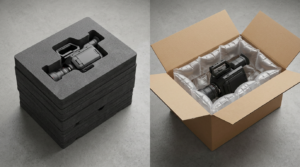
Traditional void fill is a physical inventory item. You order it, store it, count it, and reorder it. Bubble wrap rolls, foam peanut bags, and paper bundles all consume warehouse space that could hold revenue-generating inventory instead.
Air pillow systems flip this model. You stock compact film rolls that inflate at the pack station as needed. One pallet of flat AIRFILL film replaces 10–15 pallets of inflated bubble wrap volume. For operations in high-rent warehouse markets, this storage efficiency alone shifts the ROI calculation.
Material Cost Drops Significantly
Air pillow film costs $0.03–$0.08 per package, compared to $0.08–$0.20 for bubble wrap and $0.10–$0.25 for custom foam inserts. At 1,000+ packages per day, the gap compounds to thousands of dollars monthly. Brands that track packaging cost per unit closely — and in 2025, most do — see the impact immediately.
Pack Speed Increases
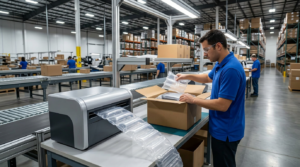
Air pillows feed directly from the machine into the packer’s workflow. There’s no measuring, cutting, crumpling, or tearing. Grab, place, close. Operations that switch from manual void fill methods typically report 15–25% throughput improvements at the pack station, which means more orders out per labor hour.
Damage Rates Drop
Consistent fill volume is the key to damage prevention. Air pillows produced by a machine are the same size and inflation level every time, which eliminates the variability that comes with hand-packed materials. Learn more about the mechanics of damage reduction in our guide on how air cushion packaging reduces shipping damage.
The Unboxing Experience Improves
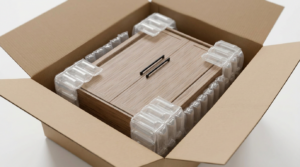
Air pillows look clean and intentional inside the box. They hold the product in place without mess, static, or loose fill that spills onto the customer’s floor. For brands that invest in branded packaging, custom inserts, or printed packing slips, air pillows complement that aesthetic rather than undermining it.
What the Switch Looks Like in Practice
The transition from traditional void fill to air-filled packaging follows a predictable path for most e-commerce operations.
Phase 1: Pilot (Weeks 1–4)
Start with your highest-volume, simplest-to-pack SKUs. Install one auto inflation machine at a single pack station. Track damage rates, pack time, material usage, and packer feedback for 30 days alongside a control group using the old method.
Phase 2: Expand (Weeks 5–12)
Once the pilot confirms the numbers, expand to additional pack stations and product lines. This is where you start seeing the storage and labor benefits at scale. Most operations add a second machine at this stage to handle increased throughput.
Phase 3: Optimize (Ongoing)
Fine-tune pillow sizes for different carton configurations. Standardize packing guidelines with visual references. Review damage data monthly and adjust as needed. The brands that get the most value from air-filled packaging treat it as a continuously optimized system, not a one-time material swap.
The Sustainability Factor
Sustainability claims matter to e-commerce customers, but only if they’re backed by real action. Vague language like “eco-friendly packaging” is losing credibility. Consumers and B2B buyers increasingly want specifics: what’s the material, how is it recycled, and what’s the actual environmental footprint?
Air-filled packaging gives brands concrete answers to those questions.
• Less material per package. Air pillows use a thin polyethylene film because the air does the cushioning. Less plastic per unit means a smaller overall material footprint.
• Store drop-off recyclable. Standard AIRFILL Bags recycle through the same programs that accept plastic grocery bags — a familiar, accessible pathway for consumers.
• Curbside recyclable option. AIRFILL’s EcoGuard film is curbside recyclable, removing the friction of a separate trip to a collection point. This is the highest-convenience recycling pathway available for flexible plastic packaging.
• On-demand production eliminates waste. You produce only what each package needs. No pre-cut excess, no leftover rolls from SKU changes, no obsolete inventory headed to landfill.
Brands that communicate these specifics — on packing slips, product pages, and shipping confirmation emails — convert packaging from a cost center into a brand-building asset. Learn more about AIRFILL’s recyclable film options on the sustainability page.
The No-Cost Machine Lease Model: Removing the Adoption Barrier
One of the biggest reasons e-commerce brands hesitate to switch packaging systems is the perceived upfront investment. New equipment means capital expenditure approval, budgeting cycles, and ROI justification before a single pillow is inflated.
AIRFILL Technologies eliminates that barrier with a no-cost auto inflation machine lease program. When you purchase film, the machine comes with it — no lease payments, no equipment deposits, no maintenance contracts. You pay for the consumable (film), and the hardware is included.
This model aligns the economics for both sides. AIRFILL earns revenue on ongoing film purchases, and you get access to production-grade equipment without a capital outlay. For brands that want to pilot the system before committing to volume, it’s a low-risk entry point.
Browse the full lineup of machines and film products in the AIRFILL product catalog.
Industries Leading the Shift
While the move to air-filled packaging spans sectors, a few industries have been particularly aggressive adopters.
Health and Beauty
Glass bottles, pumps, and compacts require consistent cushioning without chemical contamination risk. Air pillows are BPA-Free and RoHS Compliant, making them safe for direct proximity to personal care and cosmetic products.
Electronics and Consumer Tech
Lightweight products in retail-ready packaging need void fill to prevent shifting, not heavy-duty wrapping. Air pillows lock boxed electronics in place without adding dimensional weight.
Food and Beverage (Non-Perishable)
Subscription boxes, condiment sets, and specialty food shipments need clean, food-safe void fill that doesn’t leave residue, static, or loose material in contact with the product.
Subscription and DTC Brands
For brands where the box is the brand experience, air pillows deliver a premium look with a low per-unit cost. The clean, uniform appearance inside the carton reinforces the intentionality of the overall packaging design.
Frequently Asked Questions
How long does it take to switch from our current packaging to air-filled?
Most operations complete the transition within 4–6 weeks, including pilot testing. Machine installation takes less than an hour, and packer training is typically a single shift. The timeline depends more on internal approval processes thanon the physical implementation.
Can we use air-filled packaging for international shipments?
Yes. Air pillows perform well in both domestic and international parcel shipping. For ocean freight or long-haul truck routes with extended vibration exposure, validate performance with ISTA 3-series testing protocols specific to your shipping lanes.
What if we have both small and large products?
AIRFILL machines produce multiple pillow sizes from different film widths. Stock two or three film types to cover your full range of carton sizes. Most operations find that two film SKUs handle 90%+ of their product mix.
Do air pillows work during peak season when pack speed is critical?
During peak season, air pillows offer the greatest advantage over manual void-fill methods. The machine produces pillows continuously, eliminating bottlenecks in cutting, crumpling, and dispensing. Operations that struggle with pack throughput during Q4 often see the most dramatic improvement.
What’s the minimum volume to make air-filled packaging cost-effective?
There’s no hard minimum, but operations shipping 50+ packages per day typically see the clearest ROI from on-demand air pillow production. Below that volume, the material cost savings are still real, but the workflow and storage benefits are less pronounced.
|
Ready to see how air-filled packaging fits your e-commerce operation? Request sample materials and a packaging cost analysis from AIRFILL Technologies. Call (844) 247-3455 | Visit airfilltechnologies.com |