Foam inserts have been a go-to protective packaging solution for decades. They feel solid, they look professional, and for a long time there was not a better option for keeping products from shifting inside a box. But the packaging industry has changed, and a lot of operations are still running foam out of habit rather than because it is actually the right choice for their volume, their product mix, or their cost structure.
Air pillow packaging has quietly become the preferred solution for a wide range of B2B shipping operations. This comparison breaks down both options honestly, across cost, protection, storage, sustainability, and operational fit, so you can make the call based on your actual situation rather than what your current vendor recommends.
How Each System Works
Air Pillow Packaging
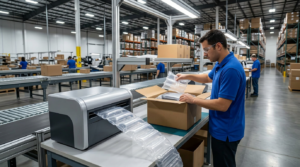
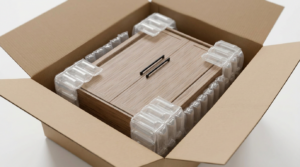
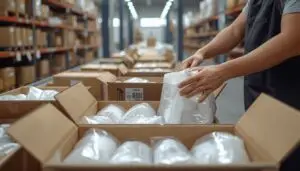
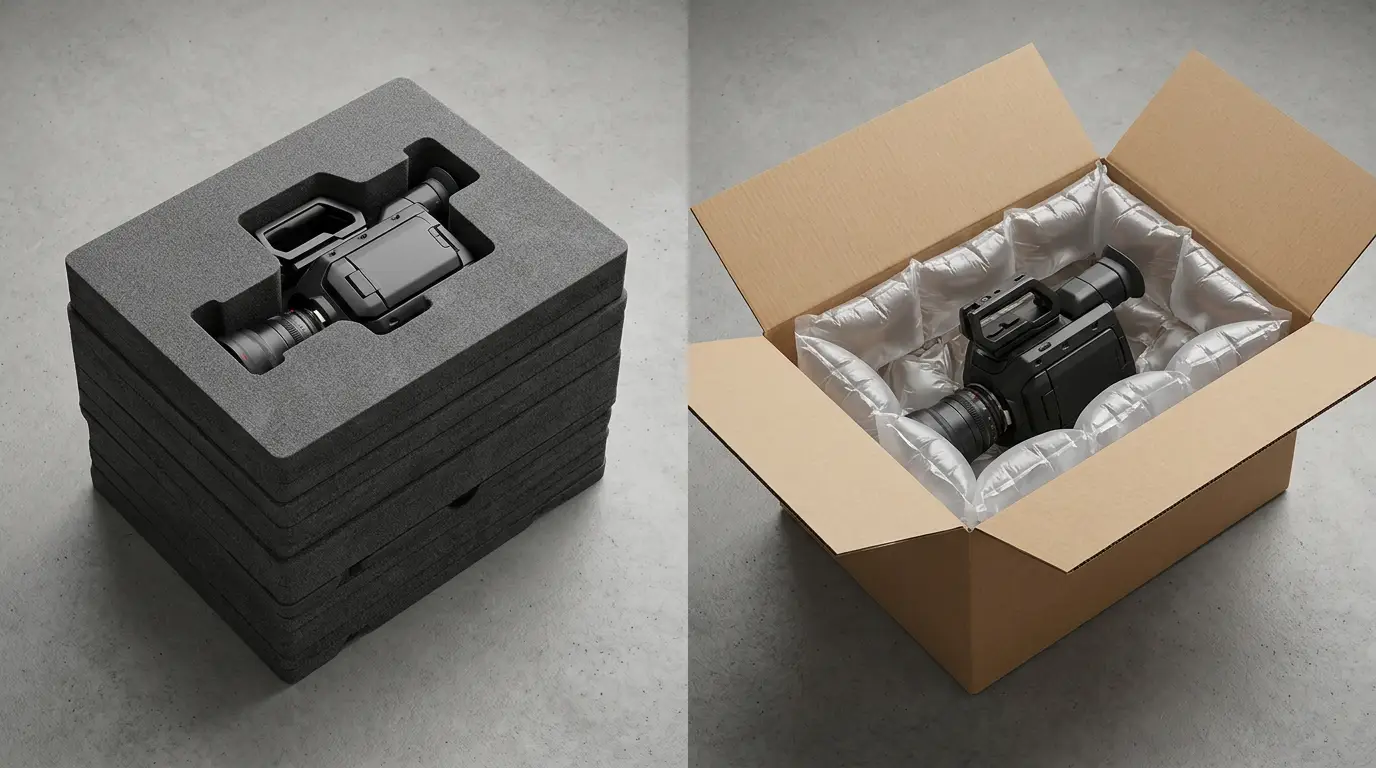
Air pillows are inflated plastic chambers produced on demand from compact film rolls. An inflation machine at the packing station pulls film from the roll, inflates it, and seals it into cushions that packers can tear to length as needed. The cushions surround the product inside the box, prevent movement, and absorb impact during transit.
Because the film ships flat and inflates at the point of use, the storage footprint is minimal. You are stocking rolls, not pre-expanded material. The system scales easily by adding film rolls, and the output rate on modern machines is fast enough to keep up with high-volume packing lines without creating a bottleneck.
Foam Inserts
Foam inserts are pre-cut or custom-molded pieces of polyethylene or polyurethane foam designed to cradle a specific product inside a box. They are manufactured to fit, which means each product SKU typically requires its own foam configuration. The insert holds the product in a fixed position and prevents contact with the box walls.
Foam inserts require lead time to produce, significant warehouse space to store, and a separate insert for each product type you ship. When your product mix changes, your foam inventory has to change with it, which creates both cost and waste.
Head to Head: The Comparison That Matters
|
Factor |
Air Pillow Packaging |
Foam Inserts |
|---|---|---|
|
Cost per shipment |
Low |
High |
|
Storage footprint |
Minimal (flat film rolls) |
Large (pre-cut, SKU-specific) |
|
Pack speed |
Fast |
Slow (sorting, positioning) |
|
Flexibility across SKUs |
High (one film type, any product) |
Low (custom cut per SKU) |
|
Protection for general shipping |
Strong |
Strong (for its specific product) |
|
Recyclable |
Yes (curbside options available) |
No (landfill in most areas) |
|
ESG compliance |
Supportable |
Difficult to defend |
|
Lead time to restock |
Short (standard film rolls) |
Long (custom manufacturing) |
|
Capital required to start |
Low (no-cost machine programs available) |
High (custom tooling and inventory) |
Pressure Distribution and Support
When it comes to travel pillows, pressure distribution and support are key factors that can make or break your comfort during a journey. Memory foam pillows are engineered to contour to the unique shape of your neck and head, ensuring that pressure is evenly distributed and reducing strain on sensitive areas. This foam core construction provides consistent support, making memory foam an excellent choice for both side sleepers and stomach sleepers who need their pillow to adapt to their preferred sleeping position.
Unlike inflatable pillows, which rely on air to provide support, memory foam pillows offer a stable, ergonomic design that maintains its shape throughout the night. However, inflatable pillows do have the advantage of adjustable firmness, allowing you to customize the pillow to your desired firmness level by simply adding or releasing air. While this adjustability is convenient, inflatable pillows may not always match the even pressure distribution and plush comfort that memory foam delivers.
Ultimately, the right travel pillow should provide adequate support for your neck and head, helping you achieve a good night’s sleep whether you’re on a plane, in a car, or camping under the stars. Consider how the pillow feels in terms of firmness and support, and choose the option that best reduces strain and promotes restful sleep on your next adventure.
Where Foam Inserts Still Make Sense
Foam inserts are not the wrong answer in every situation. There are specific use cases where they are genuinely the better choice, and it is worth being clear about that.
If you ship a single high-value product at relatively low volume, and that product has an unusual shape that needs to be held in a fixed, precise position, a custom foam insert may provide protection that air pillows cannot replicate. Think of something like precision optical equipment, a custom-machined part, or an instrument that cannot be allowed to rotate inside the box under any circumstances.
The keyword there is specific. Foam inserts are a reasonable answer when the product is fixed, the volume justifies the tooling cost, and the shape genuinely requires that level of custom fit. Outside of that narrow band, the operational and cost disadvantages tend to outweigh the protection benefits.
Where Foam Inserts Become a Problem
For most B2B shipping operations, foam inserts create problems that compound over time. Foam inserts are generally bulkier and take up more room in storage, making them less practical for operations that prioritize space efficiency.
Cost
Custom foam inserts require tooling and production runs. While foam inserts tend to be more expensive upfront, they can offer greater durability and long-term value in the long run, especially for high-quality memory foam versions. The per-unit cost is significantly higher than air pillow film, and that cost increases when you factor in the warehouse space you are paying to store the inventory, the lead time you have to build into your ordering cycle, and the waste generated when a product changes and the old foam becomes useless.
Inflexibility
Every product change, every new SKU, every box size adjustment means new foam. Air pillow systems do not care what you are shipping. The same film roll works for a box of electronics today and a set of automotive parts tomorrow. That flexibility has real operational value, especially for operations with diverse or frequently changing product catalogs.
Pack Speed
Foam inserts require packers to locate the right insert for the right product, position it correctly, and confirm the fit before closing the box. With air pillows, the packer fills the void and moves on. The difference in time per order is measurable, and at high volume it adds up to real labor cost.
Sustainability
This one is increasingly hard to ignore. Polyethylene and polyurethane foam are not recyclable through standard municipal programs. As retailers, enterprise customers, and regulatory bodies push harder on ESG documentation, foam inserts are becoming a liability for procurement teams that need to defend their packaging choices in writing. Air pillow film in curbside recyclable and BPA-free formulations gives you a clean answer to that question. Foam does not.
The ESG Pressure Is RealMore B2B procurement contracts now include sustainable packaging requirements as a condition of doing business. Foam inserts that cannot be documented as recyclable are increasingly a compliance risk, not just a sustainability preference. Air pillow packaging with certified recyclable film gives your team a defensible, audit-ready answer.
The Cost Comparison in Practice
Running the real cost comparison between foam inserts and air pillows requires looking beyond material price per unit. Here is what the full picture includes.
On the foam side: material cost per insert, tooling cost amortized across the production run, warehouse space consumed by foam inventory, labor time to sort and position inserts per order, lead time buffer stock you have to carry, and disposal or write-off cost when the foam becomes obsolete.
On the air pillow side: film roll cost, machine cost (often zero with a no-cost lease program), and labor time per order, which is significantly lower.
When operations run this comparison honestly, the air pillow cost-per-shipment typically comes out well below foam, even for applications where foam feels like the more premium solution. The protection is comparable for the vast majority of general shipping applications, and the operational overhead is dramatically lower.
Industry Applications and Uses
Travel pillows are more than just a luxury—they’re an essential piece of gear for anyone who spends time on the move. Inflatable pillows are a favorite among backpackers, campers, and frequent flyers thanks to their super light weight and compact size. These pillows pack small, fit easily into a stuff sack, and take up minimal space in your sleeping bag or carry-on, making them ideal for those who need to travel light and cover long distances.
On the other hand, memory foam pillows are often chosen by travelers who prioritize comfort and support, especially on long journeys where a good night’s sleep can make all the difference. The plush, soft material of memory foam provides adequate support for your neck and head, helping you arrive at your destination feeling refreshed. Whether you’re a side sleeper, stomach sleeper, or someone who simply wants the right pillow for their travel style, both inflatable and memory foam pillows offer unique benefits.
Choosing the right travel pillow depends on your individual needs—do you value lightweight portability, or do you prioritize comfort and support above all else? Either way, investing in a quality travel pillow can provide the support you need to sleep well and enjoy your travels, no matter where the road takes you.
Regulatory Compliance and Standards
Safety and quality are non-negotiable when it comes to travel pillows, and regulatory compliance plays a crucial role in ensuring both. Inflatable pillows must adhere to strict standards for air pressure and valve design to prevent issues like over-inflation or unexpected deflation during use. Memory foam pillows, meanwhile, are required to meet guidelines for material safety and durability, ensuring that the foam and pillowcase are made from non-toxic, long-lasting materials.
When selecting a travel pillow, look for products constructed from durable materials such as ripstop nylon, which can withstand the rigors of travel and temperature changes. Easy maintenance is another important consideration—removable covers that can be wiped clean with a damp cloth help keep your pillow fresh and hygienic, even after long journeys.
By choosing travel pillows that meet or exceed industry standards, you can rest assured that your pillow will provide maximum comfort and support while minimizing the risk of discomfort or injury. Prioritizing regulatory compliance not only protects your investment but also ensures a safe and restful experience, wherever your travels may lead.
Making the Switch from Foam to Air Pillows
The transition is simpler than most operations teams expect. Choosing the right gear for your packaging operation is crucial, as some operations may prefer foam inserts for specific use cases, such as when insulation for temperature-sensitive items is needed. Air cushion machines are compact and fit into existing packing station layouts without reconfiguration. Training is minimal. Film rolls drop in and the system is running within the same shift.
The bigger challenge is usually internal. Foam inserts have been in place for years at a lot of operations, and there is organizational inertia around changing something that technically works. The business case, built on labor savings, storage recapture, and lower material cost, is what moves that conversation forward.
Switching to air pillows is easy, but it’s important to note that air pillows require careful handling to avoid punctures or leaks, as they are more prone to damage compared to foam inserts. Air pillows can be adjusted to achieve the perfect balance of protection and cost for different products. Please note: air pillows are designed for packaging protection and not for life-saving purposes.
For high-volume operations, AIRFILL Technologies offers qualified clients access to air cushion inflation equipment at no cost as part of a packaging supply agreement. That removes the capital question entirely and lets you run the comparison based on operational results from day one.
For a full breakdown of void fill options beyond this comparison, see our guide: What Is Void Fill Packaging? Types, Benefits and Best Practices. And for a complete look at air pillow packaging systems, visit our Air Pillow Packaging Ultimate Guide.
Still running foam inserts? Talk to an AIRFILL specialist about what the switch could save your operation.