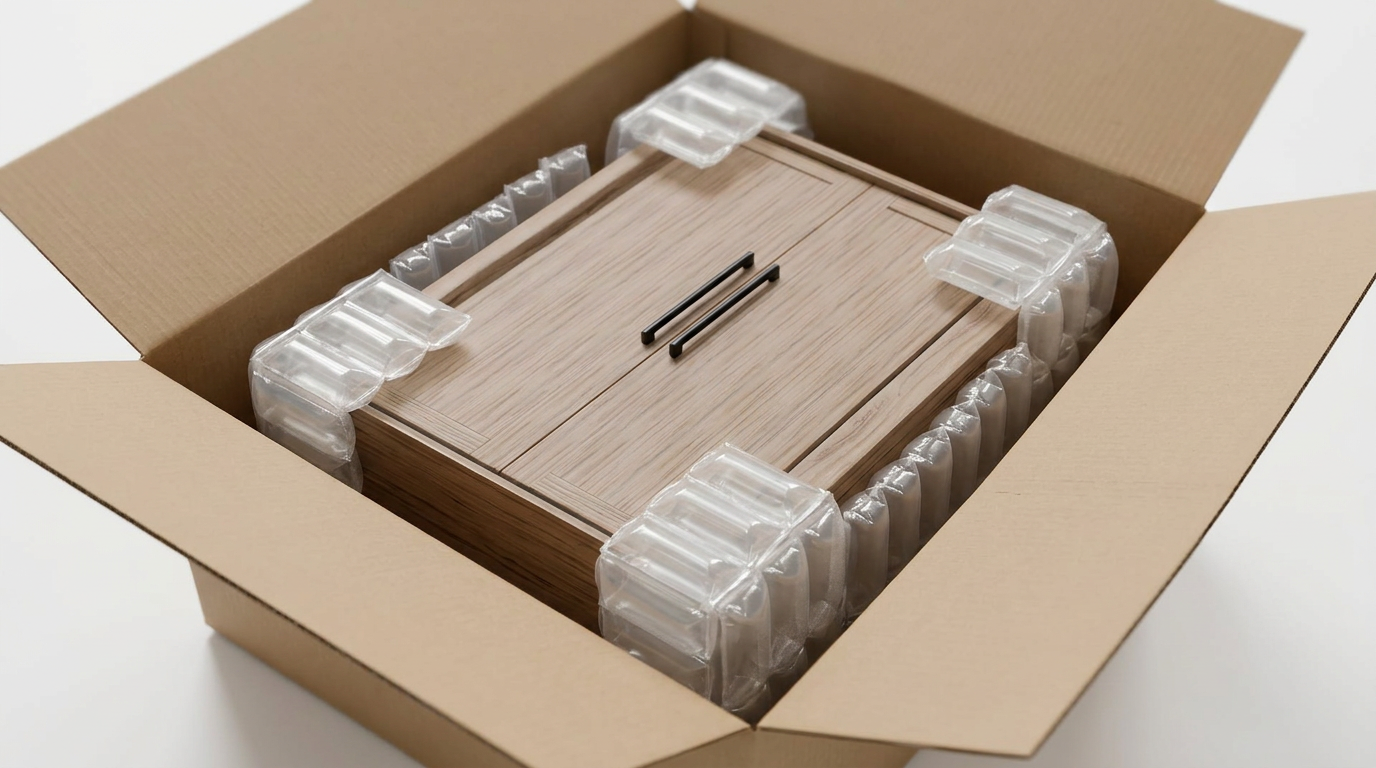
If your business ships physical products, the material you use to fill space inside the box directly affects three things: your damage claim rate, your shipping costs, and your packing labor time. Most businesses know this — and most are still using a void fill solution that was chosen years ago without a rigorous cost comparison.
Air pillow packaging has become the standard for high-volume shipping operations across industries ranging from electronics to pharmaceuticals to furniture. In this guide, we cover everything procurement managers and operations leaders need to know: what air pillow packaging is, how it works, what types exist, how the costs compare to alternatives, and how to evaluate the right system for your shipping volume and product mix.
Quick answer: Air pillow packaging is an on-demand void fill system that inflates lightweight plastic film into air-filled cushions at the point of packing. It protects products in transit, reduces DIM weight charges, and cuts storage costs — without requiring capital investment through a no-cost machine lease program.
What is air pillow packaging?
Air pillow packaging refers to inflatable plastic pouches used as void fill and product cushioning inside shipping boxes. The pouches are made from thin polyethylene film and inflated on-demand using a tabletop or floor-standing air inflation machine. Once inflated, the pillows are placed around the product inside the carton to prevent movement during transit.
Unlike packing peanuts, paper fill, or pre-inflated bubble wrap rolls, air pillow systems inflate film on demand — meaning you store flat rolls of uninflated film and only create the packaging you need, when you need it. This eliminates the storage footprint problem that plagues high-volume operations using legacy materials.
The basic components of an air pillow packaging system are straightforward: an air inflation machine (tabletop or floor model), film rolls made from perforated polyethylene film in various pillow sizes, and inflated air pillows dispensed directly onto the packing line. Explore AIRFILL Technologies’ full product catalog to see the range of film types and system configurations available.
How air pillow packaging works
The on-demand inflation process is straightforward, but understanding the mechanics helps procurement managers make better decisions about machine placement, labor requirements, and film consumption.
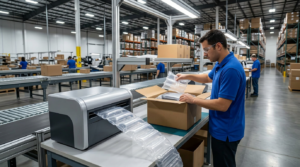
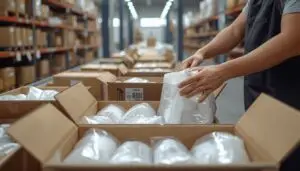
The film roll loads onto the inflation machine in under two minutes. The machine feeds the film through a heat-sealing mechanism that closes the pillow chambers while injecting air, inflating each pillow to the correct pressure. Inflated pillows exit in a connected chain and are dispensed directly at the packing station. The packer tears off the number of pillows needed per shipment and places them in the box. The box is sealed — the product is immobilized and protected for transit.
Modern air pillow machines run continuously at rates of 10 to 20 feet of film per minute, keeping pace with even high-volume packing operations without creating a bottleneck.
Entry-level single-inflation machines are appropriate for smaller-volume operations. High-volume fulfillment centers benefit from floor-model systems with higher output rates. Contact AIRFILL Technologies to get a machine recommendation matched to your operation.
Types of air pillow packaging
Not all air pillow products are the same. The right film type depends on your product weight, fragility, box dimensions, and industry-specific compliance requirements.
Air pillows — standard void fill
The most common format. Rectangular or square pouches used to fill empty space in boxes and prevent product movement. Best for ecommerce, general retail, and non-fragile consumer goods. Available in multiple sizes to match carton dimensions.
Air cushions
Denser, more structured cushions designed for product protection rather than just void fill. They wrap around individual products to provide impact absorption on all sides. Best for electronics, glassware, instruments, pharmaceuticals, and other fragile or high-value items.
Air columns (column bags)
Vertical column chambers that stand upright inside the carton and create a protective wall around the product. Particularly effective for bottles, cylinders, and irregularly shaped items. Best for wine and beverage shipping, fragile jars, candles, and cosmetics.
BPA-free and RoHS-compliant film
Compliance-grade film for regulated industries. BPA-free film serves food-adjacent applications. RoHS-compliant film meets requirements for electronics and pharmaceutical shipments. Both are available in curbside-recyclable EcoGuard formulations. Learn more about AIRFILL’s sustainability commitment and recyclable film options.
EcoGuard recyclable film
Formulated for curbside recycling where available, making it compatible with most corporate ESG packaging commitments and sustainability reporting requirements. Part of AIRFILL’s commitment to sustainable packaging solutions.
Customizing air pillow packaging for your operation
One of the practical advantages of air pillow packaging is how readily it adapts to different product types, box sizes, and shipment volumes within the same operation. Procurement managers who ship across multiple product lines do not need a different vendor for each SKU category — the right film type and pillow configuration handles the full range.
Air pillows can be combined with other protective elements — inner cartons, paper fill, corner protection — to build a packaging system tailored to each product’s fragility level and transit requirements. Where a lightweight consumer item may need only two or three pillows for void fill, a fragile electronics shipment may call for air cushions on all six sides. The inflation machine dispenses both from the same unit, keeping the packing line simple regardless of what is moving through it.
AIRFILL Technologies serves 17 industries with purpose-built film configurations — not generic void fill sold to whoever will buy it. That means when you work with AIRFILL, a dedicated account manager helps you spec the right film for your product mix before you commit to a system. No distributor in between, no generic recommendations. The goal is a packaging configuration that protects your products, reduces your cost-per-shipment, and meets your compliance requirements from day one.
For operations with multiple product categories, AIRFILL’s catalog makes it possible to standardize on a single inflation machine while using different film types for different SKUs — reducing equipment overhead while keeping every shipment optimally protected. Contact AIRFILL Technologies to walk through your product mix with a packaging specialist.
Air pillow packaging vs. alternatives: a cost comparison
Most packaging decisions are made based on material cost alone. That is how businesses end up overpaying. The true cost of a void fill system includes four components that rarely appear in a vendor quote:
-
Material cost per shipment
-
Labor time per shipment — packing labor is expensive at scale
-
Storage cost — the floor space your void fill materials occupy
-
DIM weight surcharges — bulky filler adds cubic inches and increases carrier billing on every package
Material cost: Air pillow systems use compact film rolls, keeping material cost per shipment low. Because air pillows are inflated on demand from a flat roll, you use exactly the amount of void fill each shipment requires — no pre-formed excess, no material sitting in a box that does not fit the product. Foam inserts and packing peanuts carry significantly higher material costs due to weight and pre-formed bulk.
Storage footprint: Flat film rolls store compactly in a small floor footprint. Foam inserts and packing peanuts require substantial warehouse space that costs money every month.
Labor per shipment: Air pillows dispense in seconds. Foam must be cut or fitted to the product. Packing peanuts must be scooped and cleaned up. The labor difference compounds quickly at high shipment volumes.
DIM weight impact: Lightweight polyethylene film adds minimal cubic inches to a shipment. Bulky void fill materials inflate dimensional weight billing and increase carrier costs on every package you ship. For operations running hundreds of shipments per day, DIM weight savings alone often justify the switch.
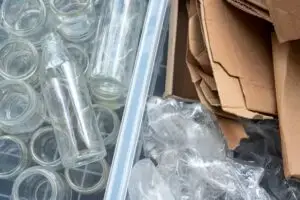
Sustainability: EcoGuard air pillow film is curbside recyclable. Standard foam inserts are non-recyclable in most municipal programs.
Compliance: BPA-free and RoHS-compliant film options are available for regulated industries. Standard foam has no comparable compliance certifications.
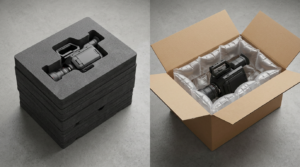
Businesses that switch from foam inserts or packing peanuts to on-demand air pillow systems typically reduce their total packaging cost by 20 to 40 percent when labor, storage, and DIM weight are included in the calculation. For a detailed head-to-head breakdown of air pillows against foam specifically, see our comparison guide: Air Pillow Packaging vs Foam Inserts: Which Is Better for Your Business?
Industries that use air pillow packaging
Air pillow packaging serves a wide range of industries with purpose-built film and machine configurations. AIRFILL Technologies serves 17 industries — here is how air pillow systems apply across the most common use cases:
Electronics and technology: Prevents impact damage during transit. RoHS-compliant film is available for regulated shipments. See AIRFILL’s electronics packaging catalog.
Pharmaceuticals: BPA-free film meets compliance requirements and cushions fragile vials, bottles, and sensitive equipment. View the full AIRFILL product catalog to explore pharmaceutical-grade options.
Wine and beverage: Air column systems cradle bottles and prevent breakage during ground and air shipping. See the beverages packaging catalog.
Furniture and large items: High-volume air cushions protect surfaces from transit scratches and impact damage on long-haul shipments.
Automotive parts: Heavy-duty cushioning for irregular, dense components that require firm immobilization in transit.
Ecommerce fulfillment: Fast on-demand void fill keeps high-volume packing lines moving without creating a bottleneck. Pairs well with AIRFILL’s multi-pack solutions.
Medical equipment: Precision cushioning for sensitive instruments and devices that cannot tolerate impact during shipping.
Food and specialty items: BPA-free film is safe for food-adjacent packaging and retail gift shipments.
Glassware and ceramics: Air cushion wrapping prevents breakage for fragile artisan products shipped direct-to-consumer.
3PL providers: Flexible systems that adapt to multiple clients and SKUs on a single packing line without reconfiguration.
How to choose the right air pillow packaging system
1. What is your daily shipment volume?
Shipment volume determines machine type. Smaller operations are well-served by a single-inflation tabletop machine, available for purchase directly from AIRFILL Technologies. High-volume operations benefit from higher-output floAir Pillow Packaging: The Ultimate Guide for Businesses
Category: Packaging Education | Reading time: 12 min | Published: March 12, 2026
If your business ships physical products, the material you use to fill space inside the box directly affects three things: your damage claim rate, your shipping costs, and your packing labor time. Most businesses know this — and most are still using a void fill solution that was chosen years ago without a rigorous cost comparison.
Air pillow packaging has become the standard for high-volume shipping operations across industries ranging from electronics to pharmaceuticals to furniture. In this guide, we cover everything procurement managers and operations leaders need to know: what air pillow packaging is, how it works, what types exist, how the costs compare to alternatives, and how to evaluate the right system for your shipping volume and product mix.
Quick answer: Air pillow packaging is an on-demand void fill system that inflates lightweight plastic film into air-filled cushions at the point of packing. It protects products in transit, reduces DIM weight charges, and cuts storage costs — without requiring capital investment through a no-cost machine lease program.
What is air pillow packaging?
Air pillow packaging refers to inflatable plastic pouches used as void fill and product cushioning inside shipping boxes. The pouches are made from thin polyethylene film and inflated on-demand using a tabletop or floor-standing air inflation machine. Once inflated, the pillows are placed around the product inside the carton to prevent movement during transit.
Unlike packing peanuts, paper fill, or pre-inflated bubble wrap rolls, air pillow systems inflate film on demand — meaning you store flat rolls of uninflated film and only create the packaging you need, when you need it. This eliminates the storage footprint problem that plagues high-volume operations using legacy materials.
The basic components of an air pillow packaging system are straightforward: an air inflation machine (tabletop or floor model), film rolls made from perforated polyethylene film in various pillow sizes, and inflated air pillows dispensed directly onto the packing line. Explore AIRFILL Technologies’ full product catalog to see the range of film types and system configurations available.
How air pillow packaging works
The on-demand inflation process is straightforward, but understanding the mechanics helps procurement managers make better decisions about machine placement, labor requirements, and film consumption.
The film roll loads onto the inflation machine in under two minutes. The machine feeds the film through a heat-sealing mechanism that closes the pillow chambers while injecting air, inflating each pillow to the correct pressure. Inflated pillows exit in a connected chain and are dispensed directly at the packing station. The packer tears off the number of pillows needed per shipment and places them in the box. The box is sealed — the product is immobilized and protected for transit.
Modern air pillow machines run continuously at rates of 10 to 20 feet of film per minute, keeping pace with even high-volume packing operations without creating a bottleneck.
Entry-level single-inflation machines are appropriate for smaller-volume operations. High-volume fulfillment centers benefit from floor-model systems with higher output rates. Contact AIRFILL Technologies to get a machine recommendation matched to your operation.
Types of air pillow packaging
Not all air pillow products are the same. The right film type depends on your product weight, fragility, box dimensions, and industry-specific compliance requirements.
Air pillows — standard void fill
The most common format. Rectangular or square pouches used to fill empty space in boxes and prevent product movement. Best for ecommerce, general retail, and non-fragile consumer goods. Available in multiple sizes to match carton dimensions.
Air cushions
Denser, more structured cushions designed for product protection rather than just void fill. They wrap around individual products to provide impact absorption on all sides. Best for electronics, glassware, instruments, pharmaceuticals, and other fragile or high-value items.
Air columns (column bags)
Vertical column chambers that stand upright inside the carton and create a protective wall around the product. Particularly effective for bottles, cylinders, and irregularly shaped items. Best for wine and beverage shipping, fragile jars, candles, and cosmetics.
BPA-free and RoHS-compliant film
Compliance-grade film for regulated industries. BPA-free film serves food-adjacent applications. RoHS-compliant film meets requirements for electronics and pharmaceutical shipments. Both are available in curbside-recyclable EcoGuard formulations. Learn more about AIRFILL’s sustainability commitment and recyclable film options.
EcoGuard recyclable film
Formulated for curbside recycling where available, making it compatible with most corporate ESG packaging commitments and sustainability reporting requirements. Part of AIRFILL’s commitment to sustainable packaging solutions.
Customizing air pillow packaging for your operation
One of the practical advantages of air pillow packaging is how readily it adapts to different product types, box sizes, and shipment volumes within the same operation. Procurement managers who ship across multiple product lines do not need a different vendor for each SKU category — the right film type and pillow configuration handles the full range.
Air pillows can be combined with other protective elements — inner cartons, paper fill, corner protection — to build a packaging system tailored to each product’s fragility level and transit requirements. Where a lightweight consumer item may need only two or three pillows for void fill, a fragile electronics shipment may call for air cushions on all six sides. The inflation machine dispenses both from the same unit, keeping the packing line simple regardless of what is moving through it.
AIRFILL Technologies serves 17 industries with purpose-built film configurations — not generic void fill sold to whoever will buy it. That means when you work with AIRFILL, a dedicated account manager helps you spec the right film for your product mix before you commit to a system. No distributor in between, no generic recommendations. The goal is a packaging configuration that protects your products, reduces your cost-per-shipment, and meets your compliance requirements from day one.
For operations with multiple product categories, AIRFILL’s catalog makes it possible to standardize on a single inflation machine while using different film types for different SKUs — reducing equipment overhead while keeping every shipment optimally protected. Contact AIRFILL Technologies to walk through your product mix with a packaging specialist.
Air pillow packaging vs. alternatives: a cost comparison
Most packaging decisions are made based on material cost alone. That is how businesses end up overpaying. The true cost of a void fill system includes four components that rarely appear in a vendor quote:
-
Material cost per shipment
-
Labor time per shipment — packing labor is expensive at scale
-
Storage cost — the floor space your void fill materials occupy
-
DIM weight surcharges — bulky filler adds cubic inches and increases carrier billing on every package
Material cost: Air pillow systems use compact film rolls, keeping material cost per shipment low. Because air pillows are inflated on demand from a flat roll, you use exactly the amount of void fill each shipment requires — no pre-formed excess, no material sitting in a box that does not fit the product. Foam inserts and packing peanuts carry significantly higher material costs due to weight and pre-formed bulk.
Storage footprint: Flat film rolls store compactly in a small floor footprint. Foam inserts and packing peanuts require substantial warehouse space that costs money every month.
Labor per shipment: Air pillows dispense in seconds. Foam must be cut or fitted to the product. Packing peanuts must be scooped and cleaned up. The labor difference compounds quickly at high shipment volumes.
DIM weight impact: Lightweight polyethylene film adds minimal cubic inches to a shipment. Bulky void fill materials inflate dimensional weight billing and increase carrier costs on every package you ship. For operations running hundreds of shipments per day, DIM weight savings alone often justify the switch.
Sustainability: EcoGuard air pillow film is curbside recyclable. Standard foam inserts are non-recyclable in most municipal programs.
Compliance: BPA-free and RoHS-compliant film options are available for regulated industries. Standard foam has no comparable compliance certifications.
Businesses that switch from foam inserts or packing peanuts to on-demand air pillow systems typically reduce their total packaging cost by 20 to 40 percent when labor, storage, and DIM weight are included in the calculation.
Industries that use air pillow packaging
Air pillow packaging serves a wide range of industries with purpose-built film and machine configurations. AIRFILL Technologies serves 17 industries — here is how air pillow systems apply across the most common use cases:
Electronics and technology: Prevents impact damage during transit. RoHS-compliant film is available for regulated shipments. See AIRFILL’s electronics packaging catalog.
Pharmaceuticals: BPA-free film meets compliance requirements and cushions fragile vials, bottles, and sensitive equipment. View the full AIRFILL product catalog to explore pharmaceutical-grade options.
Wine and beverage: Air column systems cradle bottles and prevent breakage during ground and air shipping. See the beverages packaging catalog.
Furniture and large items: High-volume air cushions protect surfaces from transit scratches and impact damage on long-haul shipments.
Automotive parts: Heavy-duty cushioning for irregular, dense components that require firm immobilization in transit.
Ecommerce fulfillment: Fast on-demand void fill keeps high-volume packing lines moving without creating a bottleneck. Pairs well with AIRFILL’s multi-pack solutions.
Medical equipment: Precision cushioning for sensitive instruments and devices that cannot tolerate impact during shipping.
Food and specialty items: BPA-free film is safe for food-adjacent packaging and retail gift shipments.
Glassware and ceramics: Air cushion wrapping prevents breakage for fragile artisan products shipped direct-to-consumer.
3PL providers: Flexible systems that adapt to multiple clients and SKUs on a single packing line without reconfiguration.
How to choose the right air pillow packaging system
1. What is your daily shipment volume?
Shipment volume determines machine type. Smaller operations are well-served by a single-inflation tabletop machine, available for purchase directly from AIRFILL Technologies. High-volume operations benefit from higher-output floor models — and qualifying accounts can access AIRFILL’s no-cost machine lease program, which eliminates capital investment entirely.
2. What are you shipping?
Product type determines film type. Lightweight consumer goods need standard void fill pillows. Fragile items such as electronics, glassware, and instruments need air cushions. Bottles and cylinders need air column protection. Regulated products in pharmaceutical and electronics categories need compliance-certified film. Browse the full AIRFILL product catalog to map your SKU mix to the right film type before specifying your system.
3. What are your compliance requirements?
If your products or customers require BPA-free, RoHS-compliant, or curbside-recyclable packaging, confirm these certifications before selecting a vendor. Not all film suppliers offer compliance-grade materials as standard catalog items. AIRFILL Technologies stocks BPA-free and RoHS-compliant film as standard catalog products — not special orders with lead time. Learn more about AIRFILL’s sustainability and compliance certifications.
4. What does your current void fill actually cost?
Before switching systems, calculate your true current cost. Take your monthly material spend and add packing labor time per shipment multiplied by your hourly labor rate and monthly shipment volume, plus storage space cost for current materials, plus monthly DIM weight surcharges attributable to void fill bulk. Most operations find the true cost is 30 to 50 percent higher than the material line item alone. Request a free cost comparison analysis from AIRFILL Technologies.
What to look for in an air pillow packaging partner
Most packaging companies sell products. AIRFILL Technologies sells outcomes. That distinction matters more than it sounds: it is the difference between a vendor that ships you a box of film and a packaging partner that stays involved in your operation, reviews your cost-per-shipment over time, and proactively recommends adjustments as your volume or product mix changes.
Here is the full differentiation stack that separates AIRFILL from commodity distributors and large manufacturers:
No-cost machine lease program: Qualifying high-volume accounts get access to AIRFILL’s inflation machine at zero capital cost. There is no equipment investment standing between your operation and a better packaging system. Smaller-volume operations can purchase a single inflation machine directly.
17-industry product catalog: Purpose-built film configurations for specific industries — not generic void fill repackaged for every application. AIRFILL’s catalog covers artwork, automotive, beauty, beverages, casework, electronics, floral, food, furniture, glassware, home essentials, instruments, medical equipment, paints, pharmaceuticals, window treatment, and premium universal. View the full catalog.
BPA-free and RoHS-compliant materials as standard: Compliance-ready film for pharmaceutical, medical, and electronics buyers — available as standard catalog items, not special orders. No lead time surprises when an audit requires documentation.
EcoGuard curbside-recyclable film: Meets corporate ESG commitments and sustainability reporting requirements without greenwashing. AIRFILL Bags are recyclable at grocery drop-off points. The EcoGuard line goes further — curbside recyclable where available. Learn about AIRFILL’s sustainability commitment.
Direct B2B relationship model: No distributor layer. You work directly with AIRFILL Technologies — which means faster response times, better pricing, and a team that actually understands your operation. Learn more about how AIRFILL works.
Dedicated account manager and client portal: Every AIRFILL account gets a named account manager — a single point of contact for reorders, machine support, film specification changes, and performance reviews. The client portal makes it easy to manage your account without going through a general contact queue.
Frequently asked questions about air pillow packaging
How much film does an air pillow system use per shipment?
Film consumption depends on box size, product dimensions, and the number of pillows required to immobilize the product. On average, most B2B shipments use four to eight pillows per carton. Contact AIRFILL Technologies to calculate your projected film consumption based on your average order profile before committing to a system.
Are air pillows recyclable?
Yes. Standard AIRFILL polyethylene film is recyclable at store drop-off locations. The EcoGuard line is formulated for curbside recycling where available, making it the right choice for operations with ESG reporting requirements or sustainability mandates. Learn more about AIRFILL’s recyclable packaging options.
Can air pillows replace foam inserts for fragile items?
Yes — and for most applications, air cushion packaging outperforms foam inserts on protection, cost, and storage efficiency. Foam inserts require custom die-cutting for each product, carry a significant storage footprint, and are non-recyclable in most programs. Air cushions conform to product shape, store as flat film, and are recyclable.
How long does it take to train staff on an air pillow machine?
Machine operation training takes under 30 minutes for most operators. Film roll changes take under two minutes. AIRFILL Technologies provides onboarding support for all new accounts as part of the account manager relationship.
What if a pillow deflates in transit?
Properly sealed air pillows maintain inflation under normal transit conditions. Quality film holds pressure through standard temperature and pressure variation in ground and air shipping. For extreme transit conditions involving altitude or temperature variance, speak with an AIRFILL representative about the right film specification for your shipment profile.
Do I need to purchase a machine to get started?
No. Qualifying high-volume accounts can access AIRFILL’s no-cost machine lease program with zero capital investment. Smaller operations can purchase a single inflation machine directly from AIRFILL. Contact AIRFILL Technologies to discuss which path fits your shipment volume.
Ready to evaluate air pillow packaging for your operation?
The best way to find out whether an air pillow system will reduce your total packaging cost is to run the numbers against your current spend. AIRFILL Technologies offers free packaging consultations that include a cost comparison analysis — factoring in material, labor, storage, and DIM weight — against your current void fill system. No sales pressure. Just the data your procurement team needs to make a confident decision. Contact AIRFILL Technologies to request a free packaging cost analysis.
Related reading
Air Pillow Packaging vs Foam Inserts: Which Is Better for Your Business?
What Is Void Fill Packaging? Types, Benefits & Best Practices
How Air Cushion Machines Save Fulfillment Centers Thousands
No-Cost Machine Lease Programs: How They Work for Packaging or models — and qualifying accounts can access AIRFILL’s no-cost machine lease program, which eliminates capital investment entirely. Learn how the no-cost lease program works.
2. What are you shipping?
Product type determines film type. Lightweight consumer goods need standard void fill pillows. Fragile items such as electronics, glassware, and instruments need air cushions. Bottles and cylinders need air column protection. Regulated products in the pharmaceutical and electronics categories need compliance-certified film. Browse the full AIRFILL product catalog to map your SKU mix to the right film type before specifying your system.
3. What are your compliance requirements?
If your products or customers require BPA-free, RoHS-compliant, or curbside-recyclable packaging, confirm these certifications before selecting a vendor. Not all film suppliers offer compliance-grade materials as standard catalog items. AIRFILL Technologies stocks BPA-free and RoHS-compliant film as standard catalog products — not special orders with lead time. Learn more about AIRFILL’s sustainability and compliance certifications.
4. What does your current void fill actually cost?
Before switching systems, calculate your true current cost. Take your monthly material spend and add packing labor time per shipment multiplied by your hourly labor rate and monthly shipment volume, plus storage space cost for current materials, plus monthly DIM weight surcharges attributable to void fill bulk. Most operations find the true cost is 30 to 50 percent higher than the material line item alone. Request a free cost comparison analysis from AIRFILL Technologies.
What to look for in an air pillow packaging partner
Most packaging companies sell products. AIRFILL Technologies sells outcomes. That distinction matters more than it sounds: it is the difference between a vendor that ships you a box of film and a packaging partner that stays involved in your operation, reviews your cost-per-shipment over time, and proactively recommends adjustments as your volume or product mix changes.
Here is the full differentiation stack that separates AIRFILL from commodity distributors and large manufacturers:
No-cost machine lease program: Qualifying high-volume accounts get access to AIRFILL’s inflation machine at zero capital cost. There is no equipment investment standing between your operation and a better packaging system. Smaller-volume operations can purchase a single inflation machine directly.
17-industry product catalog: Purpose-built film configurations for specific industries — not generic void fill repackaged for every application. AIRFILL’s catalog covers artwork, automotive, beauty, beverages, casework, electronics, floral, food, furniture, glassware, home essentials, instruments, medical equipment, paints, pharmaceuticals, window treatment, and premium universal. View the full catalog.
BPA-free and RoHS-compliant materials as standard: Compliance-ready film for pharmaceutical, medical, and electronics buyers — available as standard catalog items, not special orders. No lead time surprises when an audit requires documentation.
EcoGuard curbside-recyclable film: Meets corporate ESG commitments and sustainability reporting requirements without greenwashing. AIRFILL Bags are recyclable at grocery drop-off points. The EcoGuard line goes further — curbside recyclable where available. Learn about AIRFILL’s sustainability commitment.
Direct B2B relationship model: No distributor layer. You work directly with AIRFILL Technologies — which means faster response times, better pricing, and a team that actually understands your operation. Learn more about how AIRFILL works.
Dedicated account manager and client portal: Every AIRFILL account gets a named account manager — a single point of contact for reorders, machine support, film specification changes, and performance reviews. The client portal makes it easy to manage your account without going through a general contact queue.
Frequently asked questions about air pillow packaging
How much film does an air pillow system use per shipment?
Film consumption depends on box size, product dimensions, and the number of pillows required to immobilize the product. On average, most B2B shipments use four to eight pillows per carton. Contact AIRFILL Technologies to calculate your projected film consumption based on your average order profile before committing to a system.
Are air pillows recyclable?
Yes. Standard AIRFILL polyethylene film is recyclable at store drop-off locations. The EcoGuard line is formulated for curbside recycling where available, making it the right choice for operations with ESG reporting requirements or sustainability mandates. Learn more about AIRFILL’s recyclable packaging options.
Can air pillows replace foam inserts for fragile items?
Yes — and for most applications, air cushion packaging outperforms foam inserts on protection, cost, and storage efficiency. Foam inserts require custom die-cutting for each product, carry a significant storage footprint, and are non-recyclable in most programs. Air cushions conform to product shape, store as flat film, and are recyclable. For a detailed side-by-side breakdown, see: Air Pillow Packaging vs Foam Inserts: Which Is Better for Your Business?
How long does it take to train staff on an air pillow machine?
Machine operation training takes under 30 minutes for most operators. Film roll changes take under two minutes. AIRFILL Technologies provides onboarding support for all new accounts as part of the account manager relationship.
What if a pillow deflates in transit?
Properly sealed air pillows maintain inflation under normal transit conditions. Quality film holds pressure through standard temperature and pressure variation in ground and air shipping. For extreme transit conditions involving altitude or temperature variance, speak with an AIRFILL representative about the right film specification for your shipment profile.
Do I need to purchase a machine to get started?
No. Qualifying high-volume accounts can access AIRFILL’s no-cost machine lease program with zero capital investment. Smaller operations can purchase a single inflation machine directly from AIRFILL. Contact AIRFILL Technologies to discuss which path fits your shipment volume.
Ready to evaluate air pillow packaging for your operation?
The best way to find out whether an air pillow system will reduce your total packaging cost is to run the numbers against your current spend. AIRFILL Technologies offers free packaging consultations that include a cost comparison analysis — factoring in material, labor, storage, and DIM weight — against your current void fill system. No sales pressure. Just the data your procurement team needs to make a confident decision. Contact AIRFILL Technologies to request a free packaging cost analysis.