
|
Key Takeaways ✓ Shipping damage costs U.S. businesses an estimated $1–$3 per damaged package in direct replacement, reshipping, and customer service expenses. ✓ Air cushion packaging reduces in-transit damage by eliminating the root cause: product movement inside the carton. ✓ On-demand air pillow systems cut material waste by producing exactly what each package needs — no pre-cut sheets or bulk rolls. ✓ Proper air cushion implementation starts with carton right-sizing, not just adding more fill material. ✓ AIRFILL’s auto inflation machines and film products are designed for high-volume operations that can’t afford damage-related chargebacks. |
Shipping damage is one of those costs that hides in plain sight. It doesn’t show up as a single line item on your P&L. Instead, it spreads across replacement product costs, reshipping fees, customer service hours, return processing, and the hardest one to quantify — lost customer trust.
For e-commerce brands, 3PLs, and manufacturers shipping direct, even a 2–3% damage rate can translate to tens of thousands of dollars per year in avoidable losses. The fix isn’t complicated, but it does require understanding why packages get damaged in the first place and how air cushion packaging directly addresses those causes.
This article walks through the mechanics of shipping damage, how air cushion packaging prevents it, and what the real-world numbers look like when operations make the switch. For a broader look at air pillow technology, see our complete guide to air pillow packaging.
The Real Cost of Shipping Damage
Damage rates vary by industry, product type, and carrier, but the pattern is consistent: most operations underestimate the true cost because they only count the obvious expenses.
Direct Costs
• Replacement product: The cost of goods for the damaged item, which you absorb regardless of whether the customer requests a refund or a replacement.
• Reshipping: A second outbound shipment, often expedited to recover the customer experience.
• Return processing: Inbound freight for the damaged package, inspection, disposal or restocking, and the labor to manage each step.
• Customer service: Time spent handling claims, issuing refunds, and managing expectations. At scale, this is a staffing cost.
Indirect Costs
• Customer churn: Studies consistently show that a single damaged delivery makes 30–40% of customers less likely to reorder. For subscription or repeat-purchase models, that’s lifetime value walking out the door.
• Negative reviews: Damaged products generate disproportionately negative reviews. One visible complaint about broken items can suppress conversion rates for weeks.
• Carrier claims: Filing and tracking damage claims is time-intensive and recovery rates are low. Most operations write off small claims entirely.
• Brand perception: Unboxing is a brand touchpoint. A crushed box with inadequate packaging communicates carelessness, regardless of product quality.
When you add direct and indirect costs together, a 3% damage rate on 10,000 monthly shipments can easily cost $15,000–$30,000 per month — far more than the investment required to fix the packaging.
Why Packages Get Damaged in Transit
Understanding the root causes helps you target the right solution instead of just adding more material to the box.
Product Movement Inside the Carton
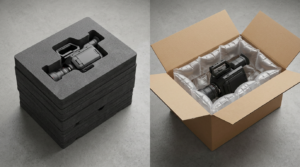
This is the number one cause of in-transit damage. When there’s empty space in the carton, the product shifts with every acceleration, deceleration, and direction change during handling and transport. Each shift is a potential impact — the product hitting the carton wall, another item, or its own accessories. Void fill exists specifically to eliminate this movement.
Compression and Stacking
Packages at the bottom of a pallet or truck stack bear the weight of everything above them. If the carton isn’t properly braced or the void fill compresses too easily, the product absorbs that load. This is especially problematic for lightweight or hollow products.
Vibration
Continuous vibration during truck and air transport can loosen components, scuff surfaces, and fatigue packaging materials over time. A product that looks fine after a single drop test may fail after 48 hours of road vibration because the packaging wasn’t designed to maintain tension over extended periods.
Inadequate Carton Sizing
Oversized cartons require more void fill and still leave products vulnerable to shifting. Undersized cartons put pressure directly on the product. Neither is a materials problem — it’s a carton selection problem that void fill alone can’t fully solve.
How Air Cushion Packaging Prevents Shipping Damage
Air cushion packaging addresses the primary damage causes through a combination of immobilization, shock absorption, and consistent fill volume.
Void Elimination
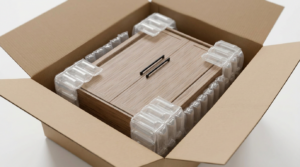
Air pillows fill the empty space around and between products, locking them in position within the carton. When the product can’t move, it can’t impact the carton walls or other items. This single factor accounts for the majority of damage reduction in operations that switch from loose fill, paper, or insufficient packaging to properly sized air cushions.
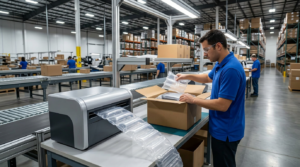
AIRFILL’s auto inflation machines produce pillows on demand in multiple sizes, so packers can match the fill to the void without cutting, folding, or estimating. The result is a tighter, more consistent pack across every carton.
Shock Absorption
Each air pillow acts as an independent shock absorber. When the package is dropped, thrown, or compressed, the air inside the pillow compresses and then rebounds, dissipating impact energy before it reaches the product. Unlike rigid inserts that transfer force, air-based cushioning distributes it.
Consistent Performance
One of the underrated advantages of air cushion packaging is consistency. Paper crumple, foam peanuts, and bubble wrap all require human judgment about how much to use and where to place them. Air pillows produced by a machine are the same size and inflation level every time, which means the protection quality doesn’t vary between packers or shifts.
Lightweight Protection
Air pillows are 98% air by volume. They add almost no weight to the package, which keeps you under dimensional weight thresholds and avoids carrier surcharges. Heavier void fill materials like paper or foam can push packages into a higher shipping tier, especially for lightweight products in large cartons.
Where the 70% Damage Reduction Comes From
The 70% figure isn’t a laboratory number — it’s based on documented outcomes from operations that replaced inadequate void fill with properly implemented air cushion systems. The actual reduction depends on your starting point.
|
Previous Packaging |
Typical Damage Rate |
After Air Cushions |
Reduction |
|
No void fill (product loose in box) |
8–12% |
2–3% |
70–80% |
|
Paper crumple/newsprint |
5–8% |
1.5–3% |
50–70% |
|
Foam peanuts |
4–6% |
1–2.5% |
45–60% |
|
Bubble wrap (improperly sized) |
3–5% |
1–2% |
40–60% |
|
Air pillows (undersized/inconsistent) |
2–4% |
0.5–1.5% |
40–65% |
The biggest gains come from operations that were using either no void fill or a loose, inconsistent fill material. If you’re already using some form of air cushioning but seeing higher-than-expected damage rates, the issue is usually pillow sizing, inflation consistency, or carton selection — not the material itself.
Implementing Air Cushion Packaging: A Step-by-Step Approach
Switching to air cushion packaging isn’t just about swapping materials. The operations that see the best results treat it as a process improvement project with measurable goals.
1. Baseline your current damage rate. Pull 90 days of damage claims, returns coded as “damaged,” and carrier claims. Calculate your damage rate as a percentage of total shipments. This is the number you’ll measure improvement against.
2. Audit your top 20 SKUs by damage frequency. Not all products get damaged equally. Identify which SKUs account for the majority of damage incidents and examine how they’re currently packed.
3. Right-size your cartons. Before adding better void fill, make sure you’re not fighting an oversized carton. The ideal gap between the product and carton wall is 1–2 inches on each side — enough for cushioning, not so much that the product can shift.
4. Select the right air pillow configuration. Pillow size matters. Small pillows for tight voids, larger pillows for bigger gaps. AIRFILL offers multiple film widths and pillow configurations designed for different carton sizes and product types. Browse the options in the AIRFILL catalog.
5. Install the auto inflation machine. Place it at the pack station for on-demand production. AIRFILL’s no-cost machine lease program eliminates the capital expenditure barrier — you pay for film, and the machine comes with it.
6. Train your pack team. The training is minimal — most teams are fully proficient within one shift — but it matters. Cover pillow placement (all six sides of the product), how to adjust inflation levels, and what a properly packed carton looks like vs. an underfilled one.
7. Run a 30-day pilot. Track damage rates on your pilot SKUs alongside a control group still packed the old way. Compare damage percentage, pack time per unit, and material cost per package.
8. Scale based on data. Once the pilot confirms the improvement, roll the system out to additional product lines. Keep monitoring damage rates monthly to catch any regressions early.
Beyond Damage Prevention: Additional Benefits
Operations that switch to air cushion packaging for damage reduction often discover secondary benefits that improve the overall shipping operation.
Storage Space Recovery
Flat film rolls take up a fraction of the floor space required by pre-made void fill. A single pallet of AIRFILL film replaces 10–15 pallets of equivalent bubble wrap or foam peanut volume. For space-constrained warehouses, this alone justifies the switch.
Faster Pack Times
On-demand air pillows eliminate the measuring, cutting, and crumpling steps associated with paper and bubble wrap. Packers grab pillows from the machine output and place them directly in the carton. Most operations report a 15–25% improvement in pack throughput.
Cleaner Unboxing Experience
Air pillows are clean, uniform, and easy for customers to remove. Compare that to foam peanuts that spill everywhere or crumpled paper that looks like trash. The unboxing experience is a brand impression, and air pillows deliver a noticeably cleaner one.
Sustainability Positioning
AIRFILL’s standard bags are store drop-off recyclable, and the EcoGuard line is curbside recyclable. Including clear disposal instructions on your packing slip turns packaging waste into a positive sustainability touchpoint. For a detailed comparison of recyclability options, see our air pillows vs. bubble wrap breakdown.
Common Mistakes That Undermine Air Cushion Performance
Air cushion packaging isn’t foolproof. These are the most common mistakes that lead to underperformance.
• Wrong pillow size for the void. Using pillows that are too small for the gap leaves space for the product to shift. Match the pillow dimensions to the void, not the other way around.
• Under-inflation. Pillows that aren’t fully inflated compress too easily under load. Check the machine’s inflation settings regularly and adjust for ambient temperature changes that affect air volume.
• Over-reliance on void fill instead of carton right-sizing. If you’re using 6+ pillows per carton, the carton is probably too big. Reducing carton size is cheaper and more effective than adding more fill.
• Inconsistent packing standards. Without clear guidelines, different packers will fill cartons differently. Create a visual packing guide for your top SKUs showing exactly how many pillows go where.
• Skipping drop tests after changes. Any time you change carton sizes, pillow configurations, or product packaging, revalidate with ISTA-style drop and vibration tests before shipping at scale.
Frequently Asked Questions
How quickly can I see results after switching to air cushion packaging?
Most operations see measurable damage reduction within the first 30 days. The improvement is usually immediate for products that were previously shipped with no void fill or loose paper. Allow 60–90 days for statistically significant data across your full product range.
Do air cushions work for heavy products?
Air pillows are effective for products up to 30–40 pounds per carton when combined with proper carton sizing. For heavier items, consider a hybrid approach using air pillows for void fill alongside corrugated inserts or EdgeGuard corner protectors for structural bracing.
What happens if an air pillow pops during transit?
Properly inflated AIRFILL pillows are engineered to withstand typical parcel-handling forces. If a single pillow fails, the surrounding pillows maintain the product’s position. Chronic failures usually indicate an over-inflation problem or a film that’s not matched to the application.
Can I use air cushion packaging with automated packing lines?
Yes. AIRFILL auto inflation machines integrate with semi-automated and fully automated lines through overhead delivery systems, centralized production, and custom mounting options. Discuss your line layout with AIRFILL to determine the best configuration.
How do I calculate the ROI of switching to air-cushion packaging?
Start with your current damage rate and average cost per damaged shipment (replacement + reshipping + customer service). Multiply by the monthly volume to get your current damage cost. Then compare against the cost of film and any change in pack labor. Most operations achieve positive ROI within the first month.
|
Ready to reduce your shipping damage rate and lower packaging costs? Request sample materials and a damage cost analysis from AIRFILL Technologies. Call (844) 247-3455 | Visit airfilltechnologies.com |